
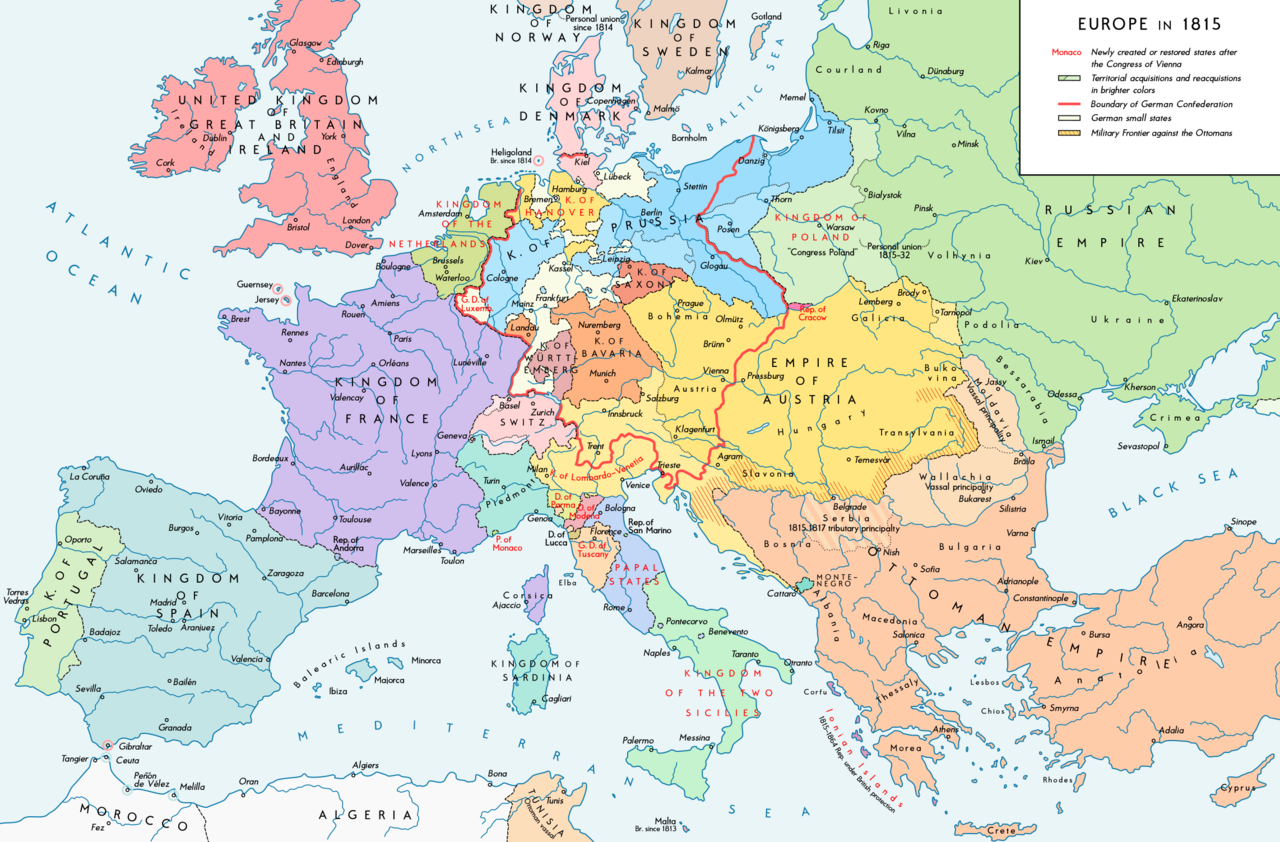
Dozens of countries have disappeared from the world map over the past few centuries. The Soviet Union, Yugoslavia, Czechoslovakia, Prussia, the Ottoman Empire, and many others once controlled vast territories and populations — but political upheaval, wars, revolutions, and peaceful dissolutions erased them from modern maps. Understanding these vanished nations is essential to making sense of today's borders, conflicts, and alliances.

Major Countries That No Longer Exist
| Country | Existed | Successor States |
|---|---|---|
| Soviet Union (USSR) | 1922–1991 | 15 countries (Russia, Ukraine, etc.) |
| Yugoslavia | 1918–2003 | 7 countries (Serbia, Croatia, etc.) |
| Czechoslovakia | 1918–1993 | Czech Republic, Slovakia |
| Ottoman Empire | 1299–1922 | Turkey + ~40 modern states |
| Prussia | 1525–1947 | Germany, Poland, Russia, Lithuania |
| East Germany (GDR) | 1949–1990 | Reunified Germany |
| Austria-Hungary | 1867–1918 | Austria, Hungary, Czech Republic, etc. |
1. Soviet Union (USSR) — 1922 to 1991
The Union of Soviet Socialist Republics was the largest country in the world, covering 22.4 million km² across 11 time zones. It was a one-party communist state and a global superpower that rivaled the United States throughout the Cold War. The USSR collapsed in December 1991, splitting into 15 independent nations: Russia, Ukraine, Belarus, Kazakhstan, Uzbekistan, Turkmenistan, Tajikistan, Kyrgyzstan, Georgia, Armenia, Azerbaijan, Moldova, Latvia, Lithuania, and Estonia.
The dissolution was largely peaceful (except in the Caucasus region) and reshaped the entire global order. Russia inherited the USSR's UN Security Council seat, nuclear arsenal, and most of its territory.
2. Yugoslavia — 1918 to 2003
Yugoslavia ("Land of the South Slavs") was a multi-ethnic federation in southeastern Europe. It existed in various forms from 1918 until its violent breakup in the 1990s. The Yugoslav Wars (1991–2001) were the deadliest European conflicts since World War II, involving ethnic cleansing and genocide. Yugoslavia eventually dissolved into seven successor states: Slovenia, Croatia, Bosnia and Herzegovina, Serbia, Montenegro, North Macedonia, and Kosovo.
3. Czechoslovakia — 1918 to 1993
Czechoslovakia was created after World War I from the remnants of Austria-Hungary. Unlike Yugoslavia, its dissolution was entirely peaceful — known as the "Velvet Divorce." On January 1, 1993, Czechoslovakia became two separate nations: the Czech Republic (now Czechia) and Slovakia. Both countries later joined NATO and the European Union.
4. Ottoman Empire — 1299 to 1922
The Ottoman Empire was one of history's longest-lasting empires, enduring for over 600 years. At its peak in the 16th–17th centuries, it controlled southeastern Europe, western Asia, and North Africa. The empire's decline accelerated in the 19th century, and its defeat in World War I led to partition. Modern Turkey was founded in 1923 from the empire's core Anatolian territory. Over 40 modern nations include territory that was once Ottoman.
5. Prussia — 1525 to 1947
Prussia was a powerful German state that dominated Central European politics for centuries. It led the unification of Germany in 1871 and was the dominant state within the German Empire. After World War II, the Allied Control Council formally dissolved Prussia in 1947, viewing it as "a bearer of militarism and reaction." Its territory was divided among Germany, Poland, Russia (Kaliningrad), and Lithuania.
6. East Germany (GDR) — 1949 to 1990
The German Democratic Republic was a Soviet-aligned communist state in eastern Germany. It was separated from West Germany by the Iron Curtain and the Berlin Wall (built 1961). When the Berlin Wall fell on November 9, 1989, East Germany's government quickly collapsed. On October 3, 1990, East Germany was absorbed into the Federal Republic of Germany in one of history's most dramatic peaceful unifications.
7. Austria-Hungary — 1867 to 1918
The Austro-Hungarian Empire was a dual monarchy that controlled much of Central Europe. Its assassination of Archduke Franz Ferdinand in 1914 triggered World War I. Defeat in that war caused the empire's dissolution, producing Austria, Hungary, Czechoslovakia, and contributing territory to Poland, Romania, Italy, and the new Kingdom of Yugoslavia.
Other Notable Vanished Nations
- Rhodesia (1965–1979): Became Zimbabwe after a liberation war and transition to majority rule.
- Siam (–1939): Renamed Thailand. Unlike its neighbors, it was never colonized by European powers.
- Ceylon (–1972): Renamed Sri Lanka upon becoming a republic.
- Persia (–1935): Renamed Iran at the request of the government.
- Burma (–1989): Renamed Myanmar by the military government.
- Zaire (1971–1997): Became the Democratic Republic of the Congo after the overthrow of Mobutu.
- Tibet (–1950): Annexed by the People's Republic of China and is now the Tibet Autonomous Region.
- South Vietnam (1955–1975): Unified with North Vietnam after the Vietnam War to form Vietnam.
- Sikkim (–1975): An independent Himalayan kingdom until it was absorbed by India via referendum.
- Gran Colombia (1819–1831): Dissolved into Colombia, Venezuela, Ecuador, and Panama.
- Holy Roman Empire (800–1806): A loose confederation of Central European territories dissolved during the Napoleonic Wars.
- Kingdom of Hawaii (–1898): Overthrown in 1893 and annexed by the United States in 1898.
- Tanganyika (–1964): Merged with Zanzibar to form Tanzania.
- United Arab Republic (1958–1961): A short-lived union between Egypt and Syria.
- South Yemen (1967–1990): Unified with North Yemen to form Yemen.
- Biafra (1967–1970): A secessionist state in southeastern Nigeria, collapsed after a devastating civil war.
- Abyssinia (–1974): The Ethiopian Empire, one of the oldest states in Africa, ended with the overthrow of Emperor Haile Selassie.
- Transvaal (1852–1902): An independent Boer republic in southern Africa, conquered by Britain in the Boer Wars and later incorporated into South Africa.
Key Facts
- The Soviet Union's dissolution in 1991 created 15 new countries and ended the Cold War.
- Yugoslavia's breakup was the bloodiest European conflict since WWII, producing seven successor states.
- Czechoslovakia's "Velvet Divorce" in 1993 remains a model of peaceful national separation.
- The Ottoman Empire lasted over 600 years and influenced the borders of more than 40 modern nations.
- Many "vanished" countries simply changed names (Persia to Iran, Siam to Thailand) rather than truly ceasing to exist.
Fun Facts
- The Holy Roman Empire, famously described by Voltaire as "neither holy, nor Roman, nor an empire," lasted over 1,000 years.
- East Germany's Trabant car became a symbol of communist-era life — when the Wall fell, thousands of Trabants streamed into West Berlin.
- The Ottoman Empire's official end came on November 1, 1922, but the last Ottoman sultan left Istanbul on a British warship just 16 days later.
- Czechoslovakia's dissolution was so smooth that it was finalized in a single parliamentary session — many citizens only learned about it afterward.
Test Your Knowledge!
Think you know your geography? Try our interactive quiz!
Play Geography Games →