
The United States has the most pet dogs of any country, about 89.7 million in 2024 according to the American Veterinary Medical Association, followed by Brazil (about 62.2 million), China (about 52.6 million counted in cities alone), Mexico (about 41.2 million) and Russia (about 25.5 million). If free-roaming street dogs are counted as well, India almost certainly belongs near the top, but no census has measured its owned and unowned dogs together.

Why no two dog counts agree
There is no global dog census. Each figure in this ranking comes from a different body, collected in a different way, and most of them measure only one kind of dog. Three distinctions explain most of the disagreement between lists you will find online.
- Owned versus free-roaming. Veterinary and pet-industry surveys ask households how many dogs they keep. They miss village dogs that belong to nobody in particular and street dogs that a neighbourhood feeds but nobody houses. In much of South Asia, Africa and Latin America those dogs are the majority.
- Who runs the survey. Official statistics offices (Mexico's INEGI, Brazil's IBGE) sample households scientifically. Industry groups such as the American Pet Products Association (APPA), Europe's FEDIAF or China's pet-industry white paper serve pet-food makers, and their methods are not always published in full.
- Urban only, or the whole country. China's widely quoted figure covers cities and towns only. Rural China, home to roughly a third of the population, is not in it.
Researchers who have tried to add everything up put the world's dogs somewhere between 700 million and about 1 billion, and Matthew Gompper's 2014 Oxford University Press volume Free-Ranging Dogs and Wildlife Conservation estimated that roughly three-quarters of them are free-ranging rather than confined pets. Treat every number below as a well-sourced estimate, not a headcount, and compare years and sources before drawing fine distinctions.
Ninety million dogs in American homes
The United States is the one country where two independent surveys both put the dog population near the top of the world table. The American Veterinary Medical Association's household survey counted about 89.7 million pet dogs in 2024, up from 80.1 million in 2023, and found a dog in 45.5% of US households, against 31.6% when its series began in 1996. The AVMA put the number of dog-owning households at about 59.8 million.
The American Pet Products Association, which surveys for the pet-supply trade, reports higher ownership: its 2025 State of the Industry report put dogs in 51% of households (about 68 million) in 2024, and its 2026 report raised that to 53%, or 71 million households, in 2025. The gap between 59.8 million and 71 million households is a good illustration of how much method matters even in a country that surveys its pets often. Either way, the US lead is not in doubt: at roughly 26 dogs per 100 people, it combines a large population with one of the higher ownership rates among rich countries.
Brazil and Mexico: the dog-heavy households of Latin America
Latin America is where dogs most clearly dominate the pet population. In Brazil, a joint survey by the pet-food association Abinpet and the Instituto Pet Brasil estimated 62.2 million dogs at the end of 2023, up from 60.5 million a year earlier, against 30.8 million cats and 42.8 million ornamental birds. Other Instituto Pet Brasil releases have quoted 58.1 million dogs, so a range of roughly 58 to 62 million is the honest reading. Brazil's statistics agency IBGE asked the question directly in its 2019 National Health Survey (PNS) and found at least one dog in 46.1% of homes, about 33.8 million households. That is roughly 29 dogs for every 100 Brazilians, slightly more per head than the United States.
Mexico was missing from many older rankings because it had no national figure until INEGI ran its National Survey of Animal Welfare (ENBIARE) in 2021. That survey counted about 43.8 million dogs in Mexican dwellings. The 2025 round, published in July 2026, found 41.2 million, a fall of 5.8%, with a dog in 53.3% of homes. Mexico, with about 133 million people (see our Mexico country guide), therefore has around 31 dogs per 100 residents, the highest ratio among the countries in this list. Because the survey counts dogs that belong to a household, it includes many animals that spend their days loose in the street but sleep at home.
China's urban dog census, and what it leaves out
China's figure comes from the annual China Pet Industry White Paper, compiled by the industry research group Petdata. Its 2025 edition put urban pet dogs at about 52.58 million in 2024, up 1.6% from 51.75 million in 2023. Urban cats grew faster, to about 71.53 million, so cats now outnumber dogs in Chinese cities, a reversal that happened in the early 2020s.
Three caveats apply. The survey covers urban households only, so it misses the dogs kept as guards on farms across rural China. It counts animals kept as pets, not the strays common in many smaller cities. And Chinese cities restrict dogs more than most: Beijing has long limited each household to one dog and banned large breeds from its central districts, while Shanghai and other cities require registration and rabies vaccination. Those rules help explain why urban China keeps only about four dogs per 100 people despite its 1.4 billion population. Counted nationwide, China might well overtake Brazil; nobody has published a credible number that does so.
Europe's leaders, from Britain to Poland
FEDIAF, the European pet-food federation, compiles national figures from 41 countries. Its Facts & Figures 2026 report, which describes 2024, counts about 91.2 million dogs across Europe against 111 million cats. Russia is no longer included and the federation has reworked how it harmonises national data, so that total cannot be compared with the 104 to 106 million quoted in earlier editions; the difference reflects coverage, not fewer dogs.
- United Kingdom: 13.4 million dogs, the largest number in FEDIAF's table.
- Germany: 10.5 million.
- France: 9.7 million.
- Italy: 9.0 million.
- Poland: 8.28 million, a high total for a country of about 37 million people.
- Spain: 6.96 million.
- Ukraine: 4.54 million, despite the war.
Measured per person, the smaller Central European states stand out. Hungary has about 2.77 million dogs for under 10 million people, and Portugal about 3.07 million for 10.6 million, both ahead of the UK's roughly 19 per 100.
Russia's own count is separate. A National Pet Census run by the Russian Center for Animal Nutrition and Welfare estimated about 25.5 million dogs and 50 million cats in 2023, with dog numbers up 1.7 million over three years. Russians lean to cats: a July 2024 VCIOM poll found 49% of respondents had a cat and 34% a dog.
India and the street-dog question
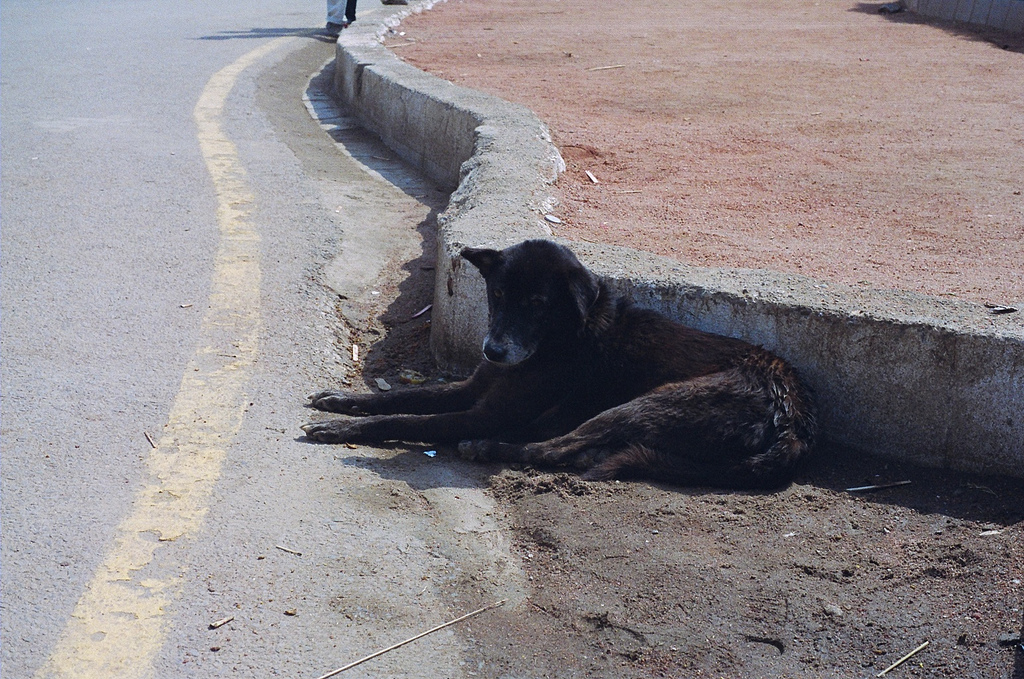
India is where lists of countries with the most dogs disagree most, because its dogs are mostly not pets in the Western sense. The only national official figure is for strays: the 20th Livestock Census of 2019 counted about 15.3 million (153 lakh) stray dogs, alongside about 5 million stray cattle. Independent researchers think the true number of free-roaming dogs is considerably higher, since census enumerators cannot reliably count animals that move between streets and neighbourhoods. A 2022 study in the journal Veterinary Sciences that estimated stray numbers in Punjab state shows the method most often used: count dogs along fixed routes, then extrapolate.
India's pet-dog population is growing quickly in cities, but there is no government count of owned dogs, and the round figures quoted by marketing firms vary too widely to rank. What is well documented is the public-health cost. The World Health Organization attributes about 36% of the world's rabies deaths to India, nearly all of them from dog bites. In August 2025 the Supreme Court ordered authorities in Delhi and its suburbs to move stray dogs into shelters, then, after protests, a larger bench modified the order within days so that dogs would be sterilised, vaccinated and returned to their localities, with only rabid or aggressive animals held. Under the Animal Birth Control Rules 2023, that catch-neuter-vaccinate-release approach is the legal default across the country. For the country's wider picture, see the India country guide.
Where cats beat dogs, and where they don't
Comparing dogs with cats shows that dog numbers follow housing and lifestyle as much as population. A dog needs walking, space and someone home during the day; a cat does not, which makes cats the pet of small flats, long working hours and ageing populations.
- Japan is the clearest case. The Japan Pet Food Association's survey recorded cats outnumbering dogs for the first time in 2017 (9.53 million cats against 8.92 million dogs). By 2024 it counted about 6.80 million dogs and 9.16 million cats, and its 2025 survey showed dogs recovering slightly, to about 6.82 million.
- Urban China has 71.5 million cats to 52.6 million dogs (2024).
- Europe as a whole has 111 million cats to 91 million dogs (FEDIAF, 2024), though the UK, Poland and Spain still keep more dogs.
- Russia has about two cats per dog.
The Americas run the other way. The United States had about 89.7 million dogs to 73.8 million cats in 2024 (AVMA), Brazil two dogs for every cat, and Mexico 43.8 million dogs to 16.2 million cats in INEGI's 2021 survey. Big detached houses, yards and a strong tradition of guard dogs all favour dogs. If you want the other half of this comparison, our ranking of the countries with the most cats shows how differently the two pets are spread around the world.