
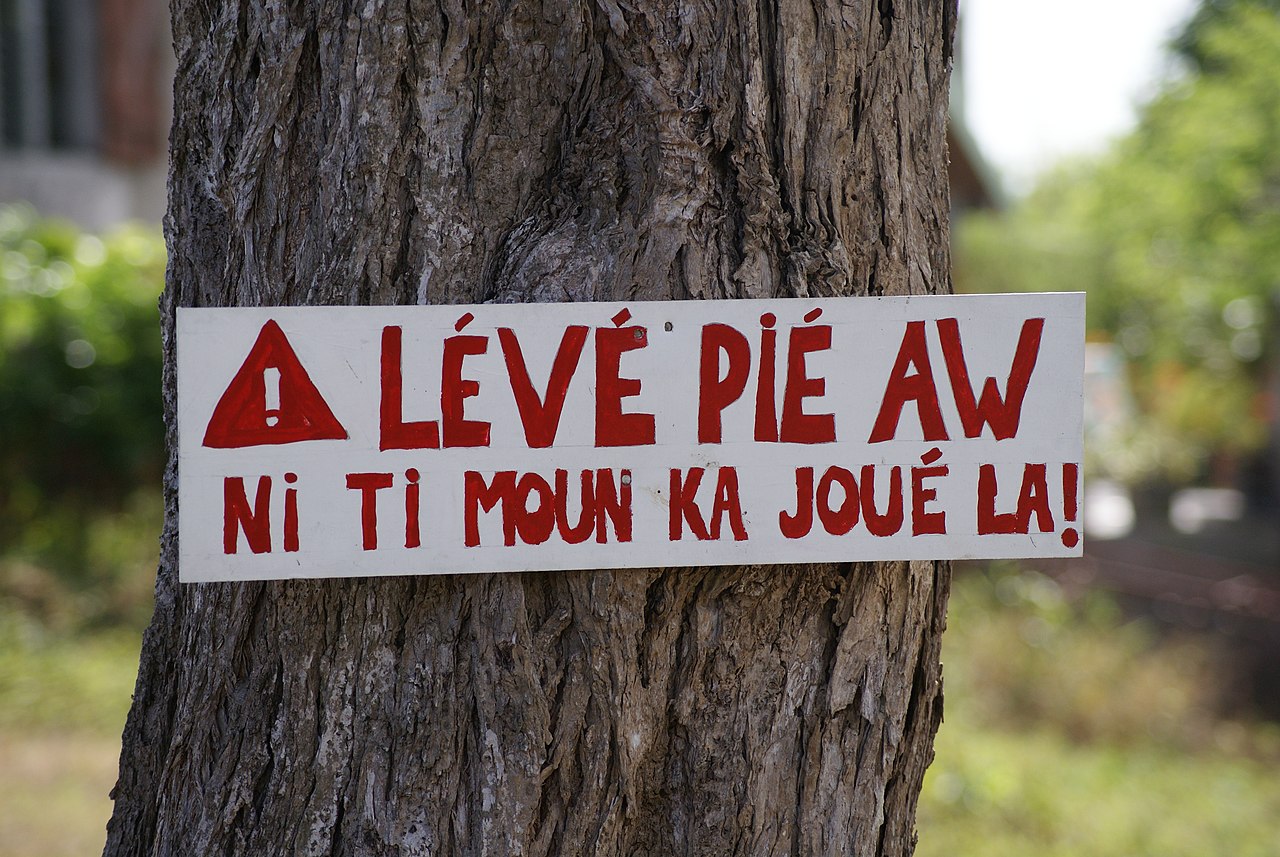
Creole and pidgin languages are born from the collision of different linguistic worlds. When people who speak different languages need to communicate — through trade, colonization, or forced migration — they create simplified contact languages called pidgins. When children grow up speaking a pidgin as their first language, it rapidly develops into a full-fledged language called a creole.
Introduction
These languages are found across the tropical world, from the Caribbean to the Pacific Islands, from West Africa to Southeast Asia. They bear the marks of the colonial era, typically combining vocabulary from a European "lexifier" language (English, French, Portuguese, Dutch, Spanish) with grammar influenced by African, Asian, or indigenous languages.

What Are Pidgins and Creoles?
- Pidgin: Simplified language for cross-group communication
- Creole: Full language that develops from a pidgin
- Lexifier: Language that provides most vocabulary (usually European)
- Substrate: Languages that influence grammar (usually non-European)
A pidgin is nobody's native language — it is a simplified system of communication developed between groups that don't share a language. Pidgins have reduced vocabulary, simplified grammar, and limited expressive range. They arise in situations of trade, slavery, or colonial administration where communication is necessary but full language learning is impractical.
When a pidgin becomes the primary language of a community and children begin acquiring it as their first language, it undergoes rapid expansion. These children, with their innate language-learning ability, add complex grammar, expand vocabulary, and create a full-fledged language — a creole. This process of creolization can happen within a single generation.
Major Creole Languages
- Haitian Creole: ~12 million speakers (French-based)
- Tok Pisin: ~4 million speakers (English-based, Papua New Guinea)
- Papiamento: ~330,000 speakers (Portuguese/Spanish-based, Caribbean)
- Cape Verdean Creole: ~1 million speakers (Portuguese-based)
Haitian Creole is the largest creole language in the world, spoken by virtually all of Haiti's 12 million people. Its vocabulary is predominantly French-derived, but its grammar shows strong influence from West African languages, particularly Fon and Ewe. Haitian Creole is a fully expressive language used in government, education, and literature.
Tok Pisin is one of the official languages of Papua New Guinea and serves as the primary lingua franca in a country with over 840 indigenous languages. Based on English vocabulary with Melanesian grammatical structures, it is used in parliament, media, and daily life. "Tok Pisin" itself means "talk pidgin."
Geographic Distribution
- Caribbean: Haitian Creole, Jamaican Patois, Papiamento, etc.
- West Africa: Krio (Sierra Leone), Nigerian Pidgin, Sango (CAR)
- Pacific: Tok Pisin, Bislama (Vanuatu), Solomon Islands Pijin
- Indian Ocean: Mauritian Creole, Seychellois Creole, Réunion Creole
Creoles cluster in regions of intense colonial contact: the Caribbean (where slavery created the conditions for creole formation), West Africa (trading posts), the Indian Ocean (colonial plantations), and the Pacific (colonial and mission contact). Each region developed its own family of related creoles.
English-based creoles stretch from West Africa (Nigerian Pidgin, Krio) through the Caribbean (Jamaican Patois, Guyanese Creole) to the Pacific (Tok Pisin, Bislama). French-based creoles span from Haiti through the Lesser Antilles to the Indian Ocean. Portuguese-based creoles are found from West Africa to Southeast Asia.
Linguistic Features
- Serial Verb Constructions: Multiple verbs in sequence without conjunctions
- TMA System: Tense-Mood-Aspect particles before the verb
- No Inflection: Minimal word-form changes
- Reduplication: Used for plurals, intensification
Creoles share remarkable structural similarities despite developing independently in different parts of the world. Most use preverbal particles for tense, mood, and aspect rather than verb conjugation. Most lack grammatical gender and case marking. Most use serial verb constructions (stringing verbs together) rather than subordinate clauses.
These shared features have led some linguists, notably Derek Bickerton, to propose that creoles reveal the innate "bioprogram" of human language — the default grammar that children create when they lack full input from a pre-existing language. This theory remains controversial but has profoundly influenced our understanding of language acquisition.
Status & Recognition
- Stigma: Often dismissed as "broken" versions of European languages
- Official Status: Some have gained official recognition
- Literature: Growing literary traditions in many creoles
- Education: Debate over creole use in schools
Creoles have historically been stigmatized as "broken" or "incorrect" versions of their European lexifiers. Linguists universally reject this view — creoles are fully expressive, grammatically complex languages that happen to be young. The perception of creoles as inferior reflects social prejudice, not linguistic reality.
Recognition is growing. Haitian Creole was recognized as an official language alongside French in 1987. Tok Pisin is one of Papua New Guinea's official languages. Papiamento is official in Aruba, Bonaire, and Curaçao. However, many creole speakers still face discrimination, and debates about using creoles in education remain contentious.
Key Facts
- Pidgins are simplified contact languages; creoles are full languages that develop from pidgins.
- Haitian Creole is the largest creole language with ~12 million speakers.
- Creoles share structural similarities despite developing independently worldwide.
- Creolization can transform a pidgin into a full language within a single generation.
- Creoles are concentrated in regions of intense colonial contact: Caribbean, West Africa, Pacific.
Fun Facts
- Tok Pisin, Papua New Guinea's lingua franca, calls the Queen "Mama belong big hat" (though this phrase is increasingly archaic).
- Haitian Creole has a fully developed literature, including novels, poetry, and newspapers.
- The Saramaccan language of Suriname preserves elements of 17th-century African languages better than any language spoken in Africa today.
- Some linguists argue that English itself was partially creolized after the Norman Conquest, when French-speaking rulers imposed their language on English-speaking commoners.
Final Thoughts
Creole and pidgin languages are living proof of human linguistic creativity — born in the most difficult circumstances of slavery, colonization, and displacement, they demonstrate the remarkable ability of humans to create full, expressive languages from scratch within a single generation. Far from being "broken" versions of other languages, they are vibrant, complex, and increasingly recognized linguistic systems.
Test Your Knowledge!
Think you know your world languages? Try our interactive quiz!
Play Geography Games →