
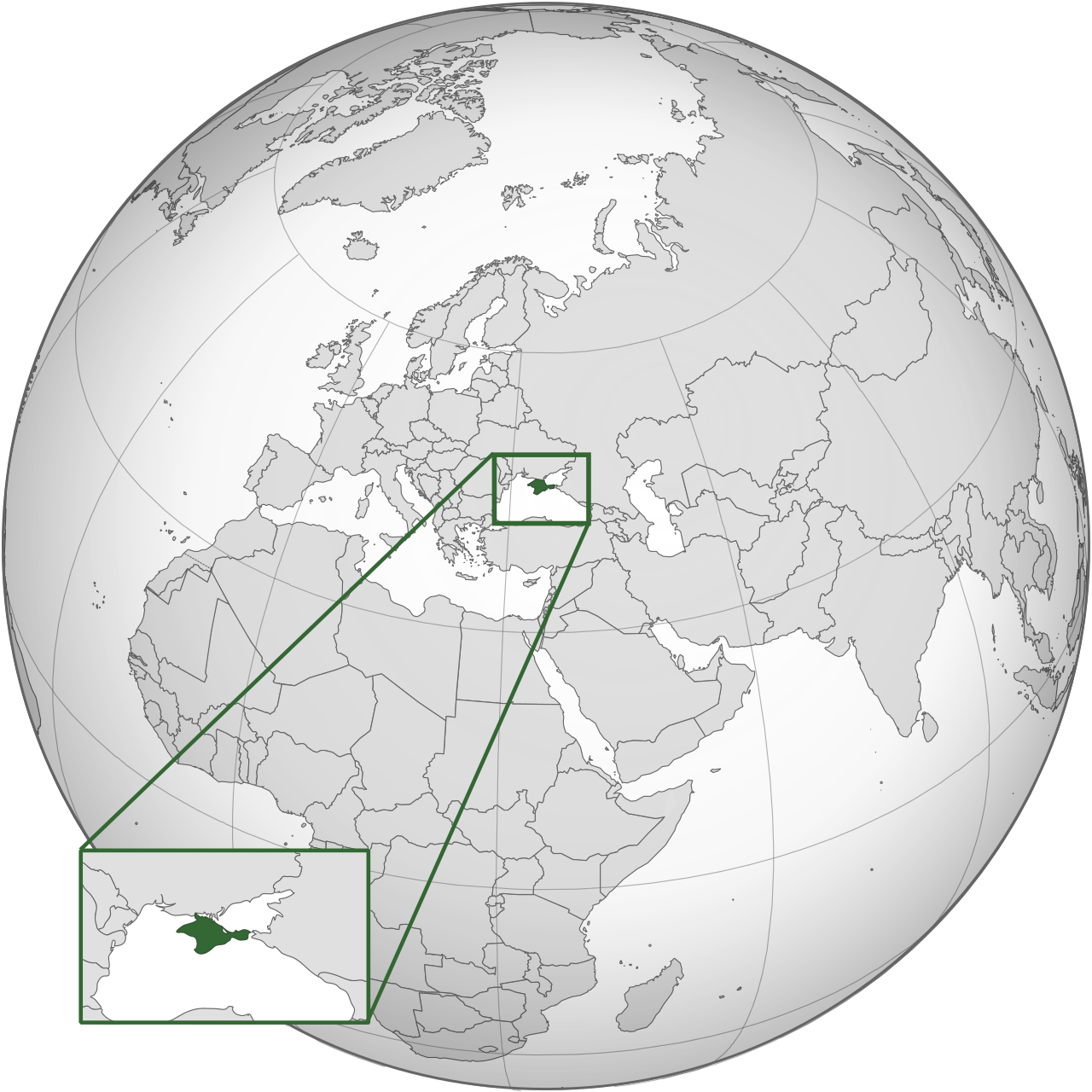
The Crimean Peninsula covers approximately 27,000 square kilometers and extends southward into the Black Sea from the southern coast of Ukraine. Connected to the mainland by the 5-to-7-kilometer-wide Perekop Isthmus, it is bordered by the Black Sea to the west and south and the Sea of Azov to the east, with the Kerch Strait separating it from Russia's Taman Peninsula.
Introduction
Crimea's geography is divided into three distinct zones: the flat northern steppe that makes up roughly 75% of the peninsula, the central foothills, and the dramatic Crimean Mountains along the southern coast. This southern strip enjoys a Mediterranean microclimate that has made it a coveted resort destination since the days of the Russian Empire.

Geography & Extent
- Area: ~27,000 km²
- Length: ~320 km east to west
- Width: ~200 km north to south
- Highest Point: Roman-Kosh, 1,545 m
The Crimean Mountains run parallel to the southern coast for approximately 150 kilometers, rising abruptly from the Black Sea to form dramatic cliff faces and sheltered bays. Roman-Kosh, the highest peak at 1,545 meters, anchors the main ridge. The mountains trap warm Mediterranean air along the coast, creating a narrow subtropical zone while the interior remains continental steppe.
The northern three-quarters of the peninsula is flat, semi-arid steppe averaging only 20 to 40 meters above sea level. The Sivash, or "Putrid Sea," is a system of shallow, hypersaline lagoons separating northern Crimea from the mainland, connected to the Sea of Azov. The Kerch Peninsula, a narrow eastern extension, reaches toward Russia across the 4.5-kilometer-wide Kerch Strait.
Climate & Landscape
- South Coast Climate: Mediterranean (mild winters, warm summers)
- Interior Climate: Continental steppe (hot summers, cold winters)
- Average South Coast Temp: 13°C annual; 24°C July, 4°C January
- Annual Rainfall: 300-600 mm (steppe), up to 1,000 mm (mountains)
The south coast of Crimea is one of the warmest regions in the broader Black Sea area. Sheltered by the Crimean Mountains from cold northern winds, the coast enjoys mild winters rarely dropping below freezing and warm summers moderated by sea breezes. This microclimate supports vineyards, olive groves, lavender fields, and Mediterranean-style gardens, including the famous Nikitsky Botanical Garden established in 1812.
The steppe interior has a markedly different climate with hot, dry summers exceeding 30°C and cold winters where temperatures can drop below -15°C. Rainfall is sparse on the steppe, averaging only 300-400 millimeters annually, making irrigation essential for agriculture. The mountains receive significantly more precipitation, much of it as snow, which feeds the peninsula's rivers and reservoirs.
Strategic Importance
- Key Port: Sevastopol (Black Sea naval base)
- Kerch Strait: Links Black Sea to Sea of Azov
- Bridge: Crimean Bridge, 19 km (opened 2018)
Sevastopol, situated on a deep natural harbor on the southwestern coast, has been one of the most strategically important naval bases in the world since the 18th century. The city served as the home port of the Russian and later Soviet Black Sea Fleet, and control of Sevastopol has been central to every major conflict involving Crimea.
The Kerch Strait, connecting the Black Sea to the Sea of Azov, is another critical chokepoint. The Crimean Bridge, completed in 2018 at 19 kilometers, is the longest bridge in Europe and provides a direct road and rail link between Crimea and mainland Russia. The strait has been a contested waterway controlling access to the Sea of Azov and the major port of Mariupol.
History & Culture
- Ancient Inhabitants: Cimmerians, Scythians, Greeks, Romans
- Greek Colonies: Chersonesus (Sevastopol), Panticapaeum (Kerch)
- Key Conflicts: Crimean War (1853-56), WWII siege, 2014 annexation
Crimea has been inhabited for over 100,000 years, with Neanderthal remains found in caves near the southern coast. Ancient Greeks established colonies along the coast from the 6th century BCE, including Chersonesus near modern Sevastopol, now a UNESCO World Heritage Site. The Bosporan Kingdom, centered on the Kerch Strait, was one of the longest-lasting Hellenistic states.
The Crimean War of 1853-1856, fought primarily on the peninsula, pitted Russia against an alliance of Britain, France, and the Ottoman Empire. The Siege of Sevastopol lasted 349 days and became one of the first conflicts documented by war correspondents and photographers. During World War II, Crimea was occupied by Nazi Germany for nearly three years, and the Yalta Conference of 1945 was held at Livadia Palace on the south coast.
Natural Resources
- Agriculture: Wheat, sunflowers, vineyards, lavender
- Wine Production: Massandra, Inkerman (since 19th century)
- Tourism: Beach resorts, historic sites, nature reserves
Crimea's southern coast has been a wine-producing region since Greek antiquity. The Massandra Winery, founded in 1894 by Prince Lev Golitsyn, houses one of the largest collections of vintage wines in the world, with over one million bottles in its cellars. Crimean wines, particularly sweet muscats and ports, were prized across the Russian Empire.
Tourism has historically been the south coast's primary economic activity. Yalta, Alushta, and Sudak attracted millions of visitors annually during the Soviet era, when Crimea served as the USSR's premier vacation destination. The peninsula's nature reserves protect remnant forests of Crimean pine and juniper on the mountain slopes, while the steppe supports populations of steppe eagles, bustards, and other grassland species.
Key Facts
- The Crimean Peninsula covers ~27,000 km² and is connected to the mainland by the narrow Perekop Isthmus.
- Roman-Kosh at 1,545 m is the highest peak in the Crimean Mountains.
- Sevastopol has been a major naval base since the 18th century.
- The Crimean Bridge (19 km) is the longest bridge in Europe.
- Ancient Greek colonies on Crimea date back to the 6th century BCE.
Fun Facts
- The Crimean War gave us the Charge of the Light Brigade, Florence Nightingale's nursing reforms, and the cardigan sweater (named after Lord Cardigan).
- Crimea's Massandra Winery holds over one million bottles, including wines dating to the 18th century.
- The Yalta Conference in 1945, where Churchill, Roosevelt, and Stalin shaped the postwar world, took place at Livadia Palace on Crimea's south coast.
- The Sivash lagoons on Crimea's north coast are so salty they were historically used for commercial salt harvesting.
Final Thoughts
The Crimean Peninsula is a land where geography has driven history for millennia. Its warm southern coast, deep-water harbors, and position commanding the Black Sea have made it one of the most contested territories in European history. From Greek colonists and Mongol khans to Cold War superpowers and modern geopolitical crises, Crimea's strategic value has never diminished.
Test Your Knowledge!
Think you know the world's peninsulas and capes? Try our interactive geography quiz!
Play Geographic Features Quiz →