

Blue and yellow flags are flown by countries on every inhabited continent. Countries with blue and yellow flags include Sweden, Ukraine, Palau, Bosnia and Herzegovina, Kazakhstan, Nauru, and several others. These striking colors often symbolize the sky and sun, water and gold, or loyalty and generosity.
The combination of blue and yellow creates some of the most visually distinctive national flags in the world. While less common than red and white pairings, blue and yellow flags carry powerful symbolism tied to natural elements and national ideals. Here is a comprehensive list of every country whose flag prominently features blue and yellow.
Sweden — The Classic Scandinavian Cross
Sweden's flag features a golden-yellow Nordic cross on a blue field. The design dates back to at least the 16th century and was inspired by the Danish Dannebrog and the Swedish coat of arms (three gold crowns on a blue background). The off-center cross follows the Scandinavian cross tradition. Blue and yellow have been Sweden's national colors since the reign of King Magnus III in the 1270s, making this one of the oldest blue and yellow flags still in use. The flag was formally adopted in its current design in 1906.
Ukraine — Sky Over Wheat Fields
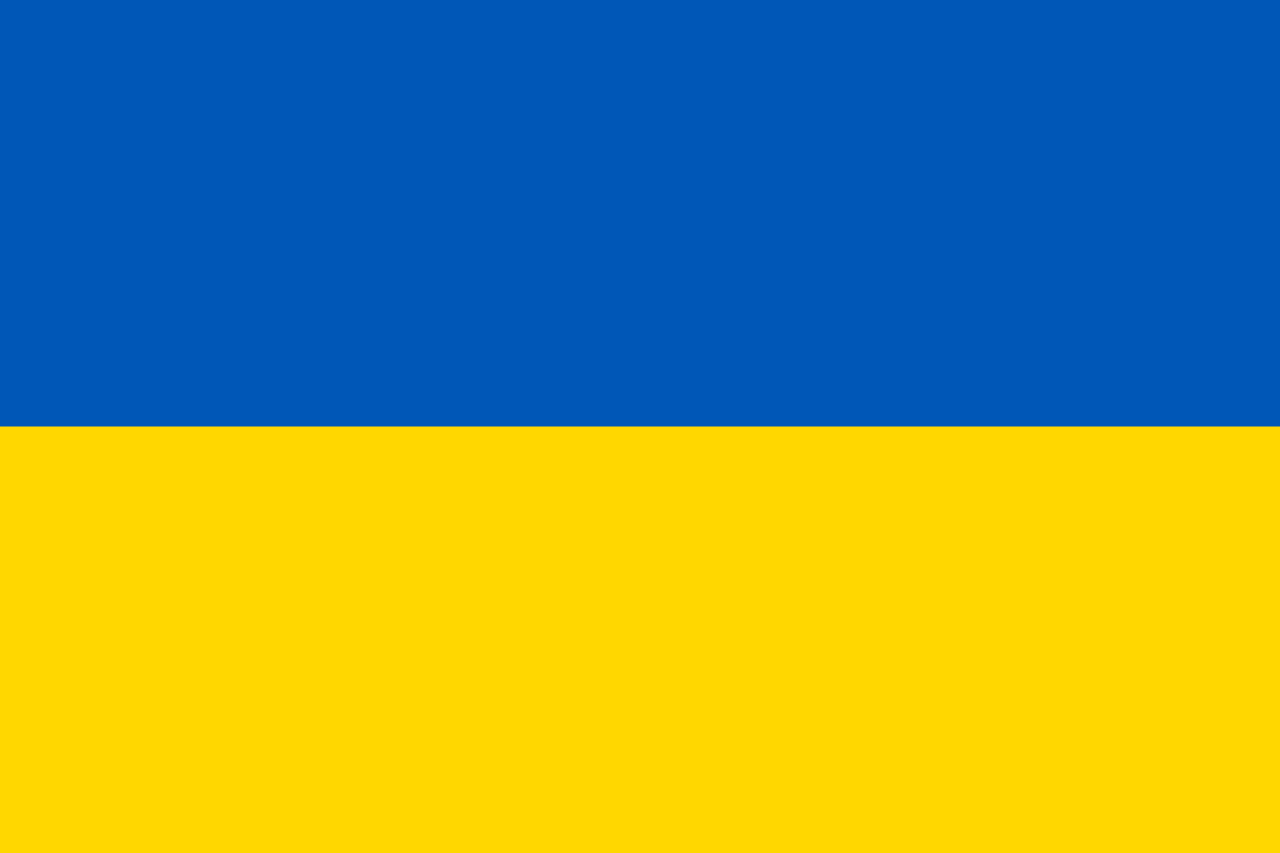
Ukraine's flag is a simple horizontal bicolor: blue on top and yellow on the bottom. The blue represents the sky, while the yellow symbolizes the vast wheat fields that have made Ukraine one of the world's breadbaskets. The blue-and-yellow color combination has been associated with Ukrainian identity since the medieval period and the Galicia-Volhynia kingdom. The flag was first adopted in 1918 during Ukraine's brief independence and was restored in 1992 after the dissolution of the Soviet Union.
Palau — Moon on Ocean Blue
Palau's flag features a golden-yellow circle slightly off-center on a light blue field. The blue represents the Pacific Ocean that surrounds this island nation, while the yellow circle symbolizes the full moon, which is culturally significant in Palauan tradition. Palauans believe the full moon is the optimal time for fishing, harvesting, and celebrations. The flag was adopted in 1981 when Palau became a republic.
Bosnia and Herzegovina — Triangle and Stars
Bosnia and Herzegovina's flag features a blue field with a yellow right triangle and a row of white stars along the hypotenuse. The triangle represents the country's three constituent peoples (Bosniaks, Croats, and Serbs), while the stars symbolize Europe. The blue and yellow colors were chosen to reflect the flag of the European Union, representing Bosnia's European aspirations. The flag was adopted in 1998 after the Dayton Agreement.
Kazakhstan — Sun and Eagle on Sky Blue
Kazakhstan's flag is a sky-blue field with a golden sun and soaring eagle in the center, plus a decorative national ornamental pattern (koshkar-muiz) along the hoist side. The blue represents the sky and the Turkic peoples who have historically inhabited the region. The golden sun with 32 rays symbolizes abundance and prosperity, while the steppe eagle represents power and freedom. The flag was adopted in 1992 after independence from the Soviet Union.
Nauru — Star Below the Line
Nauru's flag features a blue field divided by a thin yellow horizontal stripe with a white twelve-pointed star in the lower hoist corner. The blue represents the Pacific Ocean, the yellow stripe symbolizes the equator, and the star's twelve points represent the island's twelve original tribes. The star's position below the yellow line indicates Nauru's location just south of the equator. The flag was adopted on independence day, January 31, 1968.
Barbados — Ultramarine and Gold
Barbados's flag features three vertical panels: ultramarine blue, gold (yellow), and ultramarine blue, with a black trident head centered on the gold band. The blue panels represent the sea and sky, the gold represents the sand of the island's beaches, and the broken trident symbolizes the break from colonial rule. The flag was adopted in 1966 when Barbados gained independence from the United Kingdom.
Kosovo — Blue Field With Gold Map
Kosovo's flag features a blue field with a gold silhouette map of Kosovo in the center, topped by an arc of six white stars representing its major ethnic communities. The blue and gold combination echoes European institutional symbolism. The flag was adopted in 2008 when Kosovo declared independence from Serbia.

European Union — Circle of Stars
While not a country, the European Union flag deserves mention as one of the most recognized blue and yellow flags worldwide. It features twelve gold stars in a circle on a blue field. The twelve stars represent solidarity and harmony among the peoples of Europe — the number was fixed at twelve regardless of the number of member states. The flag was adopted by the Council of Europe in 1955 and later by the European Economic Community in 1986.
Other Countries With Blue and Yellow Elements
Several more nations incorporate significant blue and yellow in their flags:
- Brazil: Green field with a large yellow diamond and a blue celestial globe — the yellow and blue are prominent elements.
- Colombia: Yellow, blue, and red horizontal tricolor — the top yellow band is the largest, covering half the flag.
- Ecuador: Similar to Colombia with yellow, blue, and red horizontal bands plus a coat of arms.
- Venezuela: Yellow, blue, and red horizontal tricolor with an arc of white stars on the blue band.
- Romania: Blue, yellow, and red vertical tricolor.
- Chad: Blue, yellow, and red vertical tricolor (nearly identical to Romania).
- Moldova: Blue, yellow, and red vertical tricolor with a coat of arms.
- Andorra: Blue, yellow, and red vertical tricolor with a coat of arms.
The Symbolism of Blue and Yellow in Flags
Blue and yellow appear together on national flags for several interconnected reasons. In heraldic tradition, blue (azure) symbolizes loyalty, truth, and vigilance, while yellow or gold (or) represents generosity, elevation, and the sun. The pairing is also rooted in nature — blue for sky and sea, yellow for sun, sand, or grain. Many blue and yellow flags appear in Northern Europe and Central Asia, where these colors connect to cultural identities tied to vast skies and golden landscapes.
Final Thoughts
Blue and yellow flags may be fewer in number than red and white flags, but they are among the most striking and memorable in the world. From Sweden's centuries-old cross to Ukraine's symbolic sky-over-wheat, these flags demonstrate how two complementary colors can represent entirely different histories, geographies, and national identities while sharing a common visual boldness.
Test Your Knowledge!
Think you know your world geography? Try our interactive quiz!
Play Geography Games →