

At least 14 national flags use only two colors: Indonesia and Monaco (red and white), Poland (white and red), Ukraine (blue and yellow), Japan (white and red), Bangladesh (green and red), San Marino (white and blue), Nigeria (green and white), Argentina (light blue and white), Austria and Peru (red and white), Bahrain (red and white), and Qatar (maroon and white).
The Power of Just Two Colors
Good flag design rewards simplicity. Vexillologists often advise using no more than three colors, and a small group of countries takes that principle to its logical limit with just two. Two-color flags are easy to remember, easy to draw from memory, and instantly readable from a distance, which is exactly what a flag is supposed to be.
Most two-color flags are horizontal or vertical bicolors, though a few add a single central emblem or a decorative border. Interestingly, several of these flags are nearly identical to one another, which has caused real confusion at international events. The two-color flags below are grouped by their color pairing.
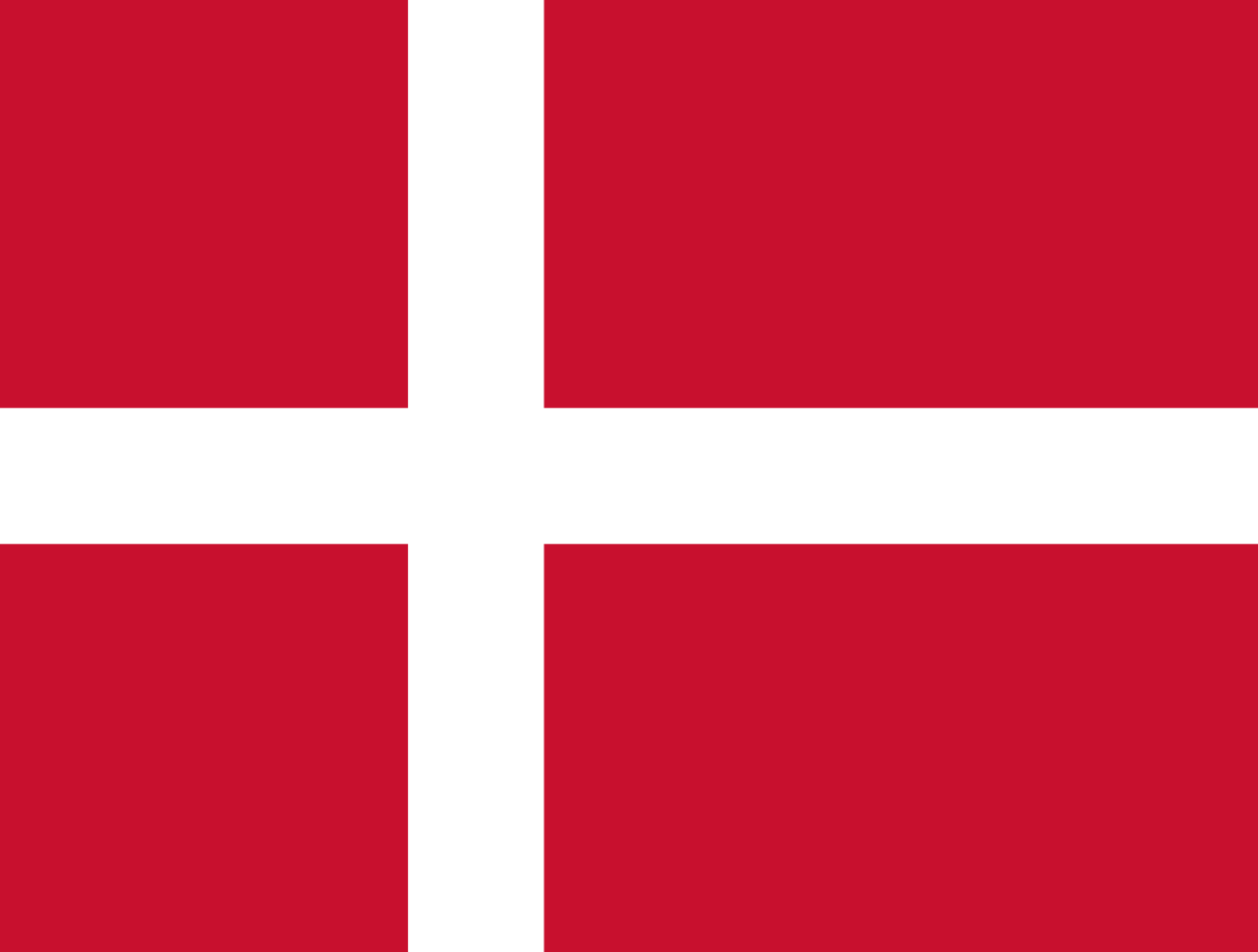
Red and White Flags
- Indonesia: Two horizontal bands, red over white. Known as Sang Saka Merah-Putih, or "the lofty bicolor red and white."
- Monaco: Two horizontal bands, red over white — visually the same as Indonesia's flag but with slightly different proportions, a famous case of near-identical flags.
- Poland: Two horizontal bands, white over red, the reverse arrangement of Indonesia and Monaco.
- Japan: A crimson-red disc, the Hinomaru or "circle of the sun," centered on a white field.
- Austria: Red, white, red horizontal bands, one of the oldest continuously used designs in the world.
- Peru: Red, white, red vertical bands; the plain civil flag uses only these two colors without the coat of arms.
- Bahrain: White and red divided by a serrated line of five white points, representing the five pillars of Islam.
Other Two-Color Flags
- Ukraine: Equal horizontal bands of blue over yellow, symbolizing blue sky above golden wheat fields.
- Bangladesh: A red disc set slightly toward the hoist on a green field, the red for the sun and those who died for independence, the green for the land.
- San Marino: White over blue horizontal bands; the plain civil flag omits the coat of arms, leaving just two colors.
- Nigeria: Green, white, green vertical bands, the green for the land and the white for peace and unity.
- Argentina: Light blue, white, light blue horizontal bands; the civil flag uses only the two colors without the Sun of May.
- Qatar: Maroon and white divided by a nine-point serrated line. The distinctive maroon color developed from red dye that darkened in the sun.
Why Two-Color Flags Work
Two-color flags succeed because they follow the core rules of good vexillology: keep it simple and make it distinctive. With only two colors and a clean layout, these flags are legible from far away and easy to reproduce at any size, from a lapel pin to a stadium banner. The trade-off is the risk of duplication — Indonesia and Monaco share essentially the same design, and Poland is the same two colors reversed. That similarity is the price of simplicity, and most of these nations consider it well worth paying.
Questions and Answers
What is the simplest national flag in the world?
Many consider Japan's flag among the simplest: a single red disc on a plain white field, using just two colors and one geometric shape. Plain bicolors like Indonesia's and Ukraine's are similarly minimal.
Which two national flags look almost identical?
Indonesia and Monaco both use two horizontal bands of red over white and differ mainly in their proportions. This near-identical design is one of the most cited examples of flag similarity in the world.
Do two-color flags ever include an emblem?
Some do. Japan's flag has a red disc and Bangladesh's has an off-center red circle, but both still use only two colors. Others, like the civil flags of Peru, Argentina, and San Marino, drop their coats of arms to leave a plain bicolor.
Test Your Knowledge!
Think you know your world geography? Try our interactive quiz!
Play Geography Games →