
Hindi has official status in two countries: India, where it is one of two official languages of the union government, and Fiji, where Fiji Hindi has been official since 1997. Around 345 million people speak it as a first language and perhaps 600 million in total, which puts it third in the world behind English and Mandarin. India has no national language, and Hindi is not one — a distinction the Indian courts have had to state repeatedly.
-
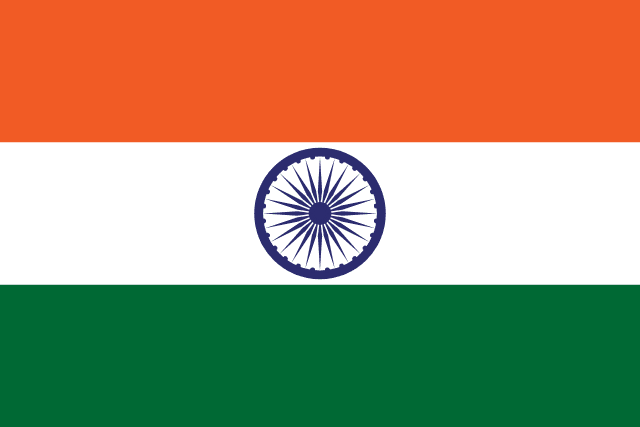 India
official language of the union
India
official language of the union
-
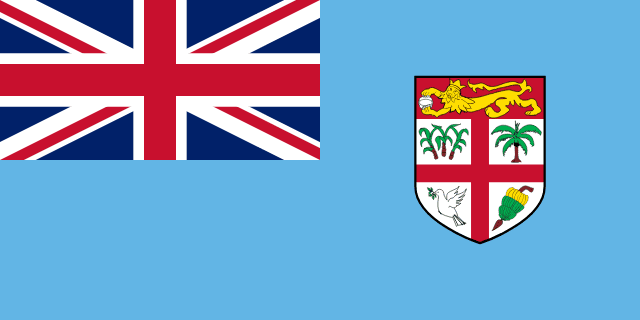 Fiji
Fiji Hindi, official since 1997
Fiji
Fiji Hindi, official since 1997
-
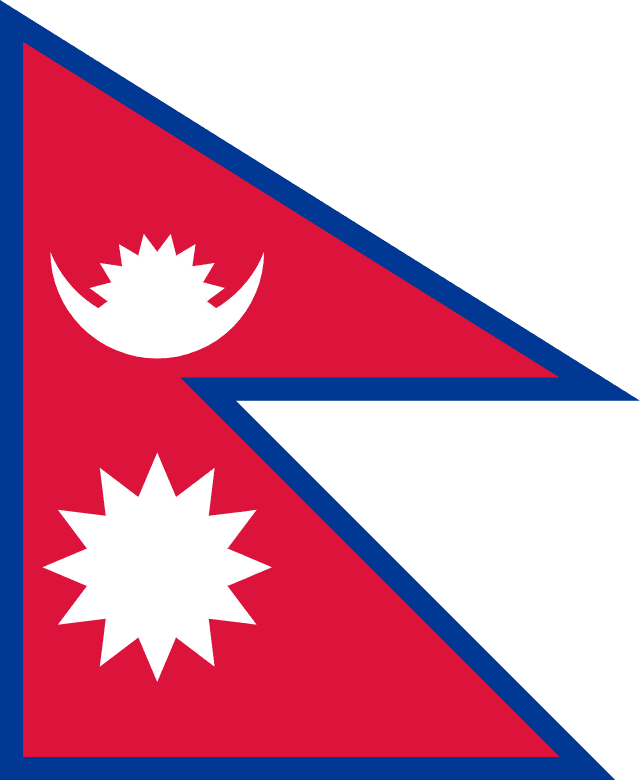 Nepal
widely spoken, not official
Nepal
widely spoken, not official
-
 Mauritius
taught in schools, ancestral language
Mauritius
taught in schools, ancestral language
-
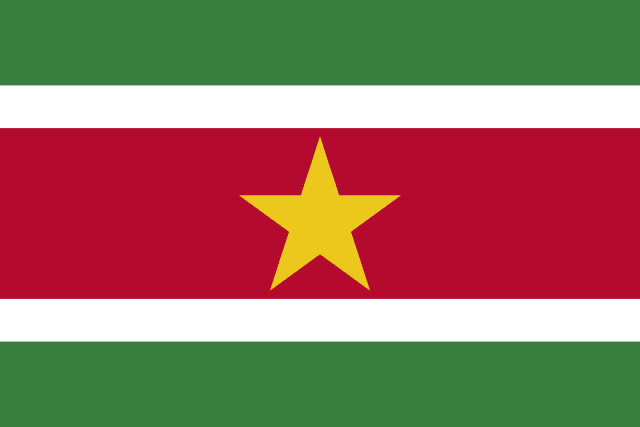 Suriname
Sarnami Hindustani
Suriname
Sarnami Hindustani
-
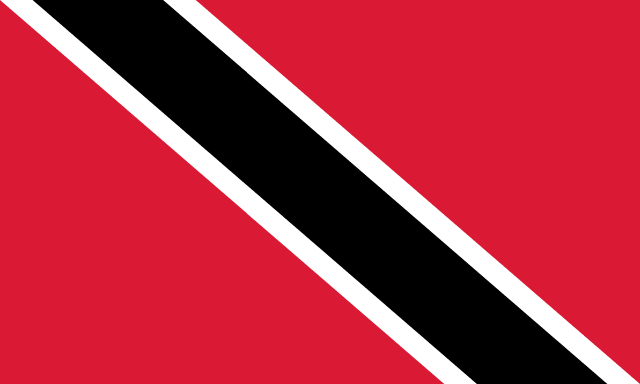 Trinidad and Tobago
Caribbean Hindustani, largely ceremonial
Trinidad and Tobago
Caribbean Hindustani, largely ceremonial
India Has No National Language
Article 343 of the Indian constitution makes Hindi in Devanagari script the official language of the union, with English continuing for official purposes. It does not say national language, and no Indian law does.
The Gujarat High Court ruled explicitly in 2010 that India has no national language. The point matters politically: Hindi is a first language for around 44% of Indians, which means a majority of the country does not speak it natively, and several states have resisted its promotion for seventy years.
The Eighth Schedule of the constitution lists 22 scheduled languages — including Bengali, Telugu, Marathi, Tamil, Urdu, Gujarati, Kannada, Malayalam, Odia, Punjabi and Assamese — each of which may be used in official business in the states where it dominates. States set their own official languages, and 22 of them do not use Hindi.
The Fifteen-Year Deadline That Never Expired
The constitution as adopted in 1950 provided that English would continue for official purposes for fifteen years, after which Hindi would take over. That deadline fell in 1965, and the approach of it produced serious unrest in Madras State, now Tamil Nadu.
The anti-Hindi agitations of January 1965 involved student protests, riots, several self-immolations and police firings, with a death toll usually put around seventy. The central government backed down.
The Official Languages Act was amended in 1967 to guarantee that English would continue indefinitely until every state that had not adopted Hindi agreed otherwise — effectively a permanent veto held by the non-Hindi states. English remains an official language of the union for that reason, and the three-language formula in schools has been contested ever since.
The Hindi Belt
Hindi as a first language is concentrated in a contiguous block across northern and central India: Uttar Pradesh, Bihar, Madhya Pradesh, Rajasthan, Haryana, Jharkhand, Chhattisgarh, Uttarakhand, Himachal Pradesh and Delhi. Uttar Pradesh alone has more people than Brazil.
What the census counts as Hindi in that belt is a much broader category than the standard language. Bhojpuri, Awadhi, Magahi, Chhattisgarhi, Marwari, Haryanvi, Braj and dozens of others are recorded as Hindi in census returns despite differing substantially, and Bhojpuri alone would rank among the world's larger languages if counted separately.
That accounting choice is why Hindi speaker figures vary so widely between sources. Counting the standard language alone gives a considerably smaller number than the census total, and campaigns to have Bhojpuri and Rajasthani added to the Eighth Schedule have been running for decades.
Fiji, and How Hindi Reached the Pacific
Fiji is the only country outside India where a form of Hindi is an official language. Fiji Hindi descends from the speech of indentured labourers brought from eastern Uttar Pradesh and Bihar between 1879 and 1916 under the girmit system.
The variety that developed is based mainly on Awadhi and Bhojpuri rather than standard Hindi, with substantial English and Fijian borrowing. Speakers of standard Hindi find it partially intelligible; Fiji Hindi speakers generally understand Bollywood Hindi through exposure.
The 1997 constitution made Fijian, English and Hindi official. Indo-Fijians were a majority of the population in the 1960s and have fallen to under 40% after emigration following the coups of 1987 and 2000, so the language's position there is not secure.
The Other Girmit Languages
The same indenture system carried Hindustani to Mauritius, Suriname, Trinidad and Tobago, Guyana, South Africa and Réunion. Each produced its own variety, and most are now in steep decline or already effectively ceremonial.
Sarnami Hindustani in Suriname is the healthiest of them, still spoken at home by a substantial part of the Indo-Surinamese population and audible in Dutch cities with Surinamese communities. Mauritius teaches Hindi as an ancestral language in schools and around a third of the population claims it, though Mauritian Creole is what people actually speak.
In Trinidad and Guyana, Caribbean Hindustani has largely gone out of daily use within three generations, surviving in religious contexts, wedding vocabulary and chutney music. Fiji is the exception that held on, because the Indo-Fijian population remained rural and concentrated for much longer.
Hindi and Urdu Are One Spoken Language
Spoken colloquially, Hindi and Urdu are the same language. The grammar is identical, the core vocabulary is shared, and speakers from Delhi and Lahore understand each other without difficulty. Linguists usually call the shared spoken form Hindustani.
They diverge in writing and in register. Hindi uses Devanagari and draws formal vocabulary from Sanskrit; Urdu uses a Perso-Arabic script and draws it from Persian and Arabic. At the technical and literary end the two become genuinely difficult for each other's speakers, while at the conversational end they are indistinguishable.
The split is a product of the nineteenth century and hardened at Partition. Counted together as Hindustani, the language would rank second or third in the world; counted apart, Hindi is third and Urdu around tenth. Both counts are defensible and neither is neutral.
Devanagari
Hindi is written in Devanagari, an abugida in which each consonant carries an inherent a vowel that is modified by diacritics. It descends from the Brahmi script by way of Nagari, and the same system, with variations, writes Sanskrit, Marathi, Nepali, Konkani and several other languages.
The distinctive horizontal line running along the top of the letters, the shirorekha, connects the characters of a word and is one of the easiest ways to identify the script at a glance. Devanagari is written left to right and is largely phonetic, with a consistent one-to-one relationship between symbol and sound.
India's constitution specifies Devanagari for official Hindi and also specifies that the international form of Indian numerals is used for official purposes, rather than the Devanagari digits — a small clause with a long history behind it.
Where the Diaspora Speaks It
Outside India and Fiji, the largest Hindi-speaking populations are in Nepal, the Gulf states, the United States, the United Kingdom, Canada, Australia and South Africa. Nepal is the biggest by some distance: Hindi is not official there but is widely understood, particularly in the Terai.
The Gulf communities are the fastest growing. Several million Indian workers in the UAE, Saudi Arabia, Qatar, Kuwait, Oman and Bahrain use Hindi and Urdu as a common language across regional origins, and Gulf Hindi radio and print media are substantial.
Hindi is taught at universities across Europe, North America and East Asia, and India's government funds chairs abroad through the Indian Council for Cultural Relations. The World Hindi Conference has met periodically since 1975, and 14 September is observed in India as Hindi Diwas.
Bollywood Did the Soft Power
The Hindi film industry has spread the language far beyond where any government policy reached. Hindi cinema has had large audiences in Russia and the former Soviet republics since the 1950s, across the Middle East and North Africa, in Nigeria's Hausa north, in Indonesia and in Afghanistan.
The language of those films is not formal Hindi. It is Hindustani, mixing freely with Urdu and English, and the dialogue that reaches Cairo or Tashkent is closer to Delhi street speech than to the Sanskritised register of All India Radio news bulletins.
The effect on the language inside India is the same. Film Hindi has spread a common colloquial standard across the country faster than schooling did, and it is the main reason a Tamil or Bengali speaker who has never studied Hindi can often follow a conversation in it.
Learning It
The US Foreign Service Institute places Hindi in Category III at roughly 1,100 class hours for English speakers, alongside Russian, Turkish and Greek. That rating reflects grammar and script rather than sound.
The obstacles are the retroflex consonants, which English lacks and which distinguish meaning; the aspirated and unaspirated pairs, where a puff of air changes the word; and a case-marking system that puts the verb at the end and requires split ergativity in the past tense — the subject of a completed transitive action takes a special marker.
Working the other way, Hindi vocabulary contains a great deal of English, more each year, and the script is learnable in weeks. For the wider context, the position of Urdu across Pakistan and India and the count of countries in Asia show how unusual it is for a language this large to be official in so few places.