
Yes. The Moon's total surface area is larger than Africa. The Moon has about 37.94 million km² of surface area, while Africa covers about 30.37 million km². The Moon is roughly 1.25 times the surface area of Africa — about 25% larger. The Moon's surface is larger than every continent on Earth except Asia (44.58M km²).
The Short Answer
Africa is Earth's second-largest continent. The Moon is a relatively small celestial body — only about 27% of Earth's diameter. Yet the Moon's spherical surface adds up to more area than Africa. This comparison is one of the more surprising scale facts in geography and astronomy.
To put it in perspective: the Moon's surface area is bigger than Africa, North America, South America, Europe, Antarctica, or Australia. Only Asia (at 44.58 million km²) exceeds the Moon's surface area. The Moon is bigger than the entire Western Hemisphere's land if you exclude Antarctica.
The Real Numbers
- Moon total surface area: 37,940,000 km² (14,650,000 sq mi)
- Africa total area: 30,370,000 km² (11,725,000 sq mi)
- Difference: 7,570,000 km² — almost the size of Australia
- Ratio: Moon is about 1.25× the surface area of Africa
The Moon's surface area is calculated as 4πr² where r is 1,737.5 km — the Moon's mean radius. The result (37.94 million km²) is the total 3D surface of the entire Moon, including both the side facing Earth and the side facing away.
How Does This Compare to Other Continents?
Moon vs each continent:
- Asia (44.58M km²): 17% bigger than the Moon
- Africa (30.37M km²): The Moon is 25% bigger
- North America (24.71M km²): The Moon is 54% bigger
- South America (17.84M km²): The Moon is 113% bigger (more than 2×)
- Antarctica (14.20M km²): The Moon is 167% bigger
- Europe (10.18M km²): The Moon is 273% bigger
- Australia/Oceania (8.56M km²): The Moon is 343% bigger
The Moon's surface area exceeds 6 of the 7 continents. Only Asia exceeds the Moon, and only by 17%. This is a counterintuitive but factually accurate scale comparison.
The Moon's Geography
The Moon's 37.94 million km² is divided between two main types of terrain:
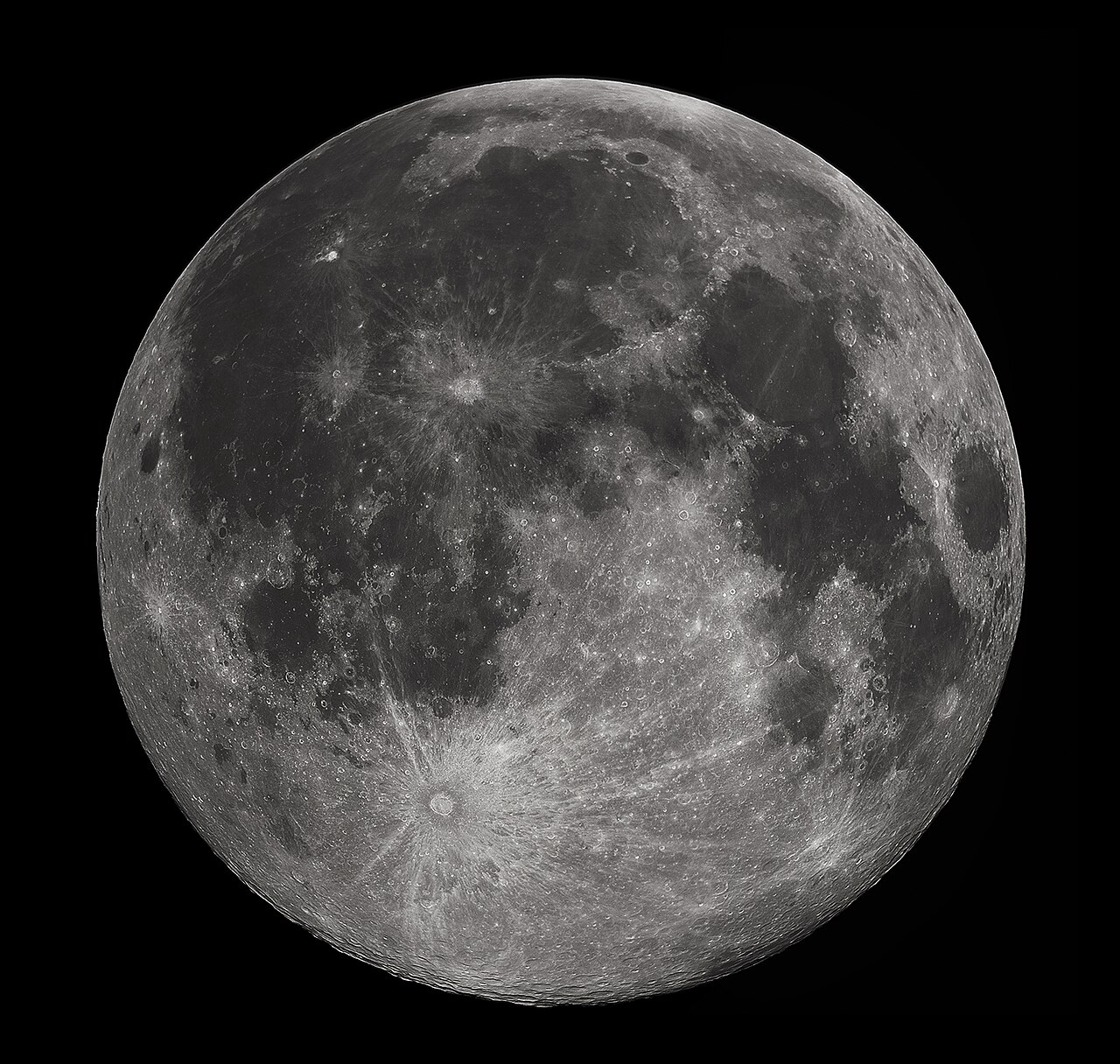
- Maria (singular: mare): Dark flat plains of solidified basalt lava. These are the dark patches you see on the Moon. Make up about 17% of the surface. Notable maria include Mare Tranquillitatis (Sea of Tranquility, where Apollo 11 landed), Mare Imbrium (Sea of Showers), and Oceanus Procellarum (Ocean of Storms).
- Highlands: Light-colored, heavily cratered terrain. Make up about 83% of the surface. The highlands are older than the maria — they preserve the early history of the Moon when it was bombarded heavily by meteorites.
The Moon has notable features including the Tycho crater (one of the most prominent young craters), the Sea of Tranquility, and the South Pole-Aitken Basin — one of the largest impact craters in the solar system at 2,500 km across.
Africa's Geography
Africa's 30.37 million km² contains tremendous geographic variety:
- The Sahara Desert: Largest hot desert (9.2 million km²)
- The Congo Basin: Second-largest tropical rainforest
- The East African Rift: Contains most of Africa's major lakes (Victoria, Tanganyika, Malawi)
- The Sahel: Transitional savanna south of the Sahara
- The Atlas Mountains: Northwestern Africa
- The Kalahari and Namib Deserts: Southern Africa
- The Nile River: The world's longest (or second-longest, depending on measurement)
- Kilimanjaro: Africa's highest peak (5,895 m)
Africa has 54 internationally recognized countries — by far the most of any continent. The continent's population is about 1.46 billion people, the second-largest after Asia.
Lunar Exploration
The Moon has been visited by humans 6 times during the Apollo program (1969-1972). Twelve astronauts have walked on the lunar surface, exploring small portions of the near side. The Apollo missions returned 382 kg of lunar samples to Earth. No human has been to the Moon since Apollo 17 in December 1972.
Robotic missions to the Moon continue. The US is planning the Artemis program to return humans to the Moon by the late 2020s. China has landed multiple robotic missions and plans crewed lunar missions in the 2030s. India's Chandrayaan-3 successfully landed near the lunar south pole in 2023.
African Exploration vs Lunar Exploration
Despite Africa being smaller than the Moon by surface area, Africa is dramatically more "explored" by humans. The continent has been continuously inhabited by humans for the entirety of human history — Africa is where modern humans evolved. Today Africa is mapped in detail, with hundreds of millions of people living across its territory.
The Moon, by contrast, has been visited only briefly by 12 humans in total. Most of the lunar surface has never been touched by human feet. Detailed maps from satellites cover much of the Moon, but ground exploration is extremely limited.
Population
This comparison is even more lopsided:
- Africa population: ~1,460,000,000
- Moon population: 0
The Moon has no permanent inhabitants and has never had any. Brief visits totaling about 80 person-days have been made by Apollo astronauts. Africa has 1.46 billion people across 54 countries with thousands of years of continuous habitation.
Why the Surface Area Comparison Is Surprising
People often underestimate the Moon's surface area because:
- The Moon looks small from Earth: It appears about the same size as the sun in our sky (a coincidence of distance and size).
- Moon's diameter is intuitive but underwhelming: 3,475 km sounds modest compared to Earth's diameter (12,742 km).
- Continents look bigger on maps: Mercator and other projections often inflate the apparent size of continents while we have no visual feel for the Moon's curved 3D surface.
- The math of spherical surface area: A sphere's area grows by r², so even a "small" body has substantial total surface when you account for both sides.
Key Facts
- The Moon's surface area is about 1.25× the area of Africa.
- The Moon's surface exceeds 6 of the 7 continents — only Asia is bigger.
- The Moon's diameter (3,475 km) is much smaller than Earth's (12,742 km).
- Africa has 1.46 billion people; the Moon has 0.
- Only 12 humans have ever walked on the Moon (1969-1972).
Fun Facts
- The Moon is moving away from Earth at about 3.8 cm per year due to tidal effects.
- The Moon's surface is older than most of Africa's — many lunar features date to over 3 billion years ago.
- If you could lay all of Africa flat on the Moon, you'd still have 7.5 million km² of lunar surface uncovered — almost the size of Australia.
- The Moon's gravity is just 16.6% of Earth's — so a 100-kg human would weigh just 16.6 kg on the Moon.
- African and lunar geography both feature ancient, cratered, and weathered terrain — the Moon's craters date back billions of years, while Africa's ancient cratons are some of the oldest rocks on Earth.
- You could fit the entire population of Africa (1.46 billion people) onto the Moon's surface with each person having about 26,000 m² to themselves — about the size of a typical American suburban neighborhood.
- The Apollo missions returned 382 kg of lunar samples — analyzing these has revealed details about the Moon's formation, age, and geology.
The Moon's Origin
The Moon is believed to have formed about 4.5 billion years ago, when a Mars-sized object (called "Theia") collided with the early Earth. The debris ejected from this impact coalesced into the Moon over time. This "Giant Impact Hypothesis" is supported by analysis of lunar samples returned by Apollo missions, which show chemistry similar to Earth's mantle.
Africa, by contrast, is part of Earth — the continent has been around for billions of years and was the original landmass where modern humans evolved (about 200,000 years ago). The two — the Moon and Africa — share a common history but in completely different ways. The Moon formed from material that once was part of Earth (and possibly the proto-Africa); Africa has been the cradle of humanity for hundreds of thousands of years.
The Bottom Line
The Moon's surface area is bigger than Africa — by about 25%. This is one of geography's more surprising scale comparisons. The Moon may look small in the sky and is only about 27% of Earth's diameter, but its spherical surface adds up to more area than Africa, North America, South America, Antarctica, Europe, or Australia. Only Asia exceeds the Moon, and only by 17%. The comparison reminds us that 3D surfaces (like spheres) can have much more area than they appear to from any single viewpoint.