
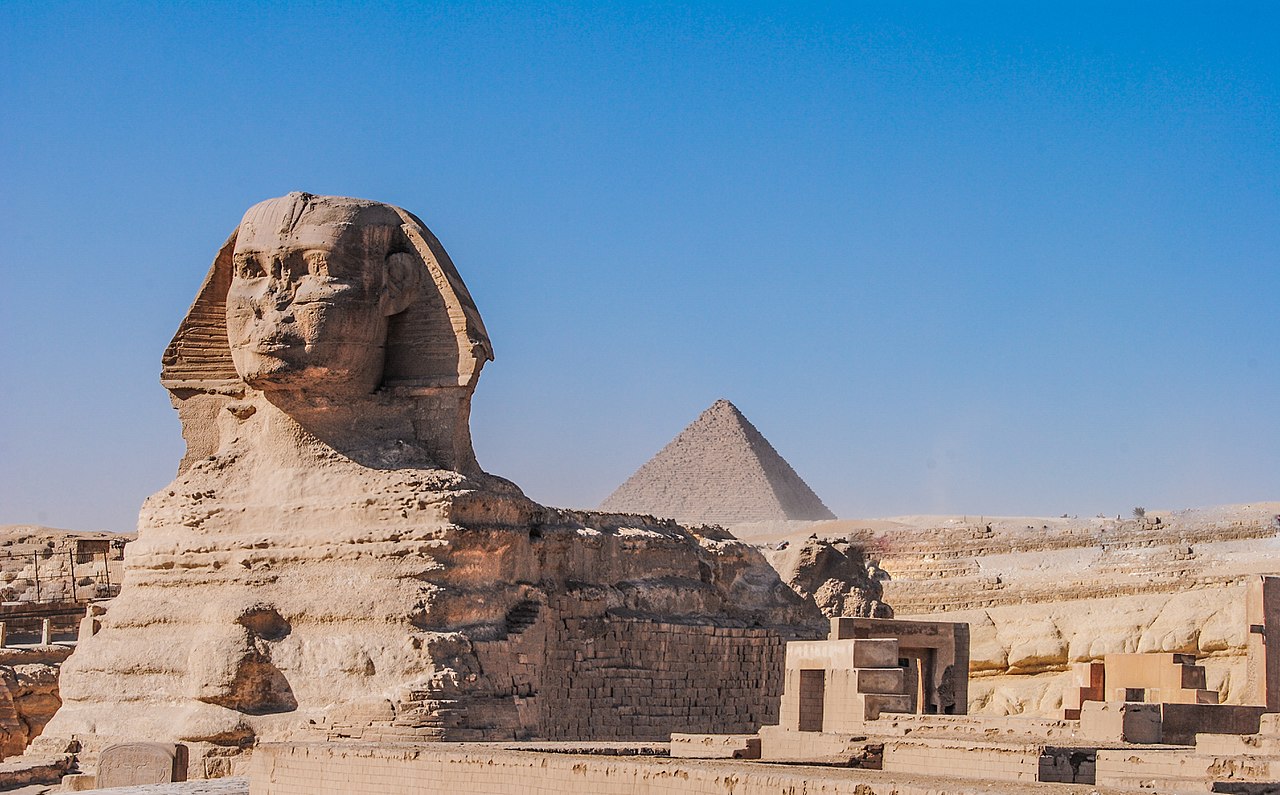
The Great Sphinx of Giza is one of the most famous monuments in the world — a 4,500-year-old statue of a mythical creature with a human head and a lion's body. The Statue of Liberty is one of the most recognized monuments of the modern world. So how do they compare in height?
The Short Answer
No, the Statue of Liberty is much taller than the Sphinx. The Great Sphinx is about 20 m (66 ft) tall. The Statue of Liberty stands 93 m (305 ft) from ground level to the tip of the torch. The Statue is approximately 4.65 times taller than the Sphinx.
Side-by-Side Numbers
- Great Sphinx height: 20 m (66 ft)
- Great Sphinx length: 73 m (240 ft)
- Statue of Liberty total height: 93 m (305 ft) including pedestal
- Statue (statue only): 46 m (151 ft) from heel to torch
- Difference: Statue is 73 m taller
- Ratio: Statue is ~4.65× the height of the Sphinx
The Great Sphinx
The Great Sphinx of Giza is a limestone statue of a mythical creature with the head of a human (most likely the pharaoh Khafre) and the body of a lion. It sits on the Giza Plateau on the western bank of the Nile, near the three pyramids and the city of Cairo. The statue is about 73 m long, 20 m tall, and 19 m wide — making it one of the largest monolithic sculptures ever created.
The Sphinx is believed to have been built around 2500 BCE during the reign of Pharaoh Khafre, son of Khufu (who built the Great Pyramid). It was carved from a single mass of limestone bedrock. The face has been damaged over thousands of years — the nose is famously missing (likely deliberately removed in the 14th century by Muhammad Sa'im al-Dahr, though the popular story blaming Napoleon's soldiers is mostly false). The Sphinx was buried in desert sand for much of its history; archaeological work in the 1920s and 1930s by Émile Baraize finally excavated it fully.
The Statue of Liberty
The Statue of Liberty was a gift from the French people to the United States, completed in 1886. The statue was designed by sculptor Frédéric Auguste Bartholdi, and the internal iron framework was engineered by Gustave Eiffel (the same engineer who would design the Eiffel Tower three years later). Bartholdi modeled Liberty's face on his mother. The statue is constructed of about 31 tons of copper sheets just 2.4 mm thick, draped over the iron skeleton.
The pedestal — designed by American architect Richard Morris Hunt — adds 47 m to the statue's height, with the statue itself standing about 46 m from heel to torch. Liberty Island, where the statue stands in New York Harbor, was named Bedloe's Island until 1956. About 4.5 million people visit the Statue of Liberty National Monument annually.
Construction
The two monuments showcase radically different construction techniques across 4,400 years. The Sphinx was carved from a single mass of bedrock — workers used copper chisels and stone tools to shape the limestone in place. The work was likely done by skilled craftsmen and laborers organized by the Old Kingdom Egyptian state, taking years if not decades to complete. The Statue of Liberty represents 19th-century engineering at its peak. Eiffel's iron skeleton supports thin copper plates riveted together. The statue was assembled in France, disassembled into 350 pieces, shipped across the Atlantic, and reassembled on Liberty Island. The whole project took about 9 years from initial concept to dedication.
Symbolism
Both monuments carry deep symbolic weight. The Sphinx represented royal power and divine kingship in ancient Egyptian religion. The lion body symbolized strength and protection (Egyptian iconography often depicted pharaohs as lions); the human head represented intelligence and the pharaoh's connection to divine wisdom. Sphinxes guarded sacred sites across Egypt and later in the Greek and Roman world. The Statue of Liberty represents Enlightenment ideals of freedom and democracy. The seven points of Liberty's crown represent the seven continents and the seven seas. The broken chains at her feet symbolize the abolition of slavery. The torch represents the light of liberty.
Erosion and Preservation
The Sphinx has faced 4,500 years of weathering, sand burial, vandalism, and pollution. The face shows significant erosion damage, particularly the nose. Modern Cairo's air pollution has accelerated decay. Restoration efforts have been ongoing since the late 19th century. The Statue of Liberty has been extensively restored — most notably in the 1980s for its 100th anniversary, when the torch was replaced and the iron structure reinforced. The statue's green patina (from oxidized copper) is now preserved as a protective layer. Both monuments are UNESCO World Heritage Sites and benefit from international preservation efforts.
Cultural Significance
The Sphinx has fascinated travelers and scholars for thousands of years. Greek historians wrote about it; Roman emperors visited it; medieval Arab geographers described it; European explorers obsessed over it. The "riddle of the Sphinx" — though originally a Greek mythological motif — became inseparable from the Egyptian monument in popular imagination. The Sphinx has appeared in countless films, books, and works of art. The Statue of Liberty is similarly iconic. The poem on its pedestal, "The New Colossus" by Emma Lazarus, contains the famous lines about welcoming "your tired, your poor, your huddled masses yearning to breathe free." For millions of immigrants arriving at nearby Ellis Island between 1892 and 1954, the Statue of Liberty was their first view of America.
Tourism
The Sphinx, together with the Pyramids of Giza, draws several million visitors per year. The complex is one of the most-visited cultural sites in the world. Visitors can view the Sphinx from various angles, walk around the base, and visit the nearby Sphinx Temple. The Statue of Liberty welcomes about 4.5 million visitors annually. Ferry service from Battery Park in Manhattan or Liberty State Park in New Jersey is the only way to reach Liberty Island. Visitors can stay on Liberty Island, access the pedestal observation deck, or (with advance booking) climb the 354 stairs to the crown.
Material Differences
The two monuments are made from radically different materials. The Sphinx is solid limestone bedrock carved in place. The relatively soft stone is susceptible to wind erosion, rain damage, and salt weathering, but the sheer mass of the structure (estimated at 200,000+ tons) means it will likely stand for many more millennia even without active preservation. The Statue of Liberty is a hollow shell — copper plates over an iron skeleton, with a stone pedestal. The total weight is much less (about 225 tons for the statue itself, plus the masonry pedestal). The materials are more vulnerable to fire and disaster but have proven remarkably durable over 140 years.
Mythical Origins
Both monuments carry mythical weight that goes beyond their literal forms. The Sphinx as a mythological creature appears in cultures from Egypt to Greece to Mesopotamia. The Greek myth of Oedipus features a sphinx posing a riddle outside Thebes; the Egyptian Sphinx is associated with the sun god and royal protection. The Statue of Liberty draws on classical Roman imagery — Libertas was a Roman goddess representing liberty. Bartholdi consciously echoed ancient sculpture in designing Lady Liberty, including the crown (suggesting solar deities) and the toga-like robe.
Discovery and Excavation
The Sphinx and the Statue of Liberty came to their current prominence through very different processes. The Sphinx was largely buried in sand for most of its history. Multiple excavation attempts were made — by Thutmose IV around 1400 BCE, by various Roman emperors, and most recently by Émile Baraize between 1925 and 1936, who fully excavated the structure to its current visible form. The Statue of Liberty was created over 9 years (1875–1884), assembled in France, disassembled, shipped to America in 1885, reassembled on Liberty Island, and dedicated on October 28, 1886. Both monuments' modern presentations are the result of significant human effort.
Key Facts
- The Statue of Liberty is about 4.65× taller than the Sphinx.
- The Sphinx is 73 m long but only 20 m tall.
- The Sphinx is about 4,500 years old.
- The Statue of Liberty was a French gift to the US.
- Both are UNESCO-listed monuments.
Fun Facts
- The Sphinx's nose has been missing for centuries, likely deliberately removed in the 14th century.
- The Statue of Liberty's engineer (Eiffel) later built the Eiffel Tower.
- The Sphinx was buried in sand for most of its history.
- Lady Liberty wears a size 879 sandal.
- Both monuments have been depicted in countless films and works of art.
The Bottom Line
The Statue of Liberty is taller than the Sphinx — by about 4.65 times. But the Sphinx is much older and much more massive in absolute terms (200,000+ tons vs about 225 tons for the Statue alone). The two represent very different conceptions of monument-building separated by over four millennia — one carved from bedrock by hand, the other constructed from industrial-age metal and shipped across an ocean.
Quiz World Monuments!
Test your knowledge of the Sphinx, Statue of Liberty, and ancient and modern monuments.
Play Geography Games →