
Yes, just barely. The United Kingdom is slightly larger than Romania. The UK covers 243,610 km², while Romania covers 238,397 km². The UK is about 1.02 times the size of Romania — larger by 5,213 km², roughly the size of Trinidad and Tobago or Brunei. They're effectively the same size for practical purposes.
The Short Answer
The UK is a major European country and former global colonial power. Romania is a Central/Southeastern European country in the Balkan region. The two are nearly identical in size — both around 240,000 km² — but they have very different histories, economies, and current geopolitical positions. The UK is one of the world's top 10 economies; Romania is in the 50s globally by GDP.
Despite the size similarity, the UK has nearly 3× more people than Romania. The UK's population density is about 2.8× higher than Romania's.

The Real Numbers
- UK total area: 243,610 km² (94,058 sq mi)
- Romania total area: 238,397 km² (92,046 sq mi)
- Difference: 5,213 km² — about the size of Trinidad and Tobago
- Ratio: UK is about 1.02× the size of Romania
Population
The UK has dramatically more people:
- UK population: ~67,000,000
- Romania population: ~19,000,000
- UK density: ~275 people per km²
- Romania density: ~80 people per km²
The UK has about 3.5× more people than Romania. The UK's density is about 3.5× higher. England in particular is among Europe's most densely populated countries. Romania's population has been declining due to emigration and low birth rates — peaking at about 23 million in 1990 and now around 19 million.
Geography
The UK consists of:
- England: 130,279 km² — largest constituent country
- Scotland: 77,933 km² — northern Britain
- Wales: 20,779 km² — western Britain
- Northern Ireland: 14,130 km² — northeastern Ireland
- Lowest point: The Fens, Cambridgeshire (-4 m)
- Highest point: Ben Nevis, Scotland (1,345 m)
Romania has remarkable geographic diversity:
- Carpathian Mountains: Curving through the country's heart
- Transylvanian Plateau: Inside the Carpathian curve
- Wallachian Plain: Southern Romania along the Danube
- Moldavian Plateau: Eastern Romania
- Danube Delta: Where the river meets the Black Sea — one of Europe's largest wetlands
- Black Sea coast: 245 km of coastline
- Highest point: Moldoveanu (2,544 m)
Economy
The UK has a much larger economy:
- UK GDP: ~$3.3 trillion
- Romania GDP: ~$345 billion
- UK per capita GDP: ~$49,000
- Romania per capita GDP: ~$18,000
The UK's economy is about 9.5× larger than Romania's in absolute terms, and about 2.7× richer per capita. The UK is the world's 5th or 6th largest economy. Romania's economy has been growing rapidly since joining the EU in 2007 — about 7% growth in 2017, and consistent growth since.
UK economic strengths: financial services (London is one of the world's top financial centers), pharmaceuticals (GSK, AstraZeneca), aerospace (Rolls-Royce, BAE), automotive (luxury brands), and creative industries. Romania's economy: agriculture (significant grain producer), automotive manufacturing (Renault's Dacia, Ford), IT/software services, and natural resources.
History
The United Kingdom's modern form dates to 1707 (Act of Union with Scotland) and 1801 (with Ireland). The British Empire at its peak controlled about 25% of the world's population and land area. After WWII, the UK gradually decolonized while remaining a major world power. The UK left the European Union (Brexit) in 2020.
Romania emerged as a unified country in 1881 when Romanian principalities (Wallachia, Moldavia, later Transylvania) unified. Romania was a Communist state from 1947 to 1989 under Ceaușescu. The 1989 revolution overthrew the Communist government, leading to Romania's transition to democracy. Romania joined NATO in 2004 and the EU in 2007.
Languages and Culture
The UK is predominantly English-speaking, with Welsh, Scottish Gaelic, and Irish recognized as regional languages. English has become one of the world's most globally spoken languages due to British colonial history.
Romania speaks Romanian (a Romance language descended from Latin — uniquely surrounded by Slavic languages in Eastern Europe). The country has minority Hungarian, German, Romani, and Ukrainian speakers in various regions. Romania has a rich cultural tradition including Orthodox Christianity, folk music, and literature.
Key Facts
- The UK is about 1.02× the size of Romania.
- The UK has 3.5× more people than Romania.
- The UK economy is 9.5× larger than Romania's.
- Both are similarly-sized European countries with very different histories.
- Romania is an EU member; the UK left the EU in 2020.
Fun Facts
- Romania is the only country in Europe whose name comes from its language (Romanian, derived from Roman).
- The UK invented football, cricket, rugby, golf, and many other modern sports.
- Romania has the third-largest population of Roma people in Europe (after Spain).
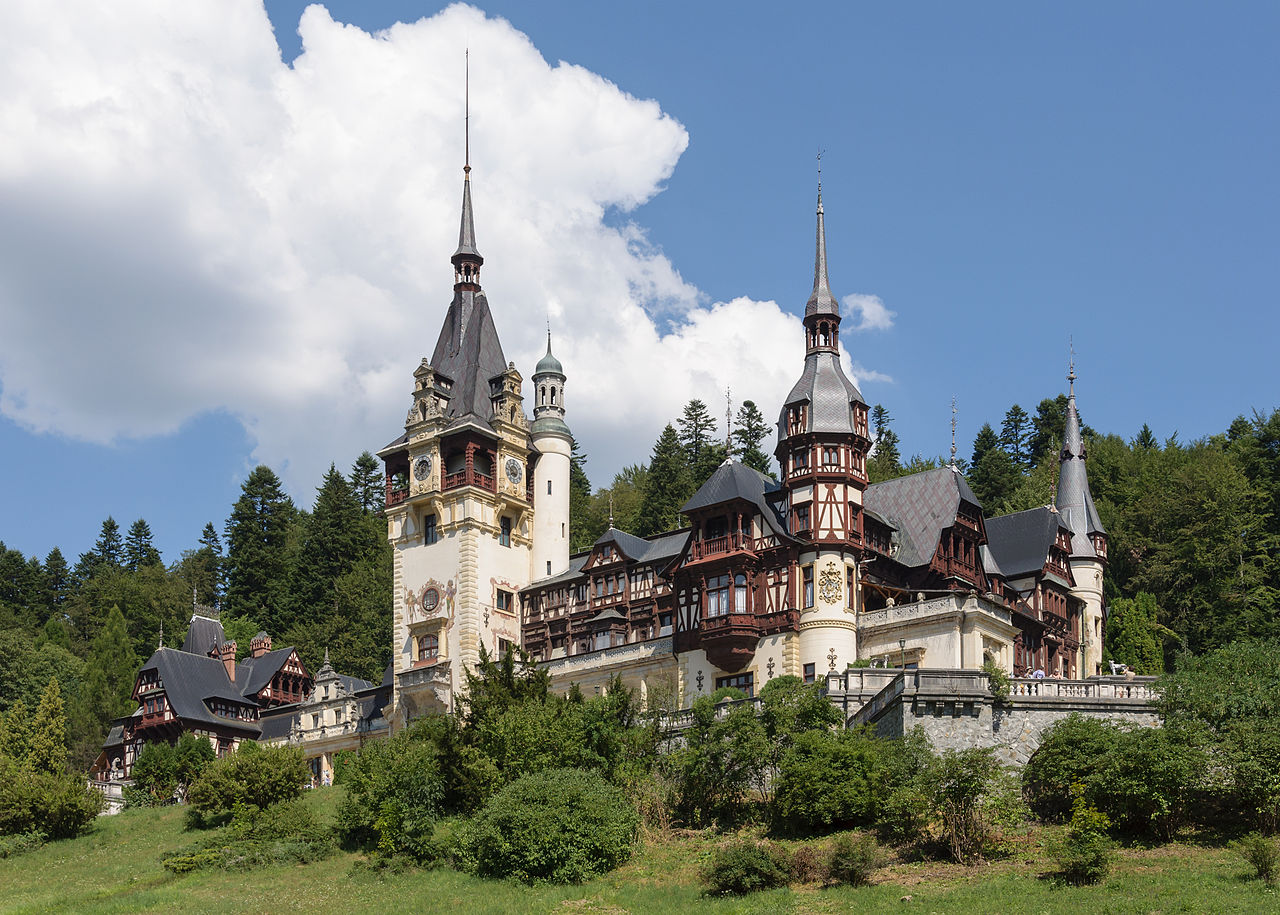
- Both countries have famous castles — UK has Windsor, Edinburgh, and many others; Romania has Bran Castle (associated with Dracula), Peleș Castle, and others.
- Romania is home to about 60% of Europe's brown bear population.
Tourism
The UK receives about 38 million international tourists annually — among the world's top destinations. Major attractions: London (Buckingham Palace, Big Ben, Westminster Abbey, the British Museum, the Tower of London), Edinburgh, Stonehenge, the Lake District, Bath, Cornwall, the Highlands. Tourism contributes about 9% of UK GDP.
Romania has been developing tourism rapidly. The country receives about 13 million international tourists annually. Major destinations: Bucharest (Palace of Parliament — the world's 2nd-largest administrative building), Bran Castle (Dracula's castle), Sibiu, Brașov, the Painted Monasteries of Bukovina, the Danube Delta (UNESCO World Heritage Site), and the Carpathian Mountains for hiking and skiing.
Religion
The UK is religiously diverse but predominantly Christian historically — about 46% Christian (mostly Church of England, Catholic, Presbyterian, Methodist), 37% no religion, 6% Muslim, with smaller populations of other faiths. The UK has been officially religiously tolerant since the 17th century.
Romania is predominantly Orthodox Christian — about 85% identify as Romanian Orthodox. There are smaller Catholic, Protestant, Greek Catholic, and Muslim minorities. Romanian Orthodox identity is closely tied to national identity.
EU and Brexit
Romania has been an EU member since 2007 and has benefited significantly from EU integration. EU funds have built infrastructure, modernized agriculture, and integrated Romania into European supply chains. Romanian workers throughout the EU send substantial remittances home — about $4.5 billion annually.
The UK left the EU on January 31, 2020 (Brexit). This was a major shift in European politics and economics. The UK is now navigating new trade relationships and global positioning outside the EU. Romanians living in the UK numbered about 600,000 before Brexit and have faced new immigration requirements.
Current Challenges
The UK faces post-Brexit economic adjustment, an aging population, Scottish independence movement, and complex relationships with Europe. Romania faces brain drain (significant emigration of young workers to Western Europe), demographic decline, and corruption concerns despite EU integration efforts. Both countries are navigating their respective challenges while maintaining democratic institutions and economic development.
Notable People
The UK has produced countless historical figures across all fields — Newton, Darwin, Shakespeare, Dickens, Churchill, Turing, Hawking, and many more. Romania has produced notable figures including Mircea Eliade (religion scholar), Constantin Brâncuși (sculptor), Eugène Ionesco (playwright), Nadia Comăneci (gymnast), and Simona Halep (tennis player). Both countries have made significant contributions to culture, science, and athletics.
Climate
The UK has a temperate maritime climate — mild, wet, and famously cloudy. Snow is uncommon in most regions. Romania has a temperate continental climate — colder winters with snow, hot summers. Both face increasing climate volatility, with the UK experiencing more frequent heatwaves and Romania experiencing both heatwaves and flooding events.
Food and Cuisine
UK cuisine includes fish and chips, Sunday roast, pies, full English breakfast, and increasingly diverse offerings reflecting immigration. Romanian cuisine features sarmale (cabbage rolls), mămăligă (cornmeal porridge), mici (grilled minced meat), traditional cheeses, and excellent wines. Both have distinct culinary traditions worth exploring. The UK and Romania both demonstrate how countries of similar size can develop very different identities, economies, and global roles. The size similarity is just a numerical coincidence; the cultural and economic differences run much deeper.
The Bottom Line
The UK is barely larger than Romania — by just 2%. But the UK has 3.5× more people and a much larger economy. Romania has been rapidly developing as an EU member but still lags the UK in economic terms. Both are similar in size but represent different European trajectories — the UK as a former superpower with global influence, Romania as a Balkan country emerging from Communism into a modern EU economy. The size coincidence is interesting but doesn't reflect the dramatic differences in their roles in modern Europe and the world.