

An island nation is a country whose territory consists entirely of one or more islands, with no land borders with other nations. Over 40 sovereign states fit this definition, ranging from Indonesia (the world's fourth most populous country with over 17,000 islands) to tiny Nauru (21 square kilometers, population 10,000). Together, island nations represent an extraordinary diversity of geography, culture, and economic circumstance.
Introduction
Island nations collectively control vast maritime territories that far exceed their land areas, giving them disproportionate influence over ocean governance and fisheries management. However, they also face disproportionate threats from climate change, natural disasters, and economic isolation. Small island developing states (SIDS) have become powerful voices in international climate negotiations, arguing that their very existence is threatened by rising seas and intensifying storms.
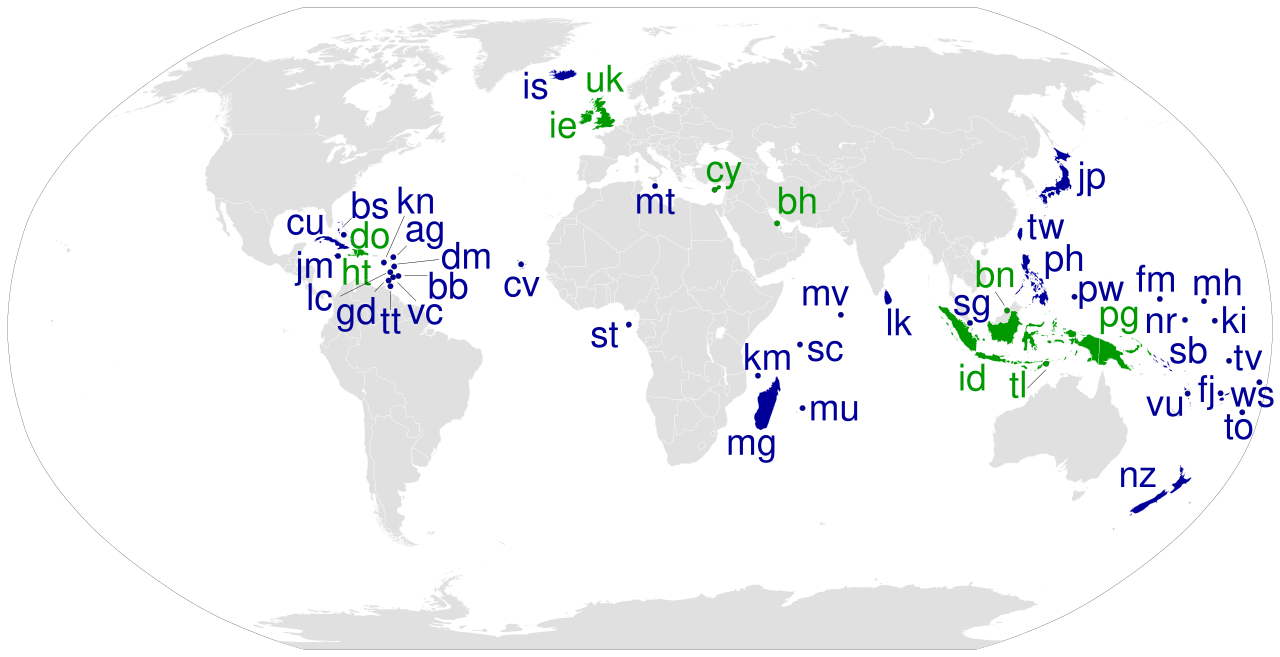
Types of Island Nations
- Continental Islands: UK (formerly), Japan, Philippines, Indonesia, Madagascar
- Volcanic Islands: Iceland, Hawaii (US state), Fiji, Comoros
- Coral Atolls: Maldives, Marshall Islands, Tuvalu, Kiribati
Island nations range enormously in size, population, and geological origin. Continental island nations like Japan, the Philippines, and Indonesia sit on continental shelves or near tectonic plate boundaries. Volcanic island nations like Iceland and Fiji were formed by volcanic activity. Coral atoll nations like the Maldives and Marshall Islands consist of low-lying rings of coral surrounding lagoons — among the most vulnerable landforms on Earth.
The largest island nations by population include Indonesia (280 million), Japan (125 million), and the Philippines (115 million). These are major global economies with diversified industrial bases. At the other extreme, nations like Nauru, Palau, and Tuvalu have populations under 20,000 and economies dependent on foreign aid, fishing rights, and creative revenue sources like selling internet domain names and citizenship.
Maritime Zones
- EEZ: Exclusive Economic Zone extends 200 nautical miles from coastline
- Pacific Island EEZs: Control ~30 million km² of Pacific Ocean
- Fisheries: Island nations control vast tuna and other fishery resources
Island nations control maritime exclusive economic zones (EEZs) that dwarf their land areas. The Federated States of Micronesia, with a land area of just 702 square kilometers, controls an EEZ of nearly 3 million square kilometers. Kiribati, with 811 square kilometers of land scattered across 3.5 million square kilometers of ocean, has one of the world's largest EEZs relative to its land area.
Pacific Island nations collectively control approximately 30 million square kilometers of Pacific Ocean — an area larger than Africa. These waters contain some of the world's most productive tuna fisheries, generating billions of dollars in fishing licenses from distant-water fishing fleets. Managing these vast maritime resources is both an opportunity and a governance challenge for small island nations with limited administrative capacity.
Climate Vulnerability
- Sea Level Rise: Existential threat for low-lying atoll nations
- Storm Intensity: Increasing cyclone intensity threatens island infrastructure
- Coral Bleaching: Warming oceans destroying reef ecosystems that protect coastlines
Small island developing states are among the most vulnerable nations to climate change, contributing minimally to global emissions while facing the most devastating consequences. Atoll nations like the Maldives (average elevation 1.5 meters), Tuvalu, Kiribati, and the Marshall Islands face the prospect of becoming uninhabitable within this century if sea levels rise as projected.
Beyond sea level rise, island nations face intensifying tropical cyclones, coral bleaching that destroys the reef systems protecting their coastlines, saltwater intrusion into freshwater supplies, and ocean acidification that threatens marine ecosystems. The Marshall Islands' Foreign Minister has described the situation as "a slow-moving tsunami" that threatens to erase entire nations from the map.
Economic Challenges
- Isolation: High transportation costs for imports and exports
- Tourism Dependence: Many island economies rely heavily on tourism
- Brain Drain: Educated citizens often emigrate to larger nations
Island nations face inherent economic challenges related to their geographic isolation. Small domestic markets, high transportation costs, limited natural resources, and vulnerability to external shocks make economic diversification difficult. Many small island nations depend heavily on a few sectors — typically tourism, fisheries, and remittances from citizens working abroad.
COVID-19 devastated island economies dependent on tourism, with some experiencing GDP declines exceeding 20%. This vulnerability has prompted discussions about building more resilient economic models, including developing digital economies, sustainable blue economies (based on ocean resources), and renewable energy. Some island nations have found creative revenue sources — Tuvalu earns millions from licensing its .tv internet domain.
Cultural Diversity
- Polynesia: Navigator cultures of the Pacific (Samoa, Tonga, Fiji)
- Caribbean: Diverse fusion cultures (Jamaica, Trinidad, Barbados)
- Indian Ocean: Unique island cultures (Maldives, Mauritius, Seychelles)
Island nations harbor extraordinary cultural diversity. The Polynesian navigator cultures of the Pacific — in nations like Samoa, Tonga, and Fiji — developed sophisticated oceanic navigation techniques that enabled them to colonize islands across an area larger than the continent of Africa. Caribbean island cultures fuse Indigenous, European, African, and Asian influences into distinctive national identities.
Island isolation has preserved unique languages, traditions, and biodiversity. Madagascar, separated from Africa for millions of years, has evolved flora and fauna found nowhere else. The Maldives has developed a distinctive Islamic culture influenced by South Asian, Arab, and Southeast Asian traditions. This cultural diversity is one of the island world's greatest treasures — and one of its most vulnerable assets.
Key Facts
- Over 40 sovereign states worldwide are island nations, ranging from Indonesia (280 million people) to Nauru (10,000).
- Pacific Island nations collectively control ~30 million km² of ocean — larger than Africa.
- Atoll nations like Maldives and Tuvalu face existential threats from sea level rise within this century.
- Indonesia has over 17,000 islands — the largest archipelago nation by far.
- Island nations contribute minimally to climate change but face its most devastating consequences.
Fun Facts
- Tuvalu earns millions of dollars annually from licensing its .tv internet domain name.
- Japan has over 6,800 islands, but 97% of its population lives on the four main islands.
- The Maldives held a cabinet meeting underwater in 2009 to highlight the threat of rising seas.
- Iceland, a volcanic island nation, generates nearly 100% of its electricity from renewable geothermal and hydroelectric sources.
Final Thoughts
Island nations represent some of the most diverse, culturally rich, and geographically unique countries on Earth. Their vast maritime territories give them outsized importance in ocean governance and fisheries. Yet they also face the most acute consequences of climate change — a crisis they did little to create. The fate of island nations, particularly the low-lying atolls of the Pacific and Indian Oceans, has become a moral test for the international community and a symbol of climate justice.
Test Your Knowledge!
Think you know the world's country groupings and alliances? Try our interactive geography quiz!
Play Geography Games →