
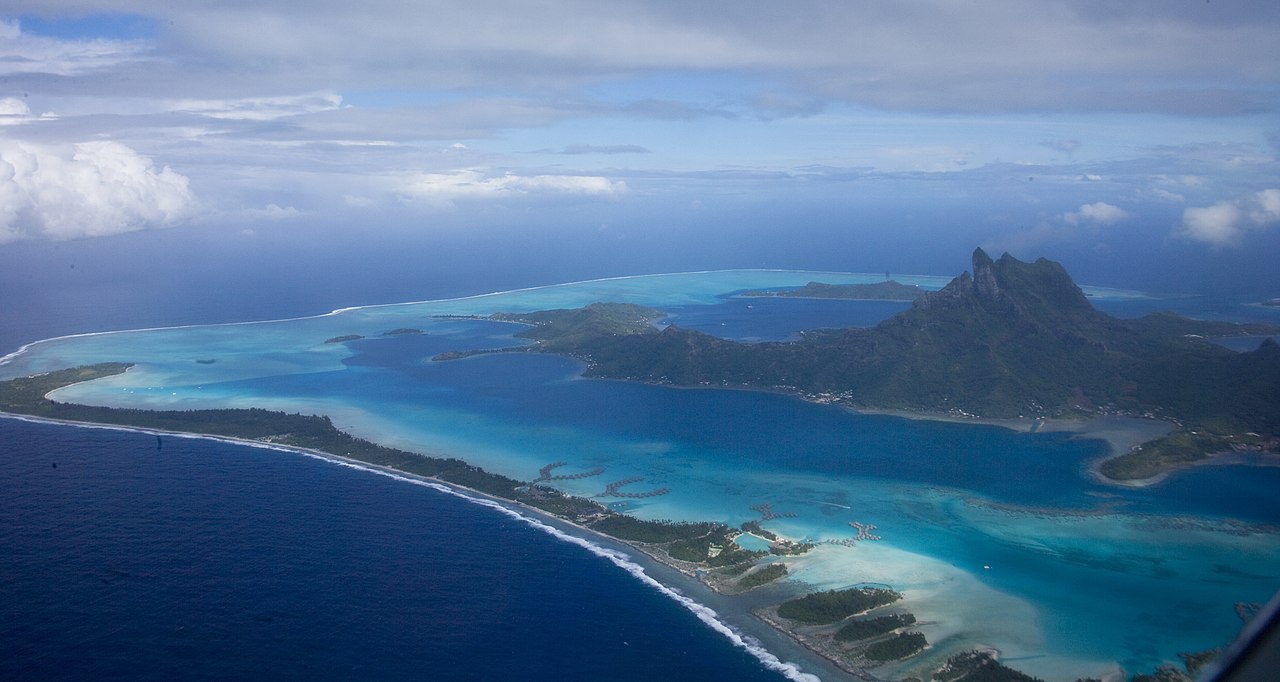
An island is a piece of land completely surrounded by water and smaller than a continent. Nobody knows exactly how many there are, but estimates run to around 900,000 if you count every rock and sandbar, and only about 11,000 of them have people living on them. They form in several completely different ways, and the way an island was made explains almost everything about what lives there.
How Big Before It Is a Continent?
There is no official rule, which is why Greenland causes so much trouble. It is 2.16 million square kilometres, and everyone agrees it is the largest island in the world.
Australia is 7.7 million square kilometres and is surrounded by water too, but it is counted as a continent instead. The usual explanation is that Australia sits on its own continental plate and has its own distinct set of plants and animals, while Greenland sits on the North American plate.
It is a decision people made rather than a fact of nature. If Australia counted as an island it would be more than three times the size of Greenland.
Continental Islands
Some islands are just bits of continent that got separated. They sit on the same continental shelf as the mainland, in shallow water, and the rocks match.
Britain and Ireland are continental islands. So are Madagascar, Sri Lanka, Borneo, New Guinea, Sicily and Newfoundland.
Many were joined to the mainland during the last ice age, when sea levels were about 120 metres lower. Britain was connected to Europe until around 8,000 years ago by a plain now beneath the North Sea. Fishing boats still occasionally dredge up mammoth bones and Stone Age tools from it.
Volcanic Islands
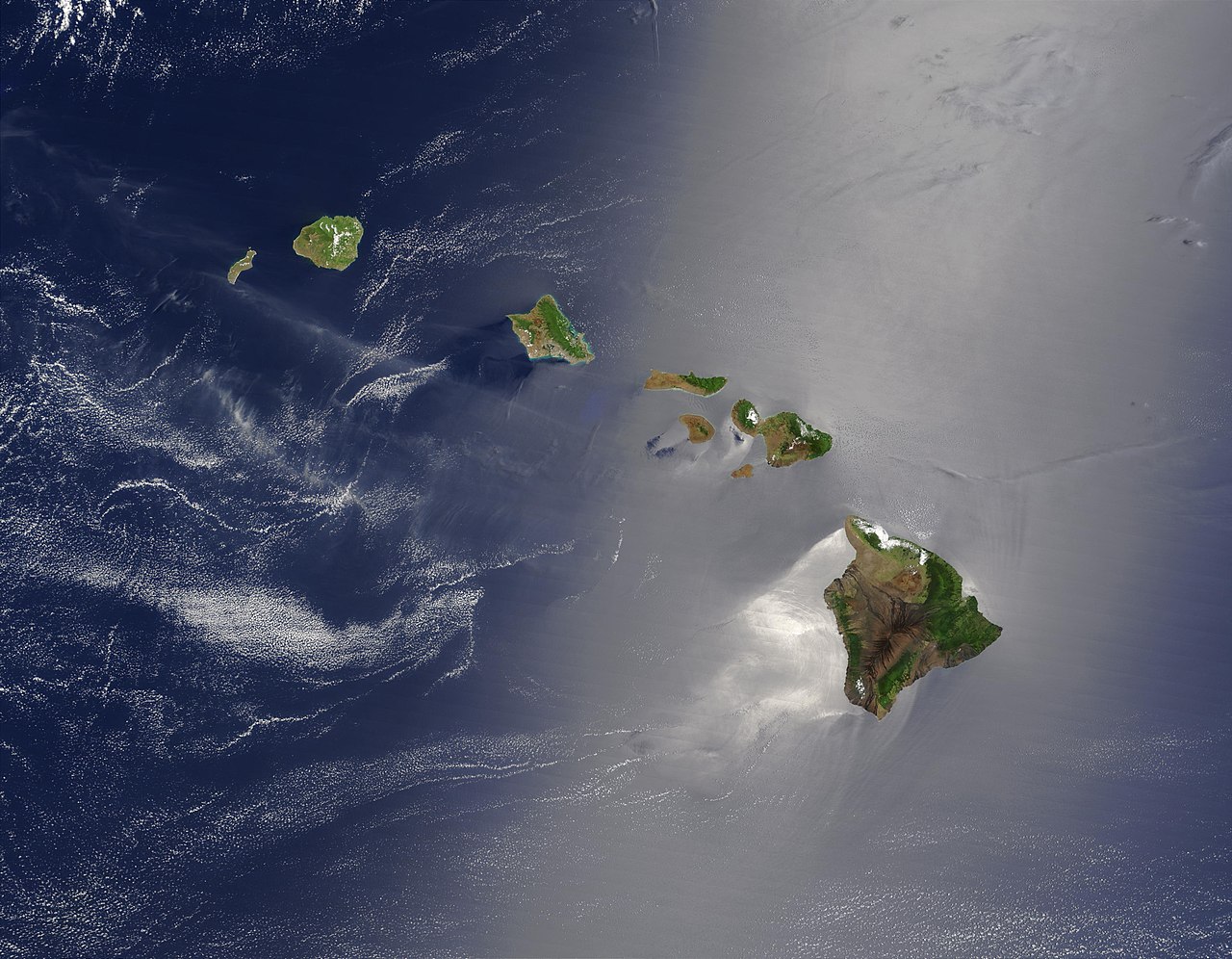
Other islands are the tops of volcanoes that have grown up from the seafloor until they broke the surface. These sit in deep water and have no connection to any continent.
Hawaii, Iceland, the Galápagos, the Canary Islands, Réunion and most of the Pacific are volcanic. So is Surtsey, off Iceland, which did not exist until November 1963 when fishermen watched it erupt out of the sea.
Surtsey has been left almost entirely alone since, as a natural experiment in how life colonises new land. Seeds arrived by sea and in birds' feathers, and it now has around 70 plant species, insects, and nesting seabirds — all documented from day one.
Coral Islands and Atolls
Coral islands are built by living things. Tiny animals called polyps make hard skeletons, and over thousands of years the skeletons pile up into reefs.
An atoll is a ring of coral with a lagoon in the middle, and the way it forms was worked out by Charles Darwin in the 1830s. A volcanic island grows a fringing reef around its coast. The volcano then slowly sinks, or the sea rises, but the coral keeps growing upwards to stay in the sunlight. Eventually the volcano disappears entirely and only the ring of coral is left.
The Maldives, Kiribati, the Marshall Islands and Tuvalu are made almost entirely of atolls. They are also the lowest-lying countries on Earth — the Maldives averages about 1.5 metres above sea level, and its highest natural point is under 2.5 metres.
Barrier Islands and Sandbars
A fourth kind is made of nothing but sand. Waves and currents pile sediment into long thin ridges parallel to a coast, and these barrier islands shelter the mainland behind them.
The Outer Banks of North Carolina, the Frisian Islands off the Netherlands and Germany, and Padre Island in Texas are all barrier islands. They move — sometimes metres a year — as storms shift sand from one end to the other.
Fraser Island in Australia is the largest sand island in the world, about 120 kilometres long, and it has rainforest growing on sand hundreds of metres deep.
Make an Island
Fill a large clear container about a third with water. Now build up a mound of sand or modelling clay in the middle until it pokes above the surface. You have made an island.
Now try the second experiment: add water slowly and watch the island shrink. Add enough and it disappears entirely. That is exactly what is happening to low-lying islands as sea level rises.
For a third, take the mound out, put a ring of small stones around where it was, and pour water back in. The ring stays above water while the middle is a lagoon. That is an atoll, and the missing mound is the sunken volcano.
Island Animals Go Strange
Cut a population of animals off on an island and evolution does odd things to it. Large animals tend to get smaller, because there is less food. Small animals tend to get bigger, because there are usually fewer predators. Biologists call this the island rule.
Dwarf elephants no bigger than a large dog lived on Mediterranean islands including Sicily, Malta and Crete. Their skulls have a large hole in the front for the trunk, and one theory is that finding them is how the ancient Greeks came up with the cyclops.
Going the other way, the Komodo dragon on a few Indonesian islands is the largest lizard alive, up to three metres. Galápagos tortoises weigh over 400 kilograms. New Zealand had no land mammals at all, so birds took over every role — including the moa, a flightless bird up to 3.6 metres tall.
Islands That People Made
Not every island is natural. Artificial islands have been built for thousands of years — the crannogs of Scotland and Ireland were small stone and timber islands in lakes, some over 3,000 years old.
Modern ones are much bigger. Palm Jumeirah in Dubai was built from around 94 million cubic metres of dredged sand and rock and added 56 kilometres of beach to the city. Kansai International Airport in Japan sits on an island in Osaka Bay that has been sinking steadily since it opened in 1994, and the buildings are jacked up on adjustable columns to compensate.
The Netherlands has built entire provinces. Flevoland was drained from a former inland sea and is the newest province in the country — around 970 square kilometres of land that was under water within living memory, now holding towns, farms and around 450,000 people.
Islands Are Fragile
Island species are extremely vulnerable, because they have nowhere to go and often no defences against new arrivals.
Around 75% of all animal and plant extinctions since 1500 have happened on islands, even though islands are a small fraction of the land. Rats, cats, goats and pigs brought by ships have caused most of them.
The dodo of Mauritius is the famous example. It was flightless and unafraid of people because it had never needed to be afraid of anything, and it was gone within about a century of Dutch sailors arriving — mostly because of the rats, pigs and monkeys that came with them rather than because of hunting.
Getting There in the First Place
How did plants and animals reach islands hundreds of kilometres from anywhere? Three ways, and biologists nickname them the three Ws: wind, wings and water.
Spores, tiny seeds and small insects blow on the wind. Birds and bats fly, and they carry seeds in their guts and burrs stuck to their feathers. Everything else rafts — on floating logs, mats of vegetation or debris washed off a coast by a storm.
It sounds unlikely, and it is, which is exactly why island wildlife is so odd. After the 2011 Japanese tsunami, nearly 300 species were recorded crossing the Pacific on floating debris and arriving alive in North America six years later. Given millions of years, unlikely things happen often enough.
Islands to Know
Greenland is the largest at 2.16 million square kilometres, followed by New Guinea, Borneo, Madagascar and Baffin Island. Indonesia has more than 17,000 islands and the Philippines over 7,600.
Sweden is often said to have the most islands of any country, at around 270,000, though most are tiny rocks in the Baltic. Canada has the most large islands.
Some are shared. Borneo is divided between Indonesia, Malaysia and Brunei. Hispaniola is split between Haiti and the Dominican Republic. New Guinea is half Indonesian and half Papua New Guinean. The island of Ireland contains two countries, and Cyprus is divided by a line neither side agrees on.
The Loneliest Places
Tristan da Cunha in the South Atlantic is the most remote inhabited island in the world. Around 250 people live there, and the nearest other settlement is Saint Helena, 2,400 kilometres away. There is no airstrip; the only way in is a boat trip of several days from South Africa.
Easter Island, or Rapa Nui, is 3,500 kilometres from mainland Chile. Its nearest inhabited neighbour is Pitcairn, over 2,000 kilometres away, and Polynesian voyagers reached it by canoe around 1,200 years ago using only stars, swells and birds to navigate.
Point Nemo, the spot in the Pacific furthest from any land, is 2,688 kilometres from the nearest island. The closest humans to it are usually the astronauts on the International Space Station, 400 kilometres straight up. To keep exploring, read about how volcanoes work and the five oceans that surround every island.
