
Introduction
Jordan is a Middle East nation covering 89,342 km², with a population of ~11.5 million. Its capital is Amman, and the country's geography is remarkably diverse. Arid Middle Eastern country dominated by desert plateau in the east, the Great Rift Valley and Jordan River valley in the west, rugged highlands in the center, and a narrow 26 km coastline on the Gulf of Aqaba in the south Among the most iconic geographic features are Dead Sea, Wadi Rum, Jordan Rift Valley, Gulf of Aqaba, and Dana Nature Reserve. The geography of Jordan has profoundly shaped its history, culture, economy, and the daily lives of its people.

Physical Geography
The physical landscape of Jordan is defined by its diverse terrain. Arid Middle Eastern country dominated by desert plateau in the east, the Great Rift Valley and Jordan River valley in the west, rugged highlands in the center, and a narrow 26 km coastline on the Gulf of Aqaba in the south The country's mountain systems include Western highlands with Jabal Umm ad Dami (1,854 m, highest point) near Aqaba; Jabal Ram (1,734 m) in Wadi Rum; Sharah Mountains in the south; Ajloun highlands in the north averaging 1,000 m. Major river systems include Jordan River (251 km total, forms western border), Zarqa River (65 km), Yarmouk River (northern border with Syria), Wadi Mujib (deepest canyon in Jordan, drains into Dead Sea). These physical features create distinct geographic regions across the country, each with unique characteristics that influence land use, agriculture, and settlement patterns.
Climate & Weather
Jordan experiences varied climate conditions across its territory. Mostly arid desert with less than 50 mm annual rainfall in the east; semi-arid Mediterranean in western highlands with 300–600 mm rainfall; hot dry summers (40°C+) in the Jordan Valley; cool winters with occasional snow in Amman and highlands These diverse climate patterns support different agricultural systems and ecosystems across the country, and play a critical role in shaping the landscape and influencing the daily lives of Jordanian people throughout the year.
Natural Resources & Environment
Jordan possesses significant natural resources and diverse ecosystems. Phosphate (one of world's largest producers), potash from the Dead Sea, limited oil shale deposits, solar energy potential, limestone, limited freshwater (one of world's most water-scarce countries) The country's ecosystems include Eastern desert steppe, Mediterranean oak and pine forests in Ajloun, Dana Biosphere Reserve (largest in Jordan with 700+ plant species), Azraq wetland oasis, Red Sea coral reefs at Aqaba, Wadi Rum desert ecosystem Environmental conservation remains an important priority as Jordan works to balance economic development with the protection of its natural heritage and biodiversity.
Human Geography
Jordan's population of ~11.5 million is centered around major urban areas including Amman (4.0M metro), Zarqa (635K), Irbid (500K), Aqaba (200K), Madaba (90K). The capital, Amman, serves as the political and administrative center. Population distribution reflects the influence of geographic factors including climate, water availability, fertile land, and transportation networks. Urbanization continues to reshape the country's demographic landscape.
Key Geographic Facts
- The Dead Sea at -430 m is the lowest point on Earth's surface and its shores form Jordan's western border with Israel and Palestine
- Over 80% of Jordan is desert, primarily the eastern extension of the Arabian Desert
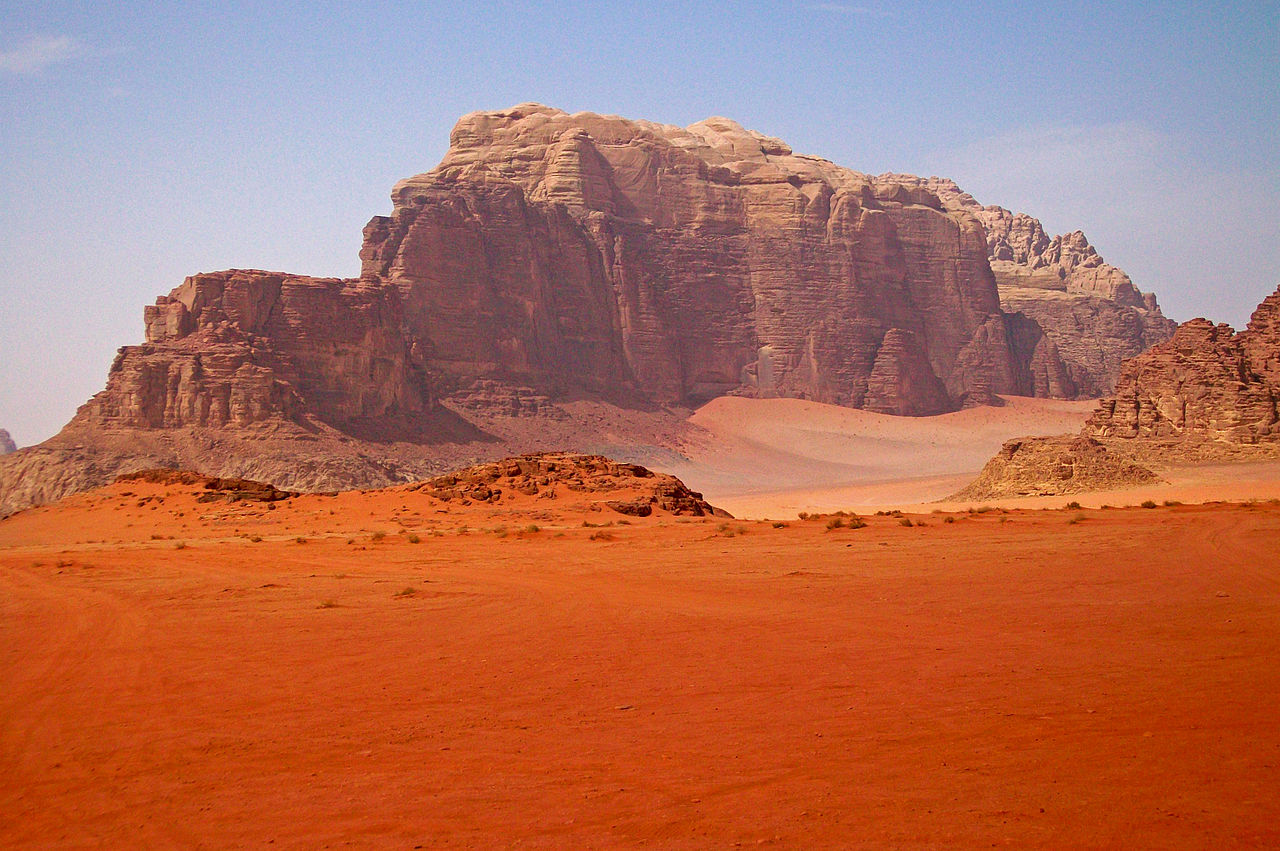
- Wadi Rum is a 720 km² sandstone and granite desert valley with rock formations rising up to 1,750 m
- Jordan is the world's second most water-scarce country, with renewable freshwater at less than 100 m³ per person per year
- The Jordan Rift Valley runs the entire length of the country's western border as part of the Great Rift Valley system
Fun Facts
- The Dead Sea is so salty (34% salinity) that no fish can survive in it and swimmers float effortlessly on its surface
- Wadi Rum's landscape is so Mars-like that it was used as a filming location for 'The Martian' and 'Lawrence of Arabia'
- Petra, carved into rose-red sandstone cliffs by the Nabataeans over 2,000 years ago, was hidden from the Western world until 1812
- Jordan's only coastline is a 26 km stretch on the Gulf of Aqaba, which contains some of the northernmost coral reefs in the world
