

Korean is the official language of two sovereign states, South Korea and North Korea, and is co-official in one region of a third — the Yanbian Korean Autonomous Prefecture in China's Jilin province. About 81 million people speak it. Seventy-five years of separation have produced two standard forms that differ in vocabulary, spelling rules and even dictionary order, and defectors arriving in Seoul routinely report needing help with the language.
-
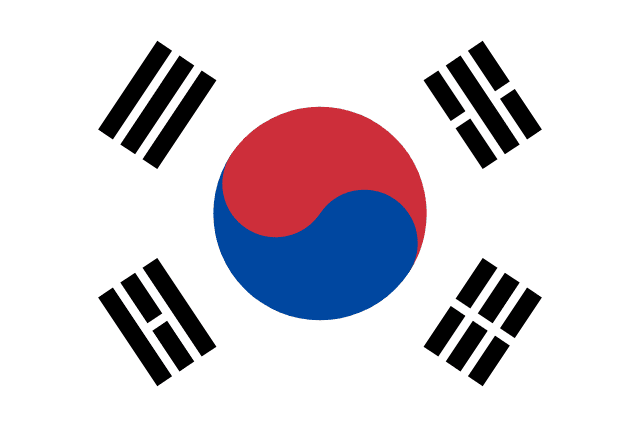 South Korea
standard is Seoul speech
South Korea
standard is Seoul speech
-
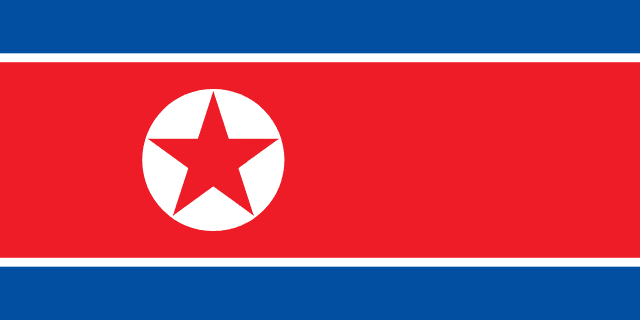 North Korea
standard is Pyongyang speech
North Korea
standard is Pyongyang speech
-
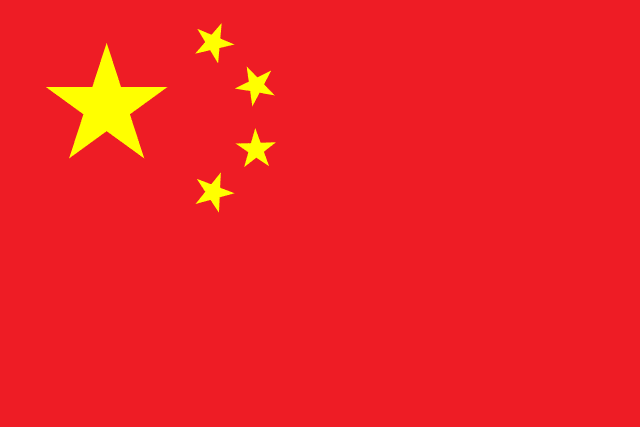 China
co-official in Yanbian Prefecture
China
co-official in Yanbian Prefecture
Two Standards, One Language
South Korea's standard is based on the Seoul dialect and is called pyojuneo. North Korea's, based on Pyongyang speech, is called munhwaŏ, the cultured language, and was formally established as the standard in 1966.
They remain mutually intelligible, but the gap is real and widening. South Korean has absorbed thousands of English loanwords; North Korean policy has systematically replaced Sino-Korean and foreign vocabulary with native coinages, so a doughnut is a karakji-ppang, a ring-shaped bread, rather than the transliterated English the South uses.
Studies of North Korean defectors have found that a substantial share of the vocabulary in South Korean daily life is unfamiliar to them, particularly in technology, business and popular culture. Seoul runs language adjustment programmes for arrivals, and a smartphone app was developed specifically to translate South Korean loanwords for defectors.
The Same Alphabet, Ordered Differently
Both states use Hangul, but they do not agree on how to alphabetise it. North Korea places the letter ㄱ's tensed forms at the end of the consonant order and treats the null initial differently, so the two countries' dictionaries sort the same words into different sequences.
Spelling conventions diverge too. The North writes word-initial ㄹ and ㄴ where the South drops them under a phonological rule — the surname written Lee or Rhee in English is I in South Korean orthography and Ri in the North, from the same character.
Spacing rules differ, and the North applies them more loosely. A joint North-South dictionary project, the Gyeoremal-keunsajeon, has been under intermittent negotiation since 2005 and remains unfinished.
Hangul Was Invented on a Specific Date
Most writing systems evolved. Hangul was designed, by a committee under King Sejong the Great, and promulgated in 1446 in a document called the Hunminjeongeum — the correct sounds for the instruction of the people. The document explains the design principles, which is close to unique in the history of scripts.
The consonant shapes are schematic diagrams of the mouth making the sound: ㄱ shows the back of the tongue against the soft palate, ㄴ the tongue tip at the ridge behind the teeth, ㅁ the closed lips. Related sounds add strokes to the base shape. The vowels are built from three elements representing heaven, earth and humanity.
Letters are grouped into square syllable blocks rather than written in a line, so 한 is three letters in one block. Sejong's preface states that a wise man can learn the system in a morning and a fool in ten days, and it is close to true — Hangul is regularly cited as the most learnable script in use.
South Korea marks Hangul Day on 9 October and North Korea on 15 January, using different dates from the promulgation record.
Yanbian and the Korean Chinese
The Yanbian Korean Autonomous Prefecture, on China's border with North Korea, has Korean as a co-official language with Chinese. Signage, schools, courts and local broadcasting operate in both, and the prefecture has around two million residents of whom a large minority are ethnic Korean.
China's Korean population, the Chaoxianzu, numbers roughly 1.7 million nationally and is one of the 56 officially recognised ethnic groups. Most descend from migration across the Tumen and Yalu rivers in the nineteenth and early twentieth centuries, much of it during the Japanese occupation.
Their variety of Korean is closer to the northern standard and uses Hangul without the Chinese characters that South Korea occasionally still employs. Migration to South Korea for work has been heavy since the 1990s, and the Yanbian population has been shrinking as a result.
Why the Two Standards Drifted
Language divergence between the two Koreas was not an accident of isolation alone. Both states pursued deliberate policies, in opposite directions, from the 1960s.
Kim Il Sung issued directives on language purification in 1964 and 1966, instructing linguists to replace Sino-Korean and Japanese-era vocabulary with native Korean formations and to base the standard on Pyongyang rather than Seoul. The result was thousands of coined words, many of them transparent compounds, and a written style that avoids characters entirely.
South Korea did the reverse, absorbing English at speed through American contact, business and technology. Estimates of the English-derived share of contemporary South Korean vocabulary in some registers run above 5%, and in advertising and technology it is far higher.
How Hard Is Korean for English Speakers?
The US Foreign Service Institute places Korean in Category IV, its hardest group, at around 2,200 class hours, alongside Japanese, Mandarin, Cantonese and Arabic.
The script is not the reason. Hangul is genuinely learnable in a day or two, and it is common for learners to be reading aloud within a week while understanding nothing. The difficulty comes afterwards: subject-object-verb order, particles that mark grammatical role, verb endings that carry politeness and mood together, and a vocabulary with almost no cognates for an English speaker.
Pronunciation adds its own problem. Korean distinguishes plain, aspirated and tense consonants — three categories where English has two — and the tense series has no English equivalent at all, which is why ddal, tal and dal are three different words that many learners cannot reliably hear apart.
Where Else Korean Is Spoken
The Korean diaspora numbers around seven million. The United States has the largest community outside East Asia, roughly two million, concentrated in Los Angeles, New York and New Jersey; Japan has around 800,000 Zainichi Koreans, many descended from people brought during the colonial period.
The Koryo-saram of Central Asia are the most distinctive group. Around 500,000 people descend from Koreans who settled in the Russian Far East from the 1860s and were deported en masse to Kazakhstan and Uzbekistan by Stalin in 1937. Their dialect, Koryo-mar, descends from the north-eastern Hamgyong variety and is now largely replaced by Russian.
Canada, Australia, Brazil, Germany and the Philippines all have substantial communities, and Germany's originated in a 1960s labour agreement that brought Korean miners and nurses.
Jeju Is a Separate Language
The speech of Jeju Island, off the southern coast, is classified by UNESCO as a critically endangered language rather than a Korean dialect. Mainland Koreans cannot understand it, and it preserves features lost elsewhere, including an extra vowel dropped from standard Korean centuries ago.
Fluent speakers number in the thousands and are almost all elderly. The island's twentieth century — the 1948 uprising and its suppression, then mass tourism and in-migration — accelerated the shift to standard Korean.
Jeju and Korean together form the Koreanic family, which like Japonic has no demonstrated relatives. The old Altaic hypothesis grouped Korean with Turkic, Mongolic, Tungusic and Japanese, and most historical linguists no longer accept it.
Sino-Korean and the Retreat of Hanja
Roughly half to 60% of Korean vocabulary is Sino-Korean, borrowed from Chinese over two millennia, and each such word can be written with Chinese characters known in Korean as hanja. Until the late twentieth century, South Korean newspapers mixed hanja into Hangul text routinely.
That has almost completely stopped. Hanja now appears mainly in academic writing, legal documents, personal names and to disambiguate homophones — Korean has many, because the sound system collapsed distinctions that Chinese kept. South Korean schools teach a set of 1,800 characters, and competence is falling.
North Korea abolished hanja from public use in 1949, earlier and more completely, though it teaches around 3,000 characters in school for reading older and South Korean material. Neither state has any plan to bring them back.
Speech Levels
Korean marks social relationship grammatically through seven traditional speech levels, of which about four are in everyday use. The verb ending changes according to the relationship between speaker and listener, independently of honorific markers that elevate the person being spoken about.
Choosing wrong is not a stylistic slip but a social one, and the calculation depends on age, rank, familiarity and setting. Korean workplaces and universities have well-known conventions about who may drop to informal speech first, and the question of what to call someone whose age you do not know is a genuine conversational problem.
Korean also has an elaborate kinship and address vocabulary that substitutes for names — seonbae for a senior colleague, hyeong, oppa, eonni and nuna for older siblings and their social equivalents, each depending on the speaker's own gender.
Hallyu Changed the Learner Numbers
Korean was a minor subject in most of the world until the 2000s. Since then, the spread of Korean television drama, film and pop music has driven one of the fastest increases in foreign-language study anywhere.
Duolingo has repeatedly reported Korean among its fastest-growing courses, and the Test of Proficiency in Korean, run by the South Korean government, has expanded to dozens of countries with applicant numbers in the hundreds of thousands. King Sejong Institutes, the state's language centres abroad, grew from a handful in 2007 to over 250.
The Oxford English Dictionary added more than twenty Korean-derived words in a single update in 2021, including hallyu, mukbang, daebak and oppa — an unusually large batch for one language and a reasonable measure of the shift. For the neighbouring cases, see Japanese, spoken in one country, and the count of countries in Asia.
