

The Mediterranean and Caribbean Seas are two of the most historically and culturally significant bodies of water on Earth. The Mediterranean, at roughly 2.5 million square kilometers, has been the center of Western civilization for over 5,000 years, nurturing the Egyptian, Greek, Roman, and Ottoman empires. The Caribbean, at approximately 2.75 million square kilometers, was the stage for European colonialism, the sugar trade, and piracy.
Introduction
Both are warm, semi-enclosed seas bordered by diverse nations and cultures. Both are renowned for tourism. And both face environmental challenges from overdevelopment, pollution, and climate change.
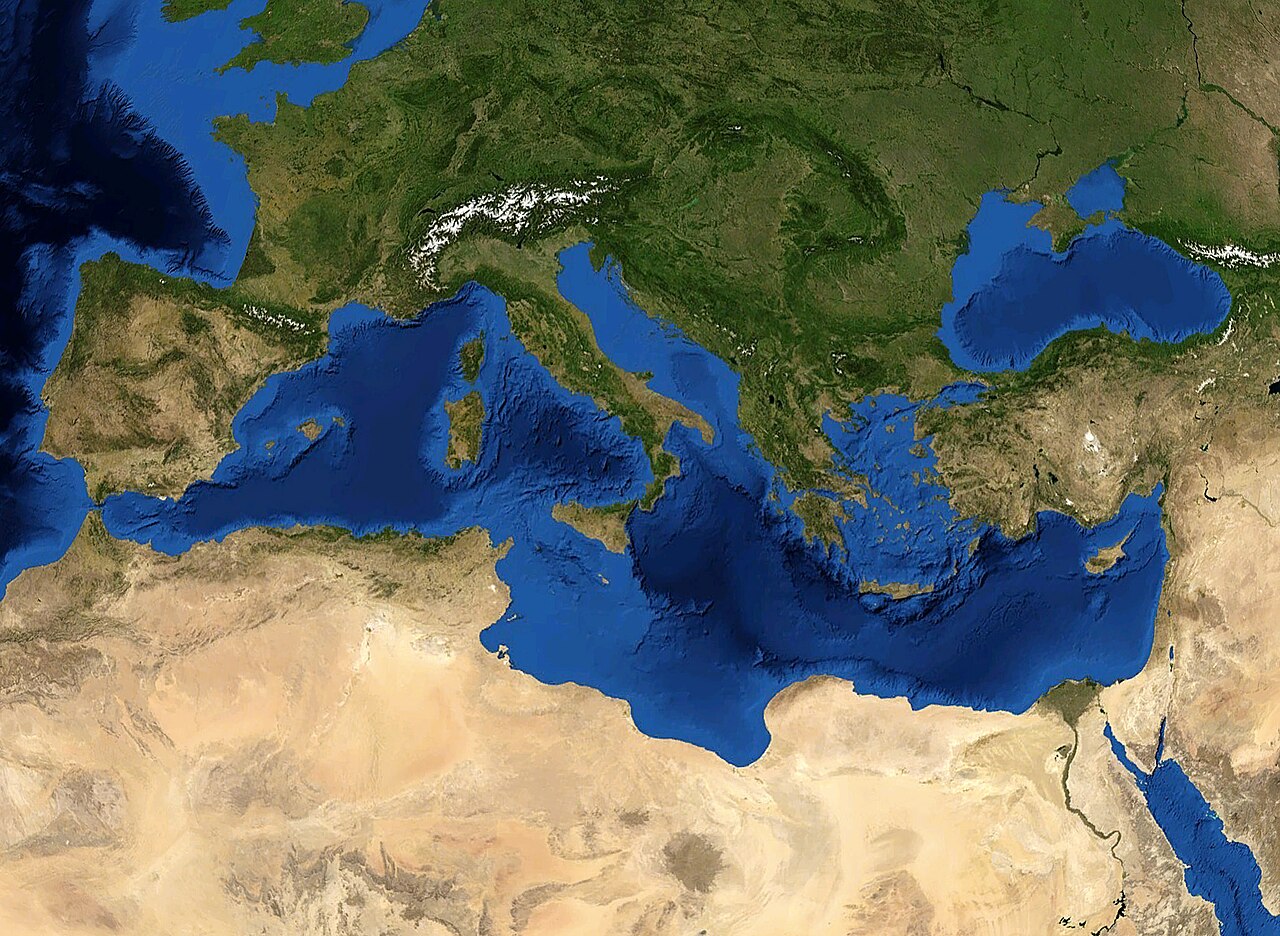
Size & Geography
- Mediterranean Area: ~2.5 million km²
- Caribbean Area: ~2.75 million km²
- Mediterranean Max Depth: 5,267 m (Calypso Deep)
- Caribbean Max Depth: 7,686 m (Cayman Trough)
- Mediterranean Countries: 21+
- Caribbean Countries/Territories: 30+
The Mediterranean is an almost-enclosed sea connected to the Atlantic through the narrow Strait of Gibraltar (14.3 km wide). It is divided into western and eastern basins by the Italian Peninsula and Sicily. The sea receives very little river water relative to its size, and evaporation exceeds inflow, making it saltier than the Atlantic.
The Caribbean is a tropical sea bounded by Central America, South America, and the Greater and Lesser Antilles island chains. It connects to the Atlantic through numerous passages between the islands and to the Pacific through the Panama Canal. The Cayman Trough makes it significantly deeper than the Mediterranean.
Mediterranean Profile
- Civilizations: Egyptian, Phoenician, Greek, Roman, Ottoman
- Climate: Hot, dry summers; mild, wet winters
- Tourism: Most visited coastal region in the world
- Threats: Overfishing, plastic pollution, invasive species via Suez Canal
The Mediterranean has been called "the cradle of Western civilization." Nearly every major ancient civilization of the Western world developed on its shores: Egypt, Phoenicia, Greece, Carthage, Rome, Byzantium, and the Ottoman Empire. The sea enabled trade, cultural exchange, and military conquest for millennia, and its influence on language, philosophy, law, and religion persists today.
Tourism is the Mediterranean's dominant modern industry, with over 300 million visitors annually to its coastlines. The French Riviera, Greek islands, Croatian coast, and Italian Amalfi Coast are among the world's most popular destinations. However, overtourism threatens the very landscapes and cultures that attract visitors.
Caribbean Profile
- History: Colonial era, sugar trade, piracy, slavery
- Climate: Tropical year-round, hurricane season June-November
- Tourism: Major cruise and resort destination
- Threats: Hurricanes, coral bleaching, overtourism
The Caribbean was the first region of the Americas encountered by Europeans, and it became the center of the colonial sugar trade that generated enormous wealth through enslaved labor. The sea was also the golden age of piracy, with Port Royal in Jamaica serving as the pirate capital of the New World. This complex history has produced a remarkably diverse cultural landscape.
Caribbean tourism generates over $60 billion annually and is the economic backbone of many island nations. The region is a major cruise ship destination and home to some of the world's most beautiful beaches. However, hurricanes pose a constant threat; the Caribbean hurricane season regularly produces Category 4-5 storms that can devastate entire islands.
Key Differences
- Climate: Mediterranean: seasonal; Caribbean: tropical year-round
- History: Mediterranean: ancient civilizations; Caribbean: colonial era
- Depth: Caribbean is significantly deeper
- Hazards: Mediterranean: earthquakes/tsunamis; Caribbean: hurricanes
The Mediterranean's seasonal climate with dry summers and wet winters is distinctive, creating the landscapes of olive groves, vineyards, and scrubby maquis that define the region. The Caribbean is tropical year-round with little temperature variation, supporting coral reefs, mangroves, and rainforest.
Their historical roles also differ. The Mediterranean was the center of the known world for millennia, the arena where ancient civilizations rose and fell. The Caribbean entered world history much later, as the theater of European colonialism and the sugar trade that shaped the modern Atlantic economy.
Which Is More Impressive?
- Mediterranean Advantage: 5,000+ years of civilization, cultural diversity, Mediterranean cuisine
- Caribbean Advantage: Tropical beauty, coral reefs, cultural vibrancy, hurricane drama
The Mediterranean wins on historical depth. No other body of water has been more central to the development of human civilization. From the Pyramids to the Parthenon to the Colosseum, the Mediterranean's shores are lined with the monuments of the cultures that shaped the Western world. Mediterranean cuisine, from Italian to Lebanese, is among the world's most celebrated.
The Caribbean wins on natural beauty and cultural energy. The combination of crystal-clear tropical water, coral reefs, white sand beaches, and vibrant Afro-Caribbean culture creates an atmosphere of joy and vitality. Caribbean music, from reggae to salsa to calypso, has influenced global culture far beyond the region's small size.
Key Facts
- The Caribbean (2.75 million km²) is slightly larger than the Mediterranean (2.5 million km²).
- The Mediterranean has been central to Western civilization for over 5,000 years.
- The Caribbean is deeper (7,686 m) than the Mediterranean (5,267 m).
- The Mediterranean receives over 300 million tourists annually.
- The Caribbean hurricane season (June-November) regularly produces devastating Category 4-5 storms.
Fun Facts
- The Mediterranean loses more water to evaporation than it receives from rivers, staying filled via Atlantic inflow at Gibraltar.
- The Caribbean's Great Blue Hole in Belize is a 300-meter-wide underwater sinkhole.
- The Mediterranean has no significant tides due to its narrow connection to the Atlantic.
- Pirates of the Caribbean were real: the golden age of piracy lasted from roughly 1650 to 1730.
Final Thoughts
The Mediterranean and Caribbean are two warm seas that shaped different chapters of human history. The Mediterranean is the sea of ancient civilizations, the body of water that connected Egypt to Greece to Rome and defined Western culture. The Caribbean is the sea of the colonial era, where European empires, African cultures, and indigenous peoples created something entirely new. Both remain among the most visited and culturally rich maritime regions on Earth.
Test Your Knowledge!
Think you can tell geographic features apart? Test your knowledge!
Play Geography Games →