
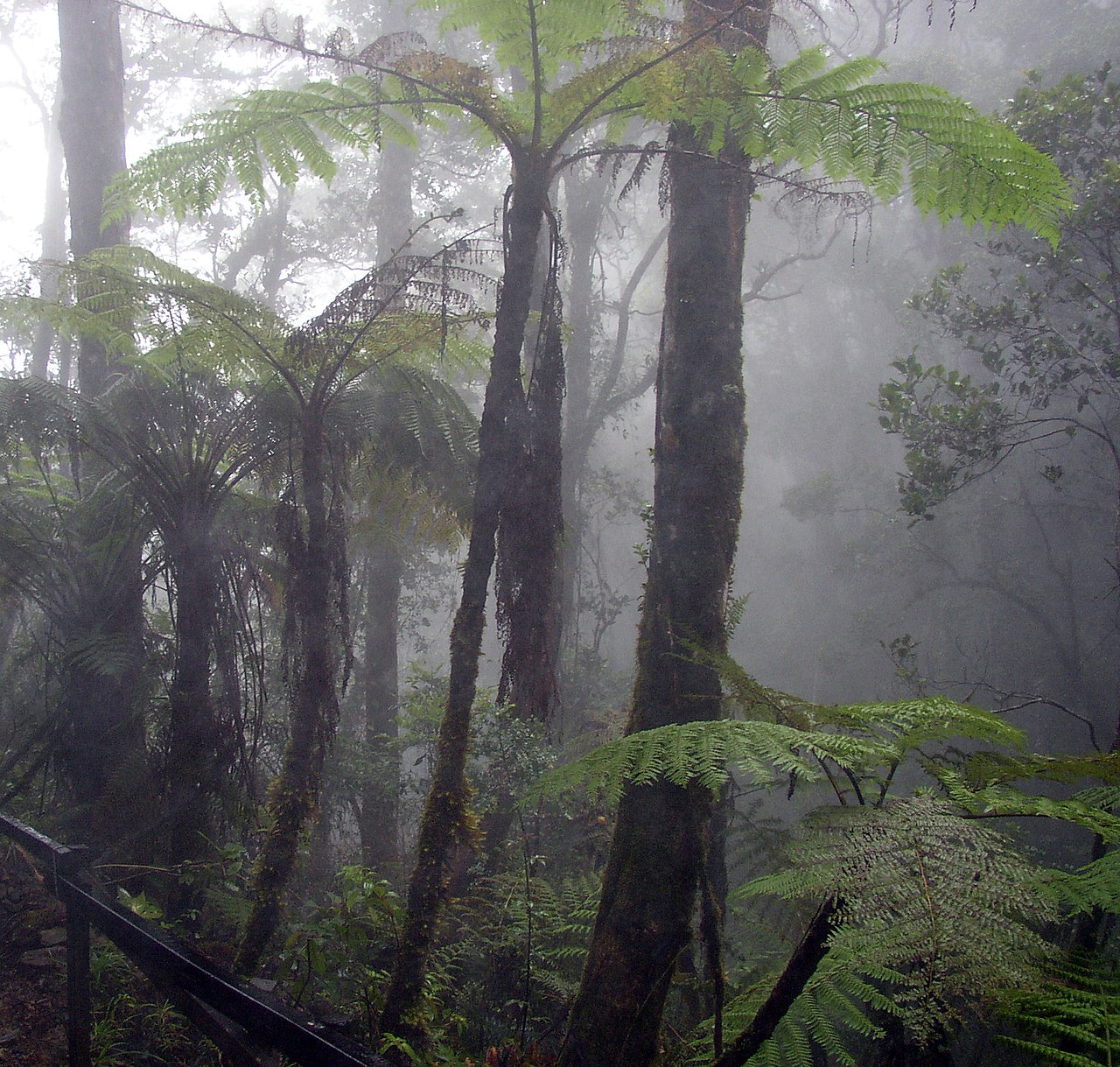
Montane cloud forests are among the most enchanting and ecologically important ecosystems on Earth. They exist in a narrow altitudinal band on tropical and subtropical mountains — typically between 1,500 and 3,500 meters — where clouds and fog envelop the forest for much of the day, bathing the vegetation in a near-constant mist.
Introduction
These fog-drenched forests cover only about 1% of the world's total forest area, yet they harbor a disproportionate share of global biodiversity, including an extraordinary concentration of endemic species found nowhere else. Their role in capturing water from fog and feeding downstream rivers makes them critical water sources for millions of people. Climate change threatens to lift the cloud base and destroy these irreplaceable ecosystems.
Distribution & Characteristics
- Global Area: ~500,000 km² (1% of world's forests)
- Elevation Range: 1,500-3,500 m (varies by latitude)
- Key Regions: Central America, Andes, East Africa, Southeast Asia, Borneo
- Fog Frequency: 200-350 days per year
Cloud forests are found wherever tropical mountains intersect the condensation layer of moisture-laden air masses. The classic cloud forest belt occurs between 1,500 and 3,000 meters in the tropics, though it can descend to lower elevations in areas of frequent fog, such as coastal mountains. The largest expanses of cloud forest are in the tropical Andes, the mountains of Central America, and the highlands of East Africa and Southeast Asia.
The defining feature of a cloud forest is persistent immersion in cloud and fog. At peak elevations, the forest may be wrapped in fog for 200 to 350 days per year. This moisture is captured directly by the vegetation — leaves, mosses, and epiphytes intercept fog droplets and drip them to the forest floor. This "fog stripping" can add 20-60% to the total precipitation captured by the forest, making cloud forests crucial water sources.
Ecology & Epiphytes
- Epiphyte Load: Up to 44 tonnes per hectare (wet weight)
- Moss Cover: Trunks and branches completely covered
- Canopy Height: 10-25 m (shorter than lowland forest)
- Soil: Thick organic layers, often waterlogged
Cloud forests are structurally distinct from lowland tropical forests. Trees are typically shorter and more gnarled, with twisted trunks and dense branching patterns shaped by wind and low temperatures. But the most striking feature is the incredible abundance of epiphytes — plants that grow on other plants. Orchids, bromeliads, ferns, mosses, and liverworts festoon every available surface, sometimes so thickly that branches bend under their weight.
The epiphyte biomass in cloud forests can exceed 44 tonnes per hectare (wet weight), far greater than in any other forest type. These epiphytic gardens create a "sponge effect," absorbing and slowly releasing moisture that sustains stream flow during dry periods. The thick moss mats on branches function as aerial wetlands, hosting entire communities of insects, amphibians, and even earthworms that spend their entire lives in the canopy.
Biodiversity & Endemism
- Amphibian Endemism: Among the highest of any habitat type
- Cloud Forest Orchids: Thousands of species, many found on single mountains
- Key Endemic Species: Resplendent quetzal, mountain gorilla, spectacled bear, olinguito
- New Species: Regularly discovered (olinguito described in 2013)
Cloud forests are hotspots of endemism because each mountain range — and often each individual peak — acts as a "sky island," isolated from other cloud forests by the valleys below. This isolation drives speciation, producing species found on a single mountain and nowhere else. Cloud forest amphibian endemism is particularly high, with many frog and salamander species known from a single location.
The resplendent quetzal, sacred to the ancient Maya and Aztec civilizations, depends on cloud forest habitat in Central America. The spectacled bear, South America's only bear, inhabits Andean cloud forests. The olinguito, described by scientists in 2013 as the first new carnivore species discovered in the Western Hemisphere in 35 years, was found in the cloud forests of Colombia and Ecuador. These discoveries suggest that many cloud forest species remain unknown to science.
Water Resources
- Fog Water Capture: 20-60% additional precipitation through fog stripping
- Downstream Users: Millions of people depend on cloud forest watersheds
- Dry Season Flow: Cloud forests maintain river flow during dry periods
- Key Watersheds: Bogotá, Quito, Nairobi, Tegucigalpa water supplies
Cloud forests function as natural water towers. Their ability to capture fog water and release it slowly into streams means they provide steady water flow even during dry seasons when lowland rainfall ceases. Cities including Bogotá, Quito, Tegucigalpa, and Nairobi depend on watersheds that include cloud forest. In some Andean valleys, cloud forest fog stripping provides more than half the total water entering the watershed during the dry season.
The thick organic soils and moss layers in cloud forests act as enormous sponges, absorbing rainfall and fog water and releasing it gradually. When cloud forest is cleared, this sponge effect is lost: streams become flashy (flooding during rain, drying during droughts), erosion increases dramatically, and downstream water supply becomes unreliable. The economic value of cloud forest water services alone far exceeds the value of any land use that replaces them.
Threats & Climate Vulnerability
- Area Lost: Over 50% of original cloud forest destroyed
- Climate Risk: Rising cloud base could eliminate habitat
- Temperature Sensitivity: Species adapted to narrow thermal ranges
- Disease: Chytrid fungus devastating cloud forest amphibians
Cloud forests are among the most climate-sensitive ecosystems on Earth. As global temperatures rise, the altitude at which clouds form is projected to increase, potentially lifting the cloud base above existing cloud forest habitat. Species adapted to the cool, moist conditions of the cloud zone would be forced upward, but mountains have finite height — species near the summit have nowhere to go.
The chytrid fungus (Batrachochytrium dendrobatidis) has devastated cloud forest amphibian communities worldwide, driving over 90 species to extinction and pushing many more to the brink. Cloud forests in Central America and the Andes have been particularly hard hit. The interaction between climate change (which weakens amphibian immune systems) and chytrid infection is a lethal combination that threatens to eliminate entire amphibian communities from cloud forests.
Key Facts
- Cloud forests cover only ~1% of global forest area but harbor a disproportionate share of the world's endemic species.
- Fog stripping adds 20-60% additional water to cloud forest precipitation, making them critical water sources.
- Epiphyte biomass in cloud forests can exceed 44 tonnes per hectare — more than any other forest type.
- Over 50% of the world's original cloud forest has been destroyed.
- Rising cloud bases due to climate change could eliminate cloud forest habitat on mountains with limited elevation.
Fun Facts
- The resplendent quetzal's tail feathers were worth more than gold to the ancient Maya civilization.
- Cloud forest mosses can hold up to 20 times their dry weight in water, functioning as living sponges.
- The olinguito, discovered in 2013 in Colombian cloud forest, had been misidentified in museum collections for over a century.
- Some cloud forest orchids produce flowers smaller than a pinhead, while others have blooms the size of dinner plates.
Final Thoughts
Montane cloud forests are among the most magical and most vulnerable ecosystems on the planet. Their misty canopies nurture extraordinary biodiversity and supply water to millions of people, yet they are being destroyed by agriculture and threatened by a warming climate that could lift the clouds beyond their reach. Protecting cloud forests is not just a conservation priority — it is a water security imperative for nations across the tropics.
Test Your Knowledge!
Think you know the world's forests? Try our interactive geography quiz!
Play Geographic Features Quiz →