

The most dangerous countries in the world in 2026, measured as the least peaceful on the Global Peace Index 2026 published by the Institute for Economics & Peace, are Russia (163rd of 163, score 3.367), Sudan (162nd, 3.195) and the Democratic Republic of the Congo (161st, 3.189), followed by Ukraine, Israel, South Sudan, Afghanistan, Yemen, Syria and Mali. That bottom ten looks very different from the first full index in 2008, when Iraq, Somalia and Sudan were last. War in Ukraine, the Sahel and Sudan has pushed new countries to the bottom, while Iraq and Sri Lanka have climbed well clear of it.
A note on terms before the rankings: the Global Peace Index (GPI) scores countries from 1 (most peaceful) to 5 (least peaceful) on 23 indicators covering ongoing conflict, safety and security, and militarisation. “Dangerous” here therefore means affected by war, violence and insecurity at a national level. It is not a measure of the risk of petty crime to a tourist in a capital city, and a low ranking does not mean every region of a country is unsafe.
The 2026 Global Peace Index: Russia, Sudan and the DR Congo at the Bottom
| Rank (of 163) | Country | GPI 2026 score |
|---|---|---|
| 163 | Russia | 3.367 |
| 162 | Sudan | 3.195 |
| 161 | Democratic Republic of the Congo | 3.189 |
| 160 | Ukraine | 3.184 |
| 159 | Israel | 3.124 |
| 158 | South Sudan | 3.116 |
| 157 | Afghanistan | 3.106 |
| 156 | Yemen | 3.081 |
| 155 | Syria | 3.067 |
| 154 | Mali | 2.996 |
Russia has been last in both of the two most recent editions. Its score reflects the war that began when it invaded Ukraine on 24 February 2022, together with the GPI’s militarisation indicators, which count military spending, armed-forces personnel, weapons exports and nuclear and heavy weapons capability. Sudan’s fall follows the civil war between the Sudanese Armed Forces and the Rapid Support Forces that broke out on 15 April 2023 and had displaced more than 14 million people by mid-2026. In the eastern DR Congo, the M23 rebel group captured Goma, the capital of North Kivu, by 30 January 2025 and Bukavu in South Kivu by 16 February.

The scores at the bottom are tightly bunched. Only 0.011 points separate Sudan, the DR Congo and Ukraine, and the whole group from 162nd to 155th spans less than 0.13 points. Small changes in a single indicator, such as the number of conflict deaths in a year, can reorder these countries from one edition to the next. Palestine is 148th, Pakistan 152nd and Somalia 153rd, just outside the bottom ten.
The rest of the bottom ten are long-running cases. Afghanistan has sat near the foot of every edition since it was first included in 2008. The Taliban captured Kabul on 15 August 2021 and the large-scale war ended, but the country still scores poorly across the index’s safety and security measures, and millions of Afghans remain refugees or internally displaced. Yemen’s civil war, which began in late 2014, continues between two rival governments that each claim to be the official one. South Sudan’s 2013–2018 civil war ended in a power-sharing government, yet refugee numbers and local violence keep it at 158th, one place below Afghanistan.
The wider trend is also negative. The 2026 report found that the world became less peaceful for the 15th time in 18 years, with the average country’s score deteriorating by 0.7% over the previous year.
2008: Iraq, Somalia and Sudan at the Foot of a 140-Country Index
The GPI was first published in 2007 with 121 countries; the 2008 edition expanded to 140. Its bottom five were Iraq (140th, 3.514), Somalia (139th, 3.293), Sudan (138th, 3.189), Afghanistan (137th, 3.126) and Israel (136th, 3.052). Chad, the Central African Republic, North Korea, Lebanon and Russia (131st, 2.777) completed the bottom ten.
That list was shaped by the conflicts of the mid-2000s. Iraq was five years into the war that followed the 2003 invasion, Somalia was in the middle of fighting between its transitional government and Islamist insurgents, and Sudan’s Darfur conflict, which began in 2003, was unresolved. Afghanistan was seven years into the war that began with the US-led invasion of 2001.
Just as revealing is who was not near the bottom in 2008. Libya ranked 61st, Syria 75th, Burkina Faso 81st, Ukraine 84th, Mexico 93rd, Mali 99th and Yemen 106th. Every one of them would fall sharply over the next decade and a half. Because the index grew from 140 to 163 countries after 2008, raw ranks are not directly comparable across the years, but scores and positions relative to the bottom of the table tell a clear story.
2016: Syria Sinks to 163rd
By the 2016 edition, with 163 countries now covered, the Arab Spring and its aftermath had redrawn the bottom of the index. Syria, 75th in 2008, was last with a score of 3.806, the worst of any country in that year’s report. Its civil war had begun with protests in March 2011. South Sudan, independent only since 2011 and in civil war from 2013, was 162nd, and Iraq, fighting the Islamic State group, was 161st. Afghanistan (160th), Somalia (159th) and Yemen (158th) followed.
Libya, which had overthrown Muammar Gaddafi in 2011 and slipped into a second civil war in 2014, had fallen from 61st to 154th. Ukraine, where fighting in the Donbas began in 2014, stood at 156th with a score of 3.287, up from 2.096 in 2008. Russia was 151st, and the Central African Republic, in civil war since late 2012, was 157th with a score of 3.354. In eight years Syria, South Sudan, Yemen, Ukraine and Libya had all joined the dozen least peaceful countries.
Fallers Since 2008: Ukraine, Sudan, Mali and Burkina Faso
Comparing 2008 with 2026 shows which countries have moved furthest towards the bottom. Ukraine went from 84th of 140 to 160th of 163, and Russia from 131st of 140 to last. Sudan, already 138th in 2008, fell further after the 2023 war. Israel moved from 136th to 159th; its 2026 position reflects the Gaza war that began on 7 October 2023, and the report notes that the Iran war that began in late February 2026 is not yet fully captured in its scores.
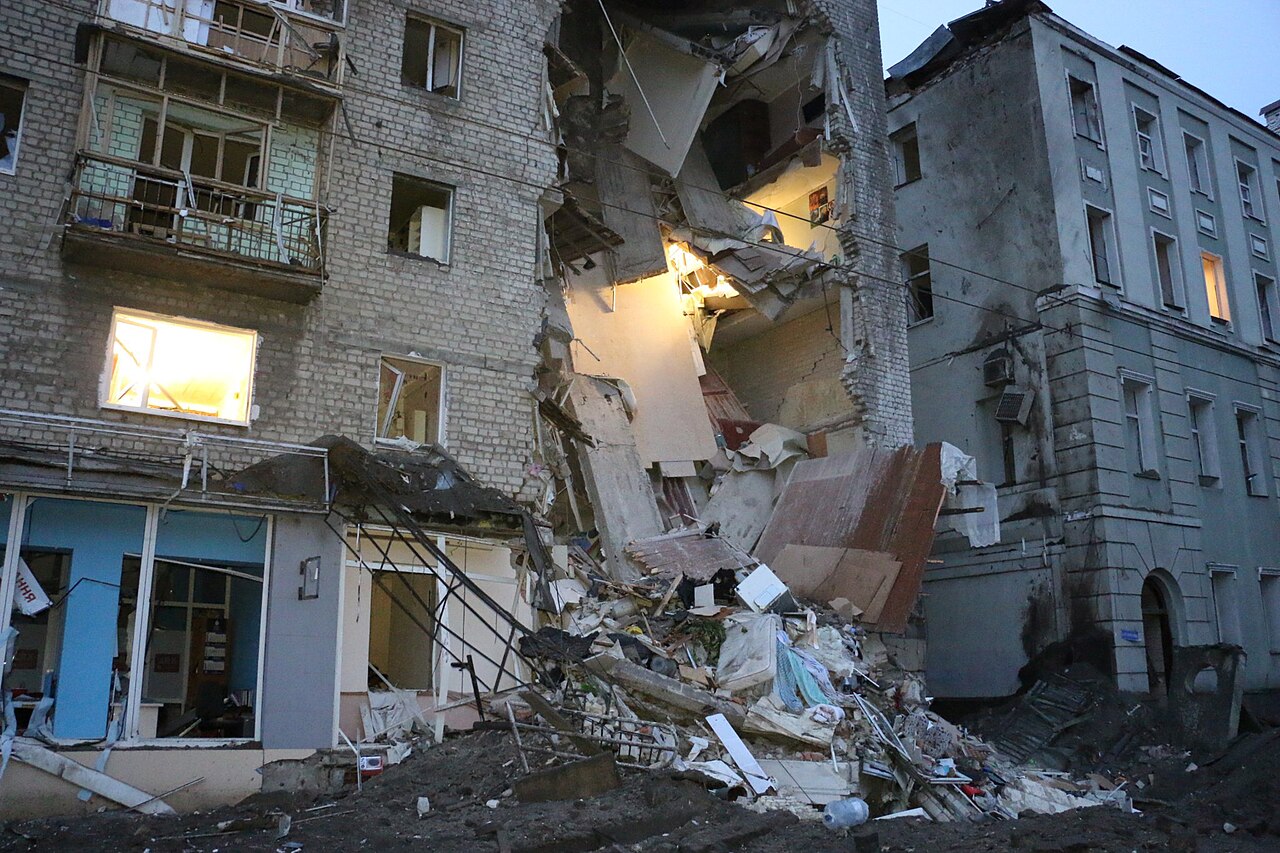
The Sahel shows the steepest regional decline. Mali, 99th in 2008, has been in conflict since a Tuareg rebellion in the north began on 16 January 2012, and is now 154th. Burkina Faso, 81st in 2008 with a score of 2.062, is 149th with 2.882 after two coups in January and September 2022 and a long jihadist insurgency. Niger (146th) and Chad (145th) are close by.
Mexico is a different kind of faller. It is not at war with another state, but violence linked to drug-trafficking organisations since the military was deployed against them in 2006 has moved it from 93rd in 2008 to 139th in 2026. The GPI counts homicide rates, violent crime and internal conflict deaths, all of which weigh heavily on Mexico’s score.
Climbers: Iraq and Sri Lanka Leave the Bottom Ten
The biggest improvement among countries that were once at the very bottom belongs to Iraq. Last in 2008 with 3.514 and still 161st in 2016, it had a score of 2.662 in 2026 and ranked 140th of 163, more than twenty places clear of last. Prime Minister Haider al-Abadi declared victory over the Islamic State on 9 December 2017, and conflict deaths have fallen sharply since.
Sri Lanka made an even longer climb. Its civil war with the Liberation Tigers of Tamil Eelam, fought from 1983, ended in 2009. The country ranked 125th of 140 in 2008, 97th in 2016 and 67th in 2026 with a score of 1.910, now in the top half of the index.
Syria has also improved from its 2016 low, from 3.806 to 3.067, and moved off last place, although it remains in the bottom ten at 155th. Its civil war, fought from 2011, ended with the collapse of the Assad government on 8 December 2024. Somalia, 139th of 140 in 2008, is now 153rd of 163 with a better score of 2.973, and Colombia’s score has barely moved: 2.757 in 2008, 2.764 in 2016 and 2.735 in 2026, despite the 2016 peace agreement with the FARC.
What the Global Peace Index Measures as Danger
The GPI weights internal peace at 60% of a country’s score and external peace at 40%. That design explains some rankings that surprise readers. Russia and Israel score poorly partly because of military spending, arms exports and involvement in external conflicts, not only because of violence inside their borders. The United States, at 134th with 2.535, is affected by indicators that include the number of people in prison per 100,000, ease of access to small arms and its role in external conflicts.
The index also has well-known limits. It does not include violence against women, relies on analyst estimates where official data are missing, and scores whole countries, so a peaceful capital and a conflict-hit province receive one number. Most indicators lag by a year or more: the 2026 report states that the full effect of the Iran war is not captured. For the other end of the table, see our countdown of the most peaceful countries in the world, and for everyday crime rather than war, our list of countries with the lowest crime rates.