

Ask which sport belongs to the United Kingdom and you get four answers, because the UK does most of its sport as four separate nations. There is no single official national sport, and no Act of Parliament names one. Football is the de facto national sport: it is the most popular sport in the UK as a whole, and its rules were first codified by the Football Association in London in 1863. Cricket, organised by the Marylebone Cricket Club since 1787, is often called England’s summer game, and rugby union is widely regarded as the national game of Wales. Scotland adds shinty, a Highland stick game, and in Northern Ireland the Gaelic games of hurling and Gaelic football are organised on an all-Ireland basis by the GAA. That four-way split is the main reason the UK has never chosen one sport.
Four home nations, four governing bodies: why no single UK sport exists
When organised sport took shape in the 19th century, England, Scotland, Wales and Ireland each set up their own governing bodies, leagues and national teams. That habit stuck. Most domestic and international sport is still run on a home-nations basis, which makes the UK unusual among sovereign states: in football and rugby it sends separate teams to the World Cup, and in cricket England and Wales play together as one side. When Ireland was partitioned in the early 1920s, football split, leaving the Belfast-based Irish Football Association to run the game in Northern Ireland, while rugby union and the Gaelic games kept organising on an all-Ireland basis.
A combined team appears only in special cases. The British and Irish Lions bring together rugby players from all four unions on tour. At the Olympics, the official team name is Great Britain and Northern Ireland, branded “Team GB”, and the country competes as one nation in athletics, swimming, cycling and most other individual events. Great Britain is the only nation to have won at least one gold medal at every Summer Games, and London was the first city to host the Summer Olympics three times, in 1908, 1948 and 2012. The modern Paralympic movement began at Stoke Mandeville Hospital in Buckinghamshire in 1948.
Participation complicates the picture further. Sport England’s 2010 Active People Survey found that swimming, athletics and cycling all had more active participants than football. Tennis takes over for the two weeks of Wimbledon each summer, and golf’s Open Championship, the oldest of the men’s majors and the only one played outside the United States, is held on British links courses. None of those sports, however, has the year-round following of football, and none is identified with a single nation the way rugby is with Wales.
Football from the Freemasons’ Tavern in 1863 to Wembley in 1966
Before the 1860s, football in Britain meant dozens of local codes, many of them written at public schools such as Eton, Winchester and Rugby. Cambridge University published its own rules in 1848, and clubs in the north used the Sheffield Rules from the 1850s. On 26 October 1863, representatives of eleven London clubs and schools met at the Freemasons’ Tavern in Great Queen Street and formed the Football Association. Ebenezer Cobb Morley, captain of Barnes, had proposed the meeting. The talks that followed ended in a split between the association game and the handling game that became rugby. Because it was the first, the FA has never put “English” in its name.
The rest of the UK quickly followed. The first official international match was played between Scotland and England on 30 November 1872 at Hamilton Crescent, the West of Scotland Cricket Club’s ground in Partick, Glasgow, in front of 4,000 spectators; it ended 0–0. The Scottish Football Association was formed in 1873, the Football Association of Wales on 2 February 1876 at the Wynnstay Arms Hotel in Wrexham, and the Irish Football Association in Belfast on 18 November 1880. These four bodies still hold the four British seats on the International Football Association Board, which sets the Laws of the Game worldwide. The FA Cup, first played in 1871–72, is the oldest national football competition in the world.
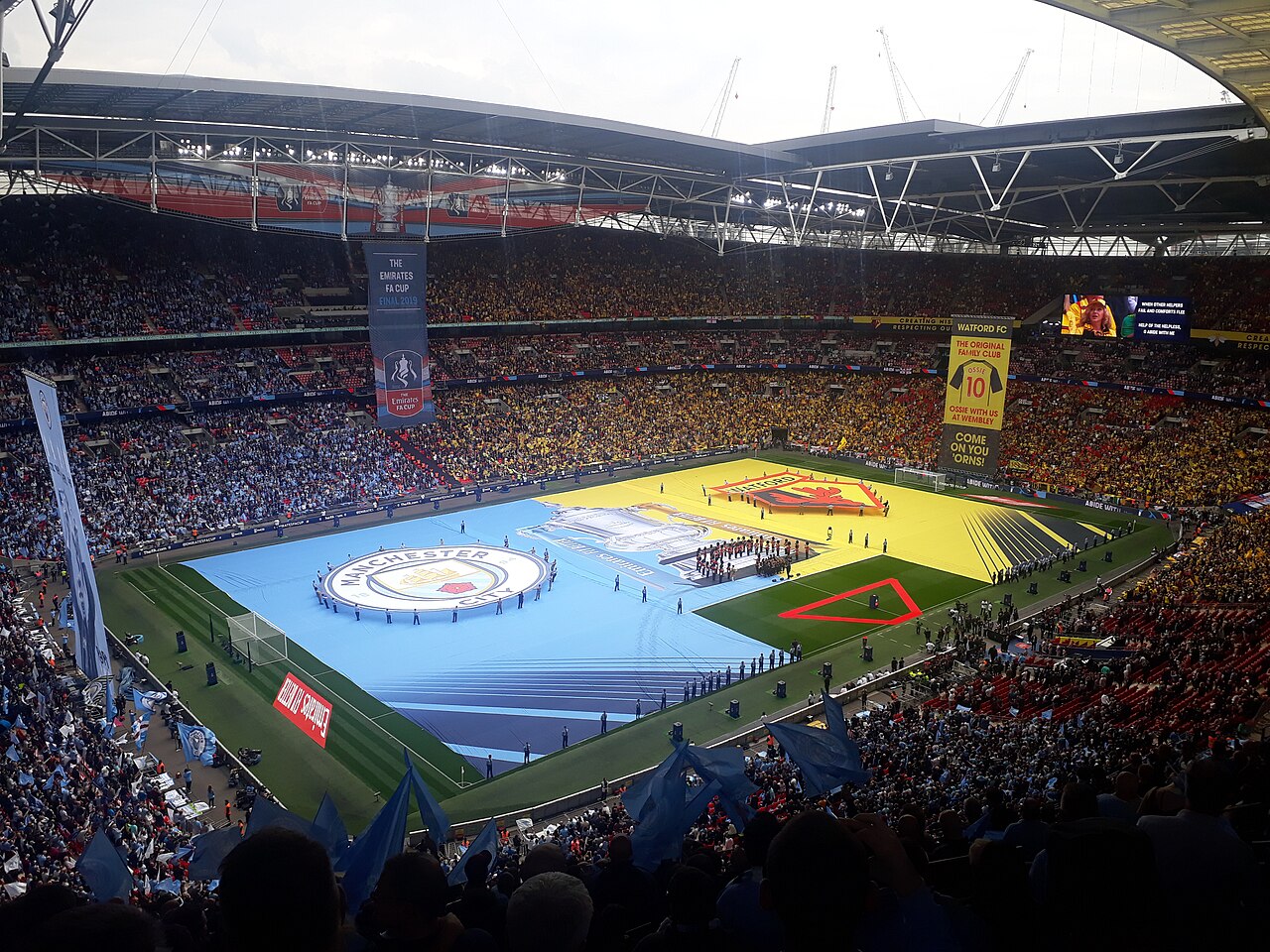
England’s greatest day came on Saturday 30 July 1966, when it beat West Germany 4–2 after extra time in the World Cup final at Wembley, with Geoff Hurst scoring a hat-trick. It remains the only time England has hosted or won the World Cup. The current Wembley, opened in 2007 on the site of the 1923 original, seats 90,000, the largest stadium in the UK, and houses the FA’s headquarters. Scotland’s national stadium, Hampden Park in Glasgow, was the largest stadium in the world from 1903 until 1950, and the 1960 European Cup final there drew 127,621 people, still the highest attendance ever recorded at a European Cup final. Wales play at Cardiff, and Northern Ireland at Windsor Park in Belfast.
Cricket at Lord’s and rugby at Twickenham and Cardiff
Cricket: the oldest professional team sport
Cricket has the longest history of the three. Village teams representing single parishes existed before the English Civil War, and after the Restoration of 1660, gambling patrons began assembling stronger teams drawn from several parishes, the origin of county cricket and of professional team sport. The Marylebone Cricket Club was founded in 1787, took charge of the Laws of Cricket in 1788, and still holds their copyright. Its ground, Lord’s, moved to St John’s Wood in north-west London in 1814 and is known as the Home of Cricket. Test matches began in the 1870s, and England’s rivalry with Australia for the Ashes remains the sport’s oldest and best known.
Since 1 January 1997, the game in England and Wales has been run by the England and Wales Cricket Board, based at Lord’s. Wales has no separate Test side, which is one reason cricket is more often described as England’s national summer game than Britain’s. Its most famous recent moment came at Lord’s on 14 July 2019, when England and New Zealand tied the World Cup final on 241 runs and England won after a Super Over.

Rugby union: England’s Twickenham and the national game of Wales
Rugby clubs that rejected the FA’s rules formed the Rugby Football Union in 1871. The world’s first rugby international followed on 27 March 1871 at Raeburn Place in Edinburgh, where Scotland beat England before 4,000 spectators. The RFU, based at Twickenham Stadium in south-west London, now represents more than 2,000 member clubs. England won the 2003 Rugby World Cup, beating Australia in the final in Sydney on 22 November 2003.
In Wales, rugby carries a weight it has nowhere else in the UK: it is the most popular sport in the country, and surveys have found that about 44 percent of Welsh people like it, the highest share of rugby supporters in Europe. Eleven clubs met at the Castle Hotel in Neath on 12 March 1881 to form what became the Welsh Rugby Union, which today oversees about 320 member clubs. The national team plays at the Principality Stadium in Cardiff, built for the 1999 Rugby World Cup on the site of the old National Stadium at Cardiff Arms Park, with a retractable roof and a capacity of 73,931. Scotland, England, Wales and Ireland, with France and Italy, meet each year in the Six Nations Championship.

Shinty in the Highlands and Gaelic games in Ulster
Two sports show how much the home nations differ. Shinty (camanachd in Scottish Gaelic) is a fast stick-and-ball game played mainly in the Scottish Highlands. It shares a root with Irish hurling and the old Welsh game of bando, but players may hit the ball in the air and use both sides of the slanted wooden stick, the caman. The Camanachd Association was founded in 1893 after a meeting in Kingussie and is based in Inverness. Its premier competition, the Camanachd Cup, was first contested in 1896, when Kingussie beat Glasgow Cowal 2–0 at Needlefield Park in Inverness. Kingussie and Newtonmore, neighbouring villages in Badenoch, are fierce rivals: in the 1997 final Kingussie beat Newtonmore 12–1, the biggest winning margin in the cup’s history. Every year Scotland and Ireland play a composite shinty–hurling international.
In Northern Ireland, the Gaelic Athletic Association runs Gaelic football and hurling as part of an all-Ireland structure. The GAA was founded on 1 November 1884 at Hayes’ Hotel in Thurles, County Tipperary. Its Ulster council, headquartered in Armagh, covers the six counties of Northern Ireland plus Cavan, Donegal and Monaghan in the Republic. Northern counties have done well in the All-Ireland Senior Football Championship: Tyrone won it in 2021 and Armagh in 2024. Casement Park in west Belfast, once Ulster’s main Gaelic games ground with about 31,500 places, has been closed since 2013 while its redevelopment is debated. Football in Northern Ireland, meanwhile, is run separately by the Irish Football Association. More on how the island’s Gaelic sports work appears in the guide to the national sport of Ireland.
The UK, then, has no official national sport. Football is the most popular sport across the UK as a whole; cricket is England’s traditional summer game; rugby union is the national game of Wales; shinty belongs to the Highlands; and Gaelic games are a major part of sporting life in Northern Ireland. The four-nation structure behind all of this is explained in the guide to how many countries make up the United Kingdom, and the British influence on cricket’s spread shows up again on the other side of the world in the national sport of Australia.