

The major natural resources of Australia include iron ore, coal, gold, natural gas, and lithium. Australia is the world's largest exporter of iron ore, accounting for approximately 53% of global iron ore trade, with exports valued at over $100 billion annually. It is also the planet's largest producer of lithium and bauxite and the world's largest exporter of liquefied natural gas, making mining and energy the backbone of one of the wealthiest economies on Earth.
Introduction
Australia is the driest inhabited continent, yet beneath its arid plains lies one of the richest endowments of mineral wealth anywhere on the planet. The continent's extraordinary geology — including some of the oldest rocks on Earth in the Pilbara and Yilgarn cratons of Western Australia — formed over billions of years and concentrated vast deposits of iron, gold, nickel, and other metals. These ancient, stable landmasses have weathered for so long that ore bodies near the surface are unusually large and accessible, ideal for the giant open-pit mines that now define the industry.
Resources extraction is far more than an economic curiosity here; it is the engine of national prosperity. The mining sector contributes roughly 10% of GDP directly and a great deal more through supply chains, services, and tax revenue. For a country of only about 26 million people, the scale of what is dug up, shipped out, and sold to the world is staggering. To understand the wider context, it helps to read alongside the Australia country guide, which sets out the geography and demographics that shape this resource economy.
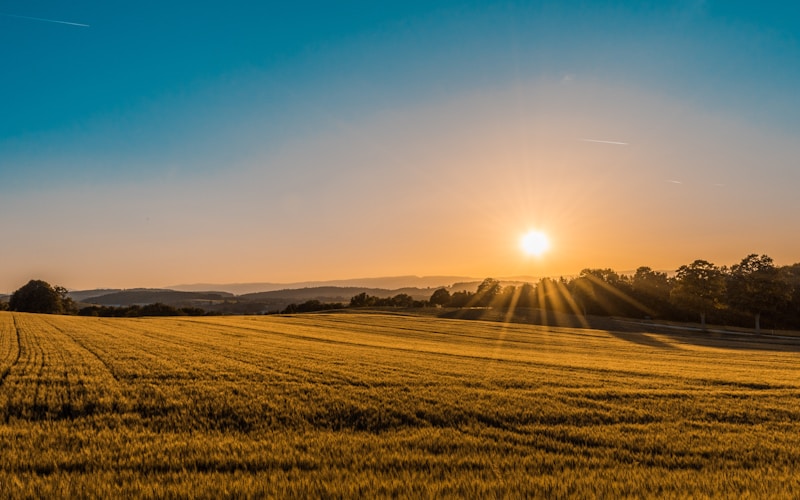
Major Mineral Resources
If one resource defines modern Australia, it is iron ore. Western Australia's Pilbara region is the epicentre of global iron ore production, where mining giants BHP and Rio Tinto operate massive open-pit mines that ship over 800 million tonnes annually, primarily to steel mills in China. The Pilbara alone holds an estimated 50 billion tonnes of iron ore reserves, enough to sustain exports for generations. This single commodity underpins Australia's position as the world's largest iron ore exporter.
- Iron Ore: World's largest exporter, around 53% of global trade.
- Gold: Second-largest producer globally, centred on Western Australia.
- Lithium: World's largest producer, much of it from Greenbushes, WA.
- Bauxite: World's largest producer, mined heavily at Weipa in Queensland.
- Zinc, lead and titanium minerals: Australia ranks among the top global producers.
Beyond iron, Australia is the world's leading producer of lithium — the metal at the heart of electric-vehicle and grid-storage batteries — and of bauxite, the raw material for aluminium. It is the second-largest gold producer on Earth, with Kalgoorlie's enormous Super Pit among the most famous mines anywhere. Add to this major output of zinc, lead, nickel, and titanium minerals, and it becomes clear why the resources sector dominates national exports and government revenue alike.
Energy Resources
Australia is an energy superpower on the export market. It is one of the world's largest coal producers and exporters, drawing on extensive deposits in Queensland's Bowen Basin and the Hunter Valley of New South Wales. In gas, the country has become the world's largest exporter of liquefied natural gas (LNG), fed by enormous offshore fields on Western Australia's Northwest Shelf and in the Browse Basin.
- Coal: Fifth-largest producer worldwide and a leading exporter.
- LNG: World's largest exporter of liquefied natural gas.
- Uranium: Holds the world's third-largest reserves.
- Solar: Highest average solar radiation of any inhabited continent.
- Wind: Rapidly growing onshore and offshore potential.
Australia also holds the world's third-largest uranium reserves, although it has no nuclear power plants and exports the ore. Looking ahead, the continent's renewable potential is immense: it receives the highest average solar radiation of any inhabited landmass, and investment in solar, wind, and green hydrogen is accelerating fast. This blend of fossil-fuel dominance and clean-energy promise places Australia at a pivotal point in the global energy transition.
Agricultural, Land and Water Resources
Although mining draws the headlines, agriculture remains a cornerstone of the Australian economy and identity. The sector produces far more food than the country's population needs, making Australia a major global food exporter. The Murray-Darling Basin in the southeast is the agricultural heartland, generating a large share of the nation's crops, while the vast rangelands of Queensland and the Northern Territory support a cattle herd of roughly 24 million head.
- Wheat: One of the world's largest wheat exporters.
- Wool: World's largest producer of fine merino wool, around 90% of global supply.
- Beef: Third-largest beef exporter globally.
- Wine: Sixth-largest wine producer, from regions like the Barossa Valley and Margaret River.
- Cotton and sugar: Major export commodities alongside dairy.
Water, however, is Australia's scarcest and most precious natural resource. The Great Artesian Basin, covering 1.7 million square kilometres beneath eastern Australia, is the world's largest underground freshwater reservoir, sustaining pastoral activity across otherwise arid country. Australian forests cover 134 million hectares — about 17% of the land area — ranging from eucalyptus woodlands to Queensland's tropical rainforests and Tasmania's temperate forests. Offshore, the nation's exclusive economic zone of 8.5 million square kilometres is the world's third-largest, supporting fisheries for tuna, rock lobster, abalone, and prawns.
Economic Significance and Exports
Resources are not merely an industry in Australia; they are the foundation of the country's prosperity. Iron ore exports alone are valued at over $100 billion annually, and together with coal, LNG, and gold they consistently rank as the nation's most valuable exports. This trade is heavily oriented toward Asia, with China, Japan, South Korea, and India among the largest customers for Australian minerals and energy.
The dependence on commodity exports gives Australia an economy that is highly exposed to global prices and to the fortunes of its trading partners, particularly China's appetite for steel. When commodity prices boom, government coffers swell; when they slump, the whole economy feels it. This concentration is a recurring theme in discussions of the nation's long-term resilience and a key reason policymakers stress the need to diversify.
How Australia Compares to Similar Nations
Australia is often grouped with other resource-rich, sparsely populated economies, and the comparisons are revealing. Like Canada, it is a stable democracy that exports vast quantities of minerals and energy while maintaining a high standard of living; both depend on a handful of giant mining and energy firms and on demand from larger neighbours. Compared with Brazil, Australia's closest rival in iron ore, it benefits from political stability, world-class infrastructure in the Pilbara, and shorter shipping routes to Asian buyers, which together help it dominate the seaborne iron ore trade.
Against petro-states such as Saudi Arabia or gas exporters like Qatar, Australia's advantage is the sheer diversity of its resource base — iron, coal, gold, lithium, bauxite, uranium, gas, and farm produce all at once — rather than reliance on a single commodity. That breadth cushions it from shocks in any one market and positions it to supply both the old fossil-fuel economy and the new battery-and-renewables economy simultaneously.
Key Facts
- Iron ore trade: Australia exports roughly 53% of the world's traded iron ore.
- Lithium leadership: It is the world's largest producer of lithium, critical for EV batteries.
- LNG: Australia is the world's largest exporter of liquefied natural gas.
- Pilbara reserves: The Pilbara holds an estimated 50 billion tonnes of iron ore.
- Great Artesian Basin: The world's largest underground water reservoir, spanning 1.7 million km².
- Merino wool: Australia produces about 90% of the world's fine merino wool.
- Maritime zone: Its exclusive economic zone of 8.5 million km² is larger than its landmass.
Frequently Asked Questions
What is Australia's most valuable natural resource?
Iron ore is Australia's most valuable natural resource by export earnings, generating over $100 billion annually. Mined primarily in the Pilbara region of Western Australia by BHP and Rio Tinto, it accounts for around 53% of all iron ore traded globally and is shipped mainly to steel mills in China.
Is Australia the world's largest lithium producer?
Yes. Australia is the world's largest producer of lithium, much of it sourced from the Greenbushes mine in Western Australia. Because lithium is essential for electric-vehicle and grid-storage batteries, this position is increasingly important as the world shifts toward clean energy.
Why is water considered a critical resource in Australia?
Australia is the driest inhabited continent, so freshwater is scarce and highly valued. The Great Artesian Basin, the world's largest underground freshwater reservoir, covers 1.7 million square kilometres and sustains farming and pastoral activity across regions that would otherwise be too arid to support it.
What energy resources does Australia export?
Australia is one of the world's largest exporters of coal and the single largest exporter of liquefied natural gas (LNG). It also holds the world's third-largest uranium reserves, which it exports rather than uses domestically, since the country has no nuclear power plants.