
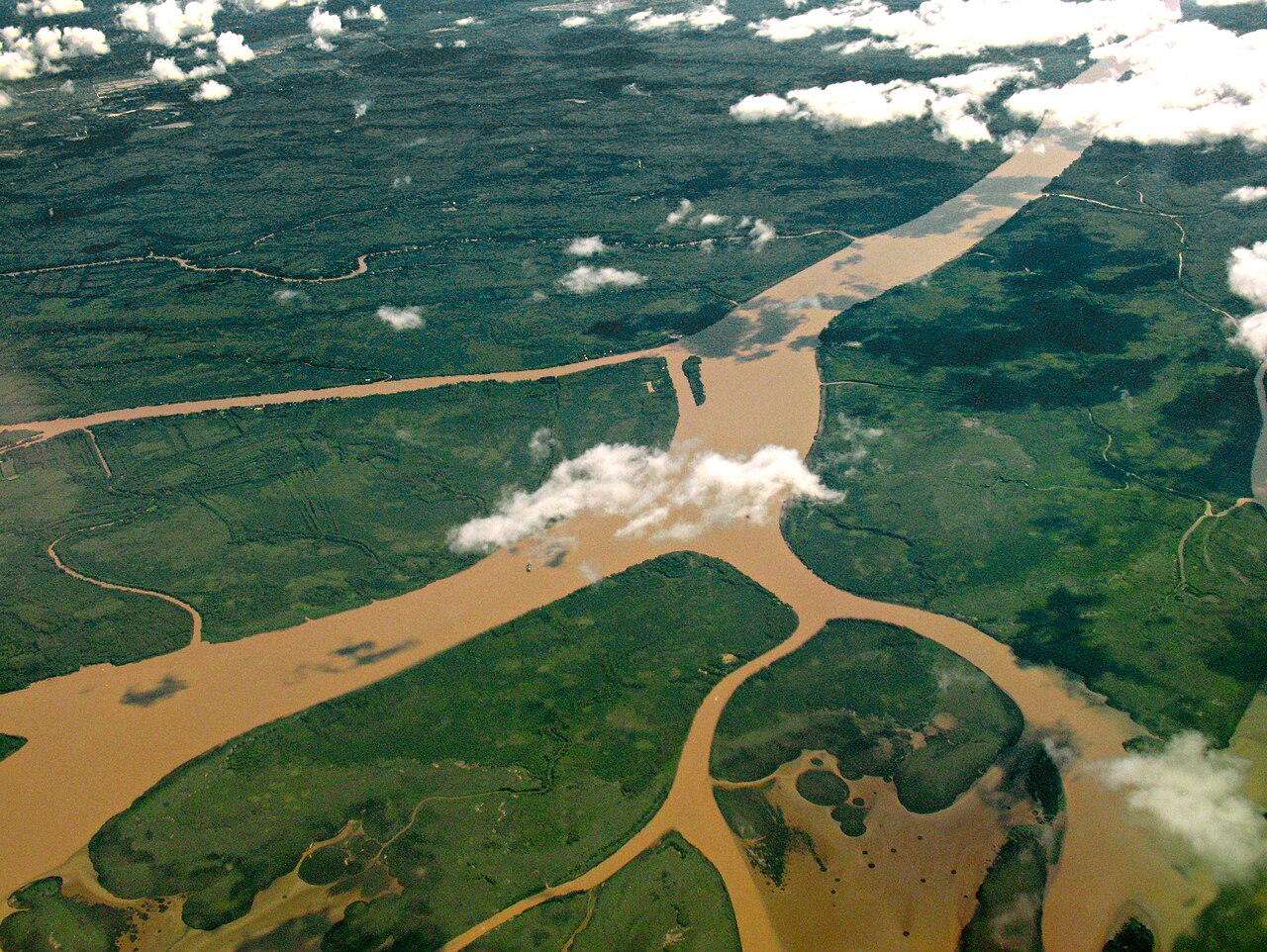
The Paraná Delta is a massive freshwater delta spanning approximately 17,500 square kilometers in northeastern Argentina, where the Paraná River fans out into thousands of islands, channels, and marshes before emptying into the Río de la Plata estuary. It is one of the largest river deltas in the world and the only major delta that is still actively growing, advancing into the estuary at a rate of roughly 70 meters per year.
Introduction
Despite its proximity to Buenos Aires — the second section of the delta begins just 30 kilometers from the capital — the Paraná Delta remains a remarkably wild landscape. Its labyrinthine waterways support diverse wildlife including marsh deer, capybara, and hundreds of bird species, while its islands are home to scattered communities of islanders who live a traditional, water-based lifestyle.
Geographic Setting
- Location: Northeastern Argentina, Entre Ríos and Buenos Aires provinces
- Area: ~17,500 km²
- Type: Freshwater river delta, actively growing
- Growth Rate: ~70 m/year into the Río de la Plata
The Paraná Delta begins near the city of Diamante in Entre Ríos province and extends roughly 320 kilometers southeast to the Río de la Plata. It is divided into three sections: the upper delta with well-defined channels, the middle delta with dense forested islands, and the lower delta — the youngest and most dynamic section — closest to Buenos Aires.
The delta's islands are formed by sediment deposition from the Paraná River, which carries an estimated 160 million tonnes of sediment annually. New islands are constantly forming at the delta front, while older islands gradually rise above flood level through sediment accumulation and organic matter buildup. The result is a landscape in perpetual motion.
Ecology & Wildlife
- Mammal Species: Over 40, including capybara, marsh deer, coypu
- Bird Species: Over 300
- Reptiles: Broad-snouted caiman, pit vipers, turtles
- Vegetation: Willows, ceibo trees, pampas grass, aquatic plants
The Paraná Delta is a critical biodiversity hotspot within the Argentine Pampas, supporting species that have been largely eliminated from surrounding agricultural land. The marsh deer, Argentina's largest native deer, survives in the delta's interior marshes. Capybara, the world's largest rodent, are abundant on island edges and riverbanks.
Over 300 bird species have been recorded in the delta, including the scarlet-headed blackbird, snail kite, and numerous heron species. The delta is a key stopover for Neotropical migratory birds. The dense willow and ceibo forests on older islands provide nesting habitat, while the extensive marshes and channels support a rich aquatic food web of fish, amphibians, and invertebrates.
Hydrology & Climate
- Water Source: Paraná River (second-largest in South America)
- Sediment Load: ~160 million tonnes/year
- Flood Frequency: Major floods every 5–7 years
- Climate: Humid subtropical to temperate
The Paraná River is the second-largest river in South America after the Amazon, with a discharge of roughly 17,000 cubic meters per second. Its enormous sediment load, sourced from erosion in Brazil, Paraguay, and Argentina, drives the delta's growth. Major floods, occurring roughly every 5 to 7 years, inundate the entire delta and deposit fresh layers of silt that enrich the islands.
The delta's hydrology is also influenced by the "sudestada," a persistent southeastern wind that pushes Río de la Plata water back upstream into the delta, causing flooding independent of river levels. These wind-driven floods can be sudden and severe, raising water levels by over 2 meters in hours and threatening island communities that lack high ground.
Conservation & Threats
- Main Threats: Fire, real estate development, invasive species, pollution
- 2020 Fires: Thousands of fires burned across the delta
- Cultural Heritage: Traditional islander communities
In 2020, thousands of deliberately set fires swept across the Paraná Delta, burning hundreds of thousands of hectares of marsh and forest. The fires, primarily set to clear land for cattle grazing, blanketed Buenos Aires and Rosario in smoke for months. The crisis highlighted the delta's vulnerability to unregulated land use and the lack of effective environmental enforcement.
Real estate development in the lower delta, driven by proximity to Buenos Aires, threatens to transform islands into gated communities with filled land and artificial embankments. These developments disrupt natural flooding patterns, fragment wildlife corridors, and displace traditional islander communities. Conservation organizations advocate for comprehensive land-use planning and the creation of a national park in the delta.
Key Facts
- The Paraná Delta covers approximately 17,500 km², one of the largest deltas in the world.
- It is actively growing, advancing about 70 meters per year into the Río de la Plata.
- Over 300 bird species and 40+ mammal species inhabit the delta.
- The Paraná River carries 160 million tonnes of sediment to the delta annually.
- It lies just 30 km from Buenos Aires, one of the world's largest cities.
Fun Facts
- The Paraná Delta is the only major river delta in the world that empties into a freshwater estuary rather than the ocean.
- Capybara in the delta can weigh over 60 kg, making them the world's largest rodents.
- The delta's islands are so dynamic that maps from 50 years ago show water where solid land exists today.
Final Thoughts
The Paraná Delta is a vast, dynamic wetland hiding in plain sight near one of South America's largest cities. Its ongoing growth, remarkable wildlife, and traditional island culture make it unique among the world's deltas, even as fire, development, and pollution threaten its future.
Test Your Knowledge!
Think you know the world's great wetlands and deltas? Try our geography quiz games!
Play Geography Games →