
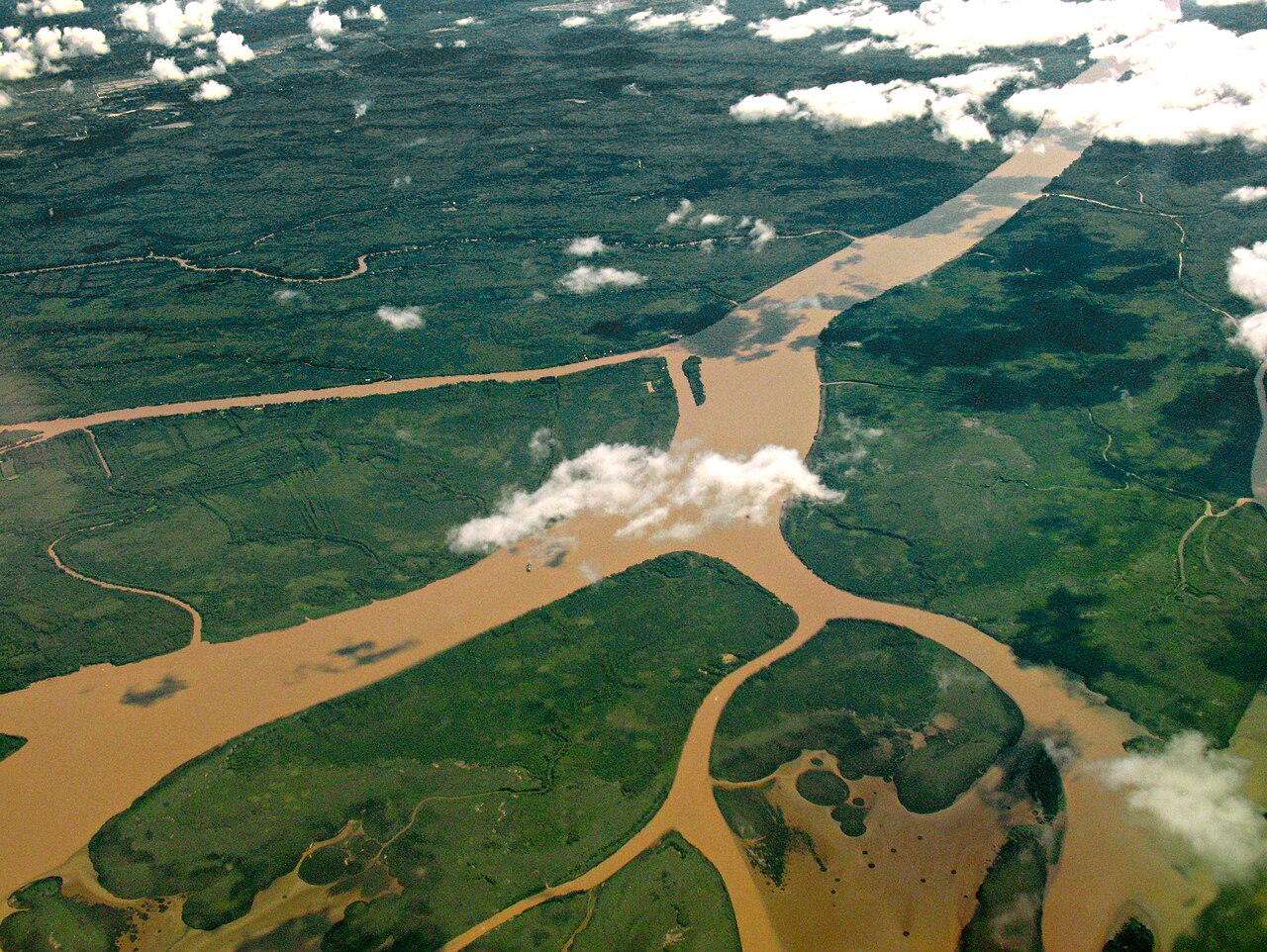
The Paraná River is the second-longest river in South America after the Amazon, flowing approximately 4,880 kilometers from the confluence of the Paranaíba and Grande rivers in southeastern Brazil through Paraguay and Argentina to the Río de la Plata estuary. Together with the Uruguay River, it forms the Río de la Plata, the widest river estuary in the world.
Introduction
The Paraná is one of the most economically important rivers in South America. It hosts the Itaipu Dam, one of the largest hydroelectric power stations on Earth, and the Hidrovía Paraná-Paraguay, a major inland waterway for commodity exports. The river's basin produces much of the soy, beef, and grain that feed the world.

Source to Sea
- Length: ~4,880 km
- Source: Confluence of Paranaíba and Grande rivers, São Paulo/Minas Gerais, Brazil
- Mouth: Río de la Plata estuary, Argentina/Uruguay
The Paraná forms at the confluence of the Paranaíba and Grande rivers in southeastern Brazil and flows southwest through the Brazilian states of São Paulo, Paraná, and Mato Grosso do Sul. It forms the border between Brazil and Paraguay, then between Paraguay and Argentina, before entering Argentina and flowing south to Buenos Aires and the Río de la Plata.
The Río de la Plata estuary, where the Paraná meets the Uruguay River, is the widest river estuary in the world at approximately 220 kilometers at its mouth. Buenos Aires and Montevideo both sit on this estuary. The Paraná Delta, a vast wetland of about 14,000 square kilometers near Buenos Aires, is one of the largest freshwater deltas in the world.
Geography & Course
- Basin Area: ~2.8 million km²
- Countries: Brazil, Paraguay, Argentina, Bolivia, Uruguay
- Major Tributaries: Paraguay, Iguazu, Tietê, Paranapanema
The Paraná Basin is the second-largest in South America, covering parts of five countries. The Paraguay River, the Paraná's largest tributary, drains the Pantanal — the world's largest tropical wetland at roughly 150,000 square kilometers. The Iguazu River enters the Paraná at the spectacular Iguazu Falls, one of the world's largest and most impressive waterfall systems.
The upper Paraná in Brazil has been heavily dammed, with a cascade of reservoirs providing hydroelectric power for São Paulo and other major cities. The middle Paraná between Paraguay and Argentina retains more natural character, with extensive floodplain wetlands and gallery forests.
Climate & Hydrology
- Average Discharge: ~17,000 m³/s at Río de la Plata
- Itaipu Dam: 14,000 MW capacity; generated world record 103.1 TWh in 2016
- 2021 Drought: Worst drought in 70 years; severe impacts on shipping and hydropower
The Paraná's flow is influenced by tropical rainfall in its northern catchment and subtropical conditions further south. The Itaipu Dam, on the Brazil-Paraguay border, is one of the largest hydroelectric power stations in the world with 14,000 megawatts of capacity. In 2016, Itaipu generated a world record 103.1 terawatt-hours of electricity.
The Paraná experienced its worst drought in 70 years in 2021–2022, with water levels dropping to historic lows. The drought severely impacted hydroelectric generation (Itaipu output dropped 25%), disrupted the Hidrovía navigation route used for grain exports, and threatened water supply to cities including Asunción and Rosario. Climate scientists linked the drought to La Niña conditions and deforestation in the Amazon.
Ecology & Wildlife
- Iguazu Falls: One of the world's largest waterfall systems (275 individual falls)
- Pantanal: World's largest tropical wetland, drained by the Paraguay tributary
- Fish Species: ~600 species in the basin
The Paraná Basin supports remarkable biodiversity, particularly in the Pantanal wetlands and the Atlantic Forest remnants of the upper basin. Iguazu Falls, shared by Argentina and Brazil, comprises 275 individual waterfalls along a 2.7-kilometer semicircular cliff, dropping up to 82 meters. The falls are a UNESCO World Heritage Site and one of South America's most visited natural attractions.
The basin supports approximately 600 fish species, including the massive dourado (golden dorado), a prized sport fish that can reach 1 meter in length. Jaguars, giant otters, and giant anteaters inhabit the Pantanal and other natural areas within the basin. However, agricultural expansion — particularly soy cultivation — continues to destroy habitat at an alarming rate.
Human Geography & History
- Population in Basin: ~100 million people
- Hidrovía: Major inland waterway for commodity exports (soy, iron, grain)
- Major Cities: São Paulo, Buenos Aires, Asunción, Rosario
The Paraná Basin is one of the most economically productive regions in South America. The Hidrovía Paraná-Paraguay waterway handles roughly 100 million metric tons of cargo annually, primarily soy, corn, iron ore, and other commodities exported through the ports of Rosario and Buenos Aires. This waterway is critical to the economies of Brazil, Argentina, Paraguay, Bolivia, and Uruguay.
The Paraná Delta near Buenos Aires is a popular recreational area and ecological reserve, just 30 kilometers from the center of a metropolitan area of 15 million people. The delta's islands are home to small farming communities, weekend residences, and nature reserves, creating a remarkable rural landscape on the doorstep of one of South America's largest cities.
Key Facts
- The Paraná is South America's second-longest river at approximately 4,880 km.
- The Itaipu Dam has 14,000 MW capacity and generated a world record 103.1 TWh in 2016.
- The Río de la Plata estuary at its mouth is the widest in the world at ~220 km.
- The Hidrovía waterway handles ~100 million metric tons of cargo annually.
- Iguazu Falls on the Paraná's Iguazu tributary comprises 275 individual waterfalls.
Fun Facts
- Paraguay gets nearly 100% of its electricity from the Itaipu and Yacyretá dams on the Paraná.
- The Paraná Delta is expanding into the Río de la Plata at a measurable rate due to sediment deposition.
- The Río de la Plata is so wide at its mouth that you cannot see across it from either shore.
- The 2021 Paraná drought was the worst in 70 years, reducing Itaipu output by 25%.
Final Thoughts
The Paraná is South America's workhorse river, powering cities, moving commodities, and sustaining ecosystems across a continent. From the engineering marvel of Itaipu to the natural wonder of Iguazu Falls, it combines human ambition with natural splendor. As drought and deforestation threaten its flow, the Paraná's sustainable management is critical to South American prosperity.
Test Your Knowledge!
Think you know the world's rivers? Test your knowledge!
Play Geography Games →