
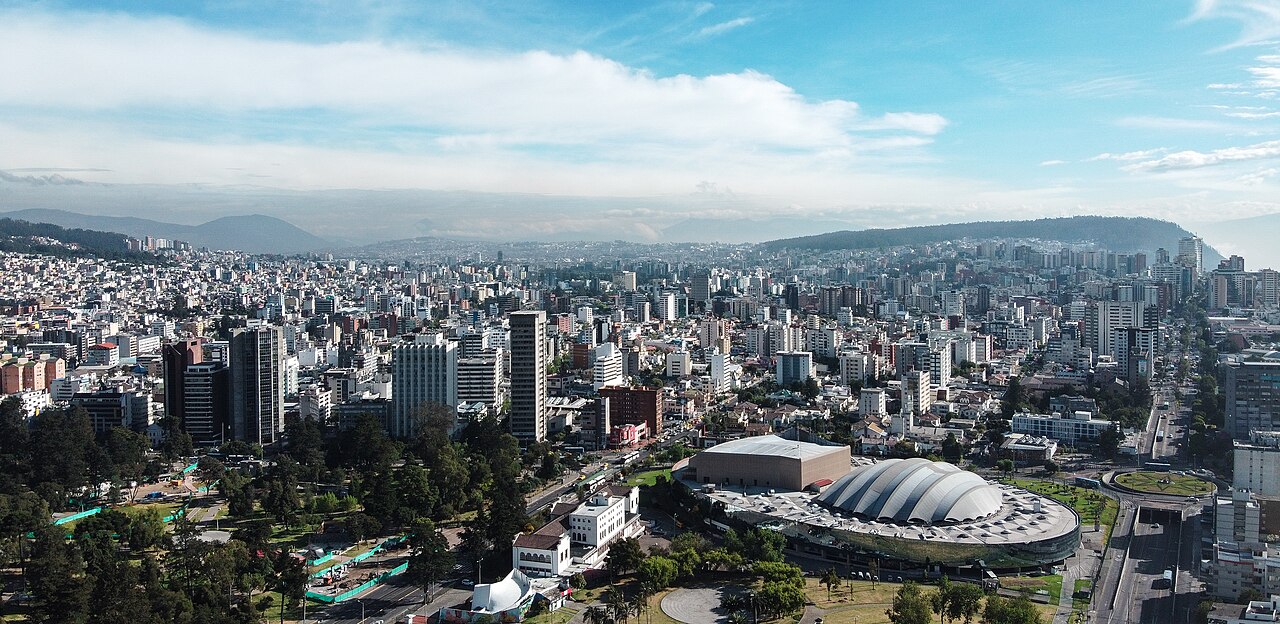
Ecuador has a population of approximately 18 million people as of 2025, making it the 65th most populous country in the world and the fourth most populous in South America. Despite ranking among the smaller nations on the continent by land area, Ecuador packs a large and youthful population into territory spanning Pacific coast, Andean highlands, and Amazon rainforest, plus the remote Galápagos Islands roughly 1,000 km offshore.
How Many People Live in Ecuador?
Ecuador's estimated 18 million residents place it 65th globally for population, just behind countries like the Netherlands and ahead of Guatemala. Within South America, only Brazil, Colombia, and Argentina have larger populations. The country's population density averages roughly 70 people per square kilometre, but that figure conceals enormous variation: the Andean highlands and the coastal lowlands around Guayaquil are densely settled, while the Amazonian east (the Oriente) and the Galápagos remain sparsely populated.
That 18 million total has roughly tripled since 1970, when Ecuador had around 6 million people. The growth reflects both falling mortality and, historically, high birth rates — though those rates have since moderated considerably. You can explore more about the country's geography and culture in our ecuador country guide.
Population Growth and Future Trends
Ecuador's population is currently growing at about 1.12% per year, a moderate pace by global standards and a sharp drop from the roughly 2.7% annual growth seen in the 1970s. The fertility rate has fallen to around 2.3 children per woman, just above the replacement level of 2.1, signalling that natural growth will continue to slow in coming decades.
Migration adds complexity to the picture. Ecuador has received an estimated 500,000 Venezuelan migrants in recent years, while at the same time around 3 million Ecuadorians live abroad, chiefly in the United States and Spain. Remittances sent home by this diaspora amount to roughly 4% of GDP — a significant economic lifeline. Demographers project Ecuador's population will reach about 22 million by 2050 before growth levels off further.
The Largest Cities
Ecuador's population is concentrated in three major urban centres, each anchoring a different region:
- Guayaquil — The country's largest city and principal Pacific port, with roughly 2.7 million metropolitan residents. It is the commercial and industrial engine of the coastal lowlands.
- Quito — The capital, home to about 2.8 million metro residents, sits at 2,850 metres in the Andes, making it the second-highest capital city in the world after La Paz. Its colonial old town is a UNESCO World Heritage Site.
- Cuenca — The third-largest city, with around 400,000 residents, celebrated for its colonial architecture and increasingly popular among North American retirees.
Roughly two-thirds of Ecuadorians now live in urban areas, a share that has climbed steadily as people moved from the countryside in search of work and services.
Who Are the Ecuadorian People?
Ecuador is ethnically diverse. About 72% of the population identifies as mestizo (mixed Indigenous and European ancestry), with around 7% Indigenous, 6% Afro-Ecuadorian, and 6% White. Spanish is the official language and spoken by the vast majority, while Kichwa (a variety of Quechua) and Shuar hold official recognition as intercultural languages used by Indigenous communities.
Religiously, the country remains predominantly Christian, with roughly 74% identifying as Roman Catholic, though evangelical and other denominations are growing. The median age is about 28 years, reflecting a relatively young society, and Ecuador is governed as a presidential republic. Notably, in 2008 Ecuador became the first country in the world to enshrine constitutional rights for nature, known as Pachamama.
Population at a Glance
- Population (2025 est.): ~18,000,000
- World rank: 65th most populous
- Annual growth rate: 1.12%
- Population density: ~70 people per km²
- Capital: Quito
- Largest city: Guayaquil
- Median age: ~28 years
Frequently Asked Questions
What is the population of Ecuador in 2025?
Ecuador's population is approximately 18 million people as of 2025, making it the 65th most populous country in the world and the fourth most populous in South America after Brazil, Colombia, and Argentina.
What is the largest city in Ecuador?
Guayaquil is Ecuador's largest city, with about 2.7 million metropolitan residents. It is the country's main Pacific port and commercial hub. The capital, Quito, is slightly larger at the metro level (around 2.8 million) but Guayaquil's urban core is the most populous.
Is Ecuador's population growing or shrinking?
Ecuador's population is still growing, at about 1.12% per year, though this rate has slowed substantially from the 1970s. With a fertility rate near replacement level, the population is projected to reach roughly 22 million by 2050 before growth tapers off.
What languages do Ecuadorians speak?
Spanish is the official language spoken by most of the population. Kichwa (Quechua) and Shuar are recognised as intercultural languages and are spoken by Indigenous communities, particularly in the Andean highlands and the Amazon region.
