
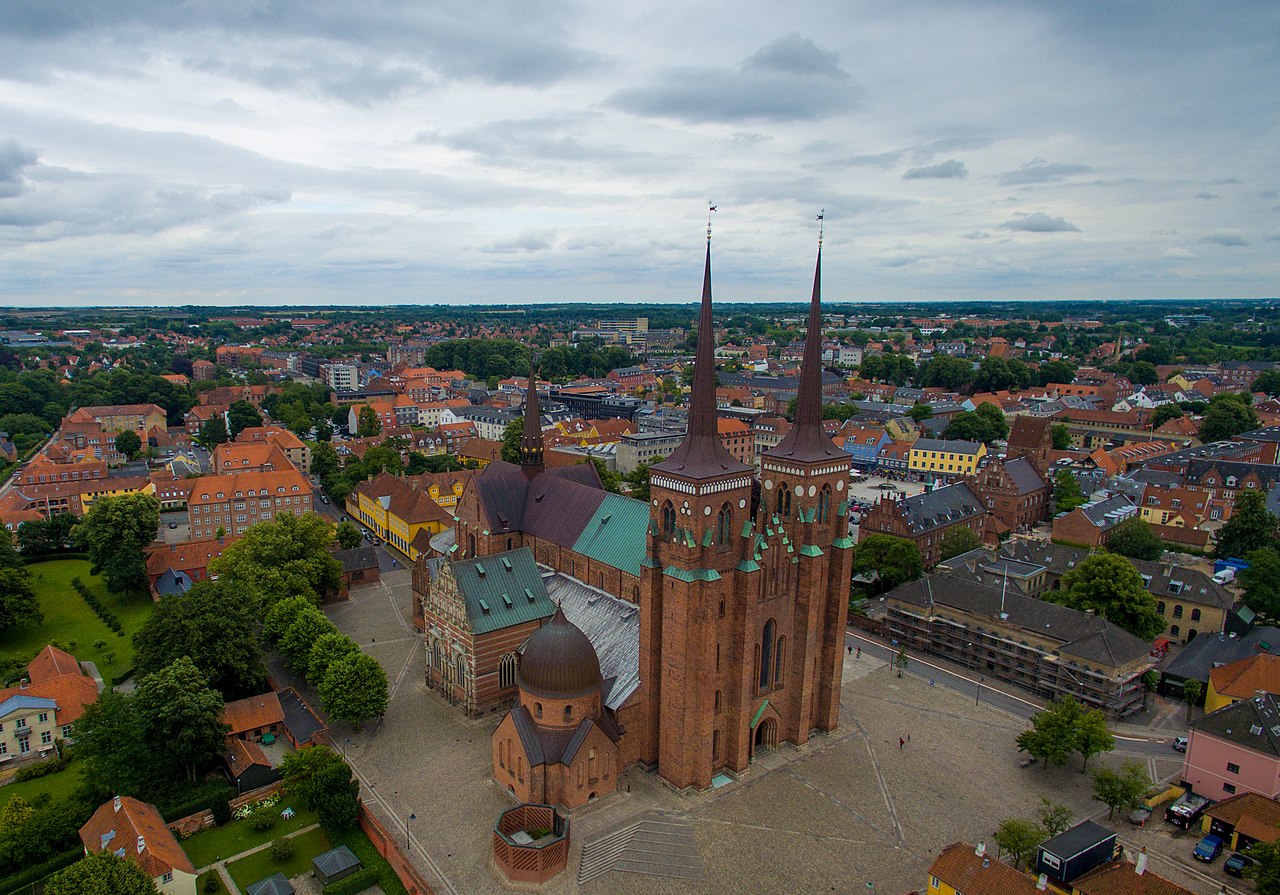
The dominant religion in Denmark is Lutheran Christianity, with roughly 73% of Danes belonging to the Evangelical Lutheran Church of Denmark — yet despite this established state church, Danes are among the least personally religious people in the world. Denmark blends a constitutionally recognised national church, funded through a dedicated church tax, with a deeply secular culture in which weekly worship is rare and belief is treated as a private, often understated matter.
Denmark's Religious Demographics
Religious affiliation in Denmark is heavily concentrated in one institution, but personal belief is far more fragmented. The approximate breakdown of the population looks like this:
- Evangelical Lutheran Church of Denmark: around 73% are registered members
- Islam: roughly 4–5%, the second-largest faith, with a Muslim population near 300,000
- Other Christian denominations: about 2%, including Roman Catholics, Pentecostals and Orthodox communities
- Unaffiliated or no religion: close to 19% and steadily rising
- Other faiths: around 2%, including small Buddhist, Hindu and Jewish communities
The headline figure is misleading on its own. While nearly three-quarters of Danes are church members, surveys consistently show that only a small minority attend services regularly and a large share describe themselves as non-believers or agnostics. This gap between formal membership and active faith is one of the defining features of Danish religious life.
From Norse Gods to the Reformation
Before Christianity, Denmark was firmly within the Norse pagan world, worshipping Odin, Thor and Freya during the Viking Age. The decisive turn came around 965 CE, when King Harald Bluetooth converted to Christianity and raised the Jelling Stones in Jutland to commemorate the event — monuments often called Denmark's "birth certificate." Over the following centuries the country became thoroughly Catholic, until the Protestant Reformation swept north. In 1536, under King Christian III, Denmark broke with Rome and adopted Lutheranism, making the Lutheran Church the official state church. That constitutional arrangement has endured for nearly five centuries and remains in place today, with the reigning monarch serving as its formal head.
Cultural Christianity and a Secular Society
Modern Danish religion is best described as "cultural Christianity." Membership is inherited and maintained largely for tradition and life-cycle rituals rather than active worship. Most members pay a church tax of roughly 1% of income, which funds clergy, buildings and parish activities, and many remain members simply to keep access to church weddings, baptisms and funerals. Confirmation (konfirmation) at around age 14 is still widely observed, frequently as much for the family party and gifts as for the religious meaning. Christmas, known as Jul, is the year's central celebration, focused on Christmas Eve dinner and gifts around the tree, while Easter carries playful customs such as anonymous teasing rhymes called gækkebreve and seasonal "Easter beers." Sociologists often note that the Danish ideal of hygge — warmth, coziness and togetherness — has come to fill some of the communal role once played by the church.
Sacred Sites and Religious Landmarks
Denmark's religious heritage is written into its landscape. The Jelling Stones, a UNESCO World Heritage Site, mark the moment the nation embraced Christianity. Roskilde Cathedral, also a World Heritage Site, has been the burial church of Danish monarchs for centuries and is a masterpiece of brick Gothic architecture. In Copenhagen, the Church of Our Saviour is famous for the external spiral staircase winding around its spire, while Grundtvig's Church stands out as a striking work of expressionist design built from millions of yellow bricks. Denmark's growing Muslim community is served by around 170 mosques, including Copenhagen's first purpose-built grand mosque, which opened in 2014 after considerable public debate over its foreign funding.
A Critical Religious Tradition
Denmark also produced one of the world's most influential religious thinkers: the philosopher Søren Kierkegaard. Often regarded as the father of existentialism, Kierkegaard wrote passionately about faith and the individual's relationship to God in the 19th century, yet he sharply attacked the comfortable, institutional Danish state church, accusing it of being spiritually hollow. His critique foreshadowed the relaxed, questioning attitude many Danes hold toward organised religion today. For broader context on the country's history, geography and culture, see our denmark country guide.
Frequently Asked Questions
What is the main religion in Denmark?
The main religion is Lutheran Christianity through the Evangelical Lutheran Church of Denmark, the official state church, to which roughly 73% of the population belongs as registered members.
Does Denmark have an official state religion?
Yes. The Danish constitution names the Evangelical Lutheran Church as the established national church, supported by the state and a church tax, with the monarch as its formal head. It is one of the few remaining state churches in Europe.
Are Danish people religious?
Generally not in a devout sense. Although church membership is high, weekly attendance is low and a large share of Danes describe themselves as non-believers or only loosely Christian, making Denmark one of the world's most secular societies.
What is the second-largest religion in Denmark?
Islam is the second-largest religion, accounting for around 4–5% of the population. The Muslim community, numbering near 300,000, grew largely through immigration since the 1960s and is served by roughly 170 mosques.