
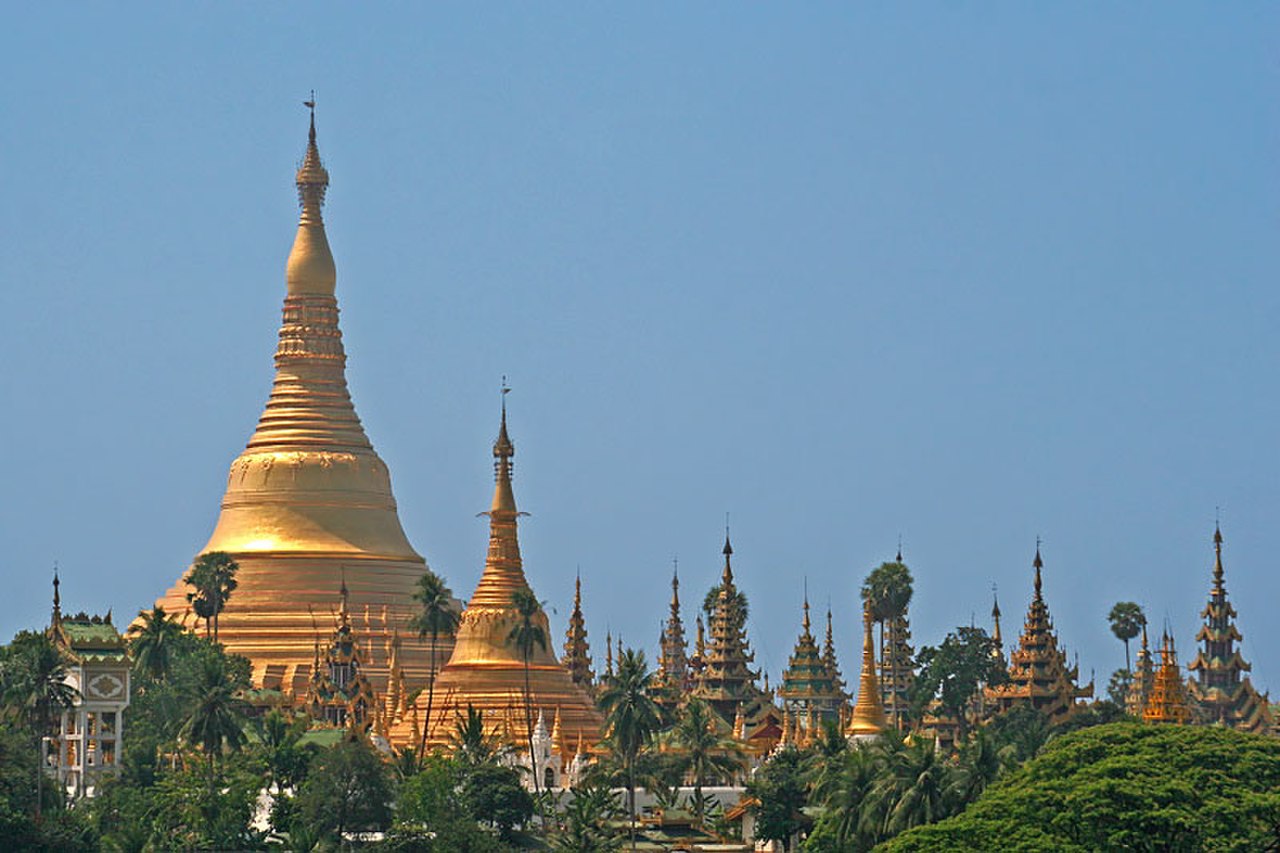
Myanmar is overwhelmingly Buddhist: according to the 2014 census, 87.9% of the population is Buddhist, 6.2% Christian, 4.3% Muslim, 0.8% animist, 0.5% Hindu, and 0.3% other or no religion. That makes Myanmar one of the most devoutly Theravada Buddhist nations on Earth. Yet the headline number hides a far richer picture: smaller faiths cluster among specific ethnic minorities, colonial history shaped where each religion took root, and a contested census means the true Muslim share is almost certainly higher than the official figure.
Religion in Myanmar at a glance
Myanmar's religious make-up is unusually concentrated. Nearly nine in ten people follow a single tradition, Theravada Buddhism, while every other faith is a minority shaped by geography and ethnicity rather than spread evenly across the country. Here is the official breakdown from the 2014 Population and Housing Census:
- Buddhist: 87.9% (about 45 million people)
- Christian: 6.2% (about 3.2 million)
- Muslim: 4.3% officially (about 2.2 million counted; likely 5–6% in reality)
- Animist: 0.8% (about 408,000)
- Hindu: 0.5% (about 252,000)
- Other or no religion: 0.3%
The numbers behind the breakdown
These percentages come from Myanmar's 2014 Population and Housing Census, the first nationwide count in three decades and still the most authoritative source available. In raw numbers, that translates to roughly 45 million Buddhists, about 3.2 million Christians, around 2.2 million Muslims, some 408,000 animists, and approximately 252,000 Hindus out of a population of about 51 million.
One important caveat shapes how these figures should be read. The census did not count an estimated 1.1 to 1.2 million Rohingya Muslims in Rakhine State, because the government refused to recognise "Rohingya" as a self-identification and most Rohingya boycotted the count in protest. The true Muslim share in 2014 was therefore likely closer to 5 to 6%. U.S. State Department religious-freedom estimates broadly echo the census otherwise, putting Buddhism near 88%, Christianity at about 6%, and Islam around 4%. Because no comparable nationwide census has been conducted since, the 2014 data remains the benchmark cited by researchers, governments, and humanitarian agencies alike.
Theravada Buddhism and Burmese identity
Nearly nine in ten people in Myanmar follow Theravada Buddhism, the "school of the elders" branch also dominant in Thailand, Sri Lanka, Cambodia, and Laos. Buddhism reached the region from India via the Mon people in the early centuries CE and became entrenched during the Bagan Kingdom (849–1297), when King Anawrahta made Theravada the realm's official faith in the mid-11th century and his successors raised more than 10,000 temples on the central plains. The surviving ruins at Bagan, where some 2,000 temples and pagodas still stand across a sweeping bend of the Irrawaddy River, remain one of the most concentrated displays of religious architecture anywhere in Asia.
Today Buddhism is tightly bound to the dominant Bamar (Burman) ethnicity, who make up roughly 68% of the population. Myanmar is also one of the most monasticised societies on the planet: it has around 500,000 ordained monks and some 75,000 nuns, meaning close to 1% of the entire population wears robes at any given moment. Almost every Burmese man ordains at least briefly, often during the three-month Vassa rains retreat. Daily life is steeped in Buddhist practice: families give alms to barefoot monks each morning, the golden Shwedagon Pagoda in Yangon draws constant pilgrims, and the lunar calendar of full-moon festivals structures the social year. For a wider look at the nation's geography and culture, see our Myanmar country guide.
Christian and Muslim minorities
Christianity, the second-largest religion at 6.2%, is concentrated almost entirely among highland ethnic minorities, the Chin, Kachin, Karen, and Naga. The roots trace to American Baptist missionary Adoniram Judson, who arrived in 1813 and translated the Bible into Burmese; missions found fertile ground among hill peoples with little exposure to lowland Buddhism. Around 80% of Chin and 90% of Kachin Christians are Baptist, and some Chin upland villages are essentially 100% Christian, a sharp contrast with the Buddhist Bamar lowlands. This means religion in Myanmar maps closely onto ethnicity and altitude: lowland river valleys are Buddhist, while the surrounding hill regions hold the country's Christian heartland.
Islam has existed in Myanmar for over a thousand years and spans several distinct communities: long-established Bamar (Burmese) Muslims, Indian Muslims descended from colonial-era migrants, and the Sunni Rohingya of northern Rakhine State, whose citizenship has been contested by successive governments since the 1982 citizenship law stripped them of recognition. The military operations of 2017, which the UN described as carrying "genocidal intent," drove around 740,000 Rohingya into refugee camps in Bangladesh, creating one of the world's largest refugee settlements at Cox's Bazar, a humanitarian crisis that remains central to any honest account of religion in Myanmar.
Hinduism, nat worship, and the state's role
Most of Myanmar's roughly 252,000 Hindus descend from Tamil and other Indian labourers brought during British rule (1824–1948); Yangon retains several historic temples and Diwali is widely marked. Hindu cosmology also bleeds into Burmese Buddhism, where deities like Indra appear as Thagyamin, king of the celestial beings.
The 0.8% animist figure badly understates reality, because it counts only those professing no other religion. In practice the indigenous cult of the nats, 37 named spirits of historical figures who met violent deaths, is observed alongside Buddhism by the majority of Burmese. Shrines to the nats sit beside Buddhist pagodas, and Mount Popa, an extinct volcano near Bagan, is the cult's spiritual home and a major pilgrimage site. As for state status, the 2008 constitution stops short of naming an official religion but recognises "the special position of Buddhism as the faith professed by the great majority of the citizens." In practice Buddhism is supported by the government, taught in schools, and, through nationalist movements such as Ma Ba Tha, sometimes weaponised against minorities.
Key Facts
- Largest religion: Theravada Buddhism, 87.9% (2014 census)
- Second largest: Christianity, 6.2%, mostly Baptist among hill minorities
- Third largest: Islam, 4.3% official (likely 5–6% including uncounted Rohingya)
- Source: 2014 Myanmar Population and Housing Census
- Monastic population: roughly 500,000 monks and 75,000 nuns
- Spiritual heartlands: Bagan and Shwedagon Pagoda (Buddhism); Mount Popa (nat worship)
- Constitutional status: no official religion, but Buddhism holds a "special position"
Frequently Asked Questions
What percentage of Myanmar is Buddhist?
87.9% according to the 2014 census, roughly 45 million people, nearly all of them Theravada Buddhist. That ranks Myanmar among the most Buddhist countries on Earth, alongside Cambodia and Thailand.
What is the second largest religion in Myanmar?
Christianity, at 6.2%, mostly Baptist and concentrated among the Chin, Kachin, and Karen ethnic minorities. Islam follows at 4.3% officially, though the real share is likely 5 to 6% once uncounted Rohingya are included.
Are the Rohingya counted in Myanmar's religion statistics?
Largely no. The 2014 census excluded an estimated 1.1 to 1.2 million Rohingya Muslims, which is why the official 4.3% Muslim figure understates the true Muslim population of the country.
Is Buddhism the official state religion of Myanmar?
Not formally. The 2008 constitution recognises Buddhism's "special position" as the faith of the majority but does not declare it the state religion, although in practice it functions as one through state support and education.
Why is Christianity concentrated in the hills of Myanmar?
American Baptist missionaries from the early 1800s found their most receptive audiences among highland peoples like the Chin and Kachin, who had little prior exposure to lowland Buddhism. As a result, today's Christian communities cluster in the upland border regions rather than the Buddhist river valleys.