

Introduction
The savanna biome is a vast tropical and subtropical grassland characterized by scattered trees, dramatic wet and dry seasons, and some of the most iconic wildlife on Earth. Covering approximately 20% of the planet's land surface, savannas are found across Africa, South America, Australia, and parts of South and Southeast Asia. They occupy the transition zone between tropical rainforests and deserts, receiving enough rainfall to support grasses and some trees but not enough for closed-canopy forest.
Savannas are shaped by four interacting forces: climate, soil, fire, and herbivory. The seasonal alternation between months of drenching rain and months of parching drought creates a dynamic landscape where grasses flourish during the wet season and fire sweeps through dry vegetation during the dry season. Large herbivores — from African elephants to Australian kangaroos — further shape the vegetation, preventing woody plants from dominating.
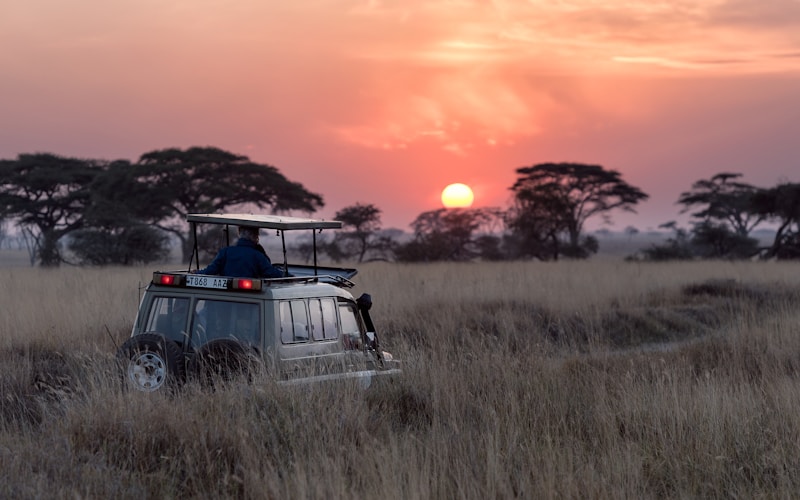
Climate Characteristics
- Köppen Classification: Aw (tropical wet-dry) and portions of BSh (hot semi-arid)
- Average Annual Temperature: 20-30°C year-round
- Annual Precipitation: 500-1,500 mm, concentrated in a 5-8 month wet season
- Dry Season: 4-7 months with little to no rainfall
The defining climatic feature of savannas is the stark division between wet and dry seasons. During the wet season, the Intertropical Convergence Zone shifts poleward, bringing moisture-laden air and heavy rainfall. During the dry season, subtropical high-pressure systems dominate, suppressing rainfall for months on end. This seasonal pulse of water and drought drives the entire ecosystem.
The length and intensity of the dry season largely determines whether an area supports wet savanna (closer to the forest boundary, with a shorter dry season) or dry savanna (closer to the desert boundary, with longer drought). In East Africa, the Serengeti receives about 1,100 mm of rain annually, concentrated in two rainy seasons separated by dry spells. Brazil's Cerrado receives 1,200-1,800 mm, but virtually all of it falls between October and March.
Temperature remains warm year-round in tropical savannas, with little seasonal variation. The most noticeable temperature changes occur diurnally — hot days and cool nights, especially during the dry season when clear skies allow rapid radiative cooling after sunset. Some subtropical savannas, like those in northern Australia, experience mild winters with occasional frost.
Location and Global Distribution
- Africa: The Serengeti, Sahel, Kalahari, and Miombo woodlands — the largest savanna region
- South America: Brazil's Cerrado, the Llanos of Venezuela and Colombia
- Australia: Northern Australia's tropical savannas, the largest in the Southern Hemisphere
- Asia: Parts of India, Myanmar, and Thailand
Africa contains nearly half of the world's savanna, stretching in a great arc from Senegal in the west through East Africa's famous wildlife parks to Mozambique in the southeast. The African savanna is the most species-rich, supporting the last great concentrations of large mammals on Earth. The Serengeti-Mara ecosystem in Tanzania and Kenya is perhaps the most famous savanna landscape, home to the annual Great Migration of 1.5 million wildebeest.
South America's Cerrado is the world's most biodiverse savanna. Covering 2 million square kilometers of central Brazil, it contains over 12,000 plant species, of which roughly 40% are found nowhere else. The Cerrado is also one of the most threatened biomes on Earth, with over 50% of its original area converted to soybean farms and cattle ranches since the 1970s.
Australia's northern savannas cover approximately 1.9 million square kilometers, making them the largest intact tropical savanna remaining on Earth. Unlike African and South American savannas, Australian savannas lack large native herbivores, with fire playing an even more dominant role in maintaining the grassland-woodland balance.
Flora of the Savanna
- Grasses: C4 tropical grasses that grow rapidly during wet season and go dormant in dry season
- Trees: Scattered, fire-resistant species with thick bark and deep roots — acacias, baobabs, eucalyptus
- Adaptations: Fire resistance, drought tolerance, deep taproots, deciduousness
- Cerrado Endemics: Over 12,000 plant species, 40% found nowhere else on Earth
Savanna grasses are among the most productive plants on Earth. Using the C4 photosynthetic pathway, which is highly efficient in hot, sunny conditions, tropical grasses can grow several meters tall during the wet season, producing enormous quantities of biomass. This productivity supports the vast herds of herbivores that characterize savanna ecosystems. When the dry season arrives, grasses go dormant, turning golden-brown and providing fuel for the fires that sweep across the landscape.
Savanna trees must survive both drought and fire. The iconic African acacia has evolved multiple strategies: deep taproots access groundwater during the dry season, thorns deter browsers, and thick bark protects the cambium from fire damage. The baobab stores thousands of liters of water in its swollen trunk, earning it the name "tree of life." In Australia, eucalyptus trees have taken fire adaptation further, with some species actually encouraging fire through volatile oil production, as their seeds germinate best in post-fire conditions.
The relationship between trees and grasses in savannas is one of ecology's great puzzles. Both compete for water and light, and the balance between them is maintained by fire (which kills young trees but not grass roots), herbivory (elephants topple trees, opening areas for grass), soil nutrients, and rainfall patterns. Remove any one of these factors, and the system can tip toward either closed forest or treeless grassland.
Fauna of the Savanna
- African Megafauna: Elephants, lions, leopards, buffalo, rhinos (Big Five), plus giraffes, zebras, wildebeest
- Predators: Lions, cheetahs, wild dogs, hyenas, crocodiles
- South American: Giant anteaters, maned wolves, jaguars, rheas, capybaras
- Australian: Kangaroos, wallabies, emus, monitor lizards
African savannas support the greatest diversity and abundance of large mammals remaining on Earth. The Serengeti ecosystem alone contains over 70 large mammal species, including the Big Five (elephant, lion, leopard, buffalo, and rhinoceros) and vast herds of wildebeest, zebra, and gazelle. The Great Migration, in which 1.5 million wildebeest and hundreds of thousands of zebras and gazelles follow the rains in a circular route through the Serengeti-Mara ecosystem, is the largest terrestrial wildlife movement on the planet.
The open landscape of savannas has driven the evolution of speed. Cheetahs, the world's fastest land animals at 112 km/h, chase down Thomson's gazelles across the African plains. Pronghorn antelope in North American grasslands can sustain speeds of 88 km/h. This predator-prey arms race has produced some of the most athletically remarkable animals on Earth.
South American savannas support a different but equally fascinating fauna. The Cerrado is home to the giant anteater, maned wolf (the tallest canid), giant armadillo, and the endangered hyacinth macaw. The Llanos of Venezuela harbor the world's densest populations of capybaras, anacondas, and caimans. Australia's savannas are dominated by marsupials — kangaroos and wallabies fill the grazing niche occupied by antelopes in Africa.
Threats and Conservation
- Agricultural Conversion: Savannas are being rapidly converted to farmland, especially in South America
- Cerrado Crisis: Over 50% of Brazil's Cerrado has been cleared since the 1970s
- Fire Suppression: Disrupting natural fire regimes allows woody encroachment
- Climate Change: Altered rainfall patterns threatening wet-dry season balance
Savannas are among the most threatened biomes globally, largely because their flat terrain and fertile soils make them ideal for agriculture. Brazil's Cerrado has been the world's fastest-disappearing biome, losing over 50% of its original cover to soybean and cattle production in just five decades. Deforestation rates in the Cerrado now exceed those in the Amazon, yet the Cerrado receives a fraction of the international conservation attention.
Fire management is one of the most contentious issues in savanna conservation. Natural fire is essential for maintaining the grass-tree balance, recycling nutrients, and preventing woody encroachment. However, fire suppression policies, often imported from temperate forest management traditions, have disrupted fire regimes in many savanna regions. In parts of Africa, fire exclusion has led to bush encroachment, reducing grazing land and habitat for open-country wildlife.
Climate change models project significant shifts in savanna rainfall patterns, with some regions becoming wetter and others drier. Changes in the timing and duration of the wet and dry seasons could fundamentally alter savanna ecosystems. In Africa, increasing drought stress may push savannas toward desertification in marginal areas, while elevated CO₂ levels could favor tree growth over grasses, shifting the balance toward woodland.
Key Facts
- Savannas cover approximately 20% of Earth's land surface, making them one of the largest biome types.
- The Great Migration in the Serengeti-Mara involves 1.5 million wildebeest and is the largest mammal migration on Earth.
- Brazil's Cerrado has lost over 50% of its original cover yet contains 12,000+ plant species, 40% endemic.
- Fire sweeps through most savannas every 1-5 years, maintaining the grass-tree balance.
- Savanna grasses use C4 photosynthesis, which is up to 50% more efficient than C3 in hot conditions.
Fun Facts
- The African baobab can store up to 120,000 liters of water in its trunk, allowing it to survive months without rain.
- Termite mounds in Australian savannas can be over 6 meters tall and maintain internal temperatures within 1°C despite extreme outside fluctuations.
- The cheetah can accelerate from 0 to 100 km/h in just 3 seconds, making it faster than most sports cars.
- Some acacia trees release chemical signals when browsed that warn neighboring trees to produce bitter tannins, deterring herbivores.
Final Thoughts
The savanna biome is a landscape of dramatic contrasts — drenching wet seasons followed by parching drought, vast herds of herbivores pursued by elite predators, and fire sweeping across golden grasslands to renew the ecosystem. From the Serengeti's wildlife spectacle to the Cerrado's botanical richness, savannas are among Earth's most dynamic and ecologically significant biomes. Their conservation requires understanding the delicate interplay of climate, fire, herbivory, and human land use that maintains these iconic landscapes.
