
Landlocked at the crossroads of Central and South Asia, Afghanistan is a country of soaring mountains, ancient cities, and a history so layered that empires from Alexander the Great to the Mughals all left their mark here. It is a place that has stitched the East to the West for thousands of years, and yet remains one of the least-visited nations on Earth. Here are ten genuinely fascinating facts that go far beyond the headlines.
1. It Sits on Some of the World's Highest Mountains
Much of Afghanistan is dominated by the Hindu Kush, a rugged mountain range whose name loosely translates as "killer of Hindus," a grim reference to the slaves who perished crossing its high passes. The range stretches roughly 800 kilometres across the country, with peaks exceeding 7,000 metres in the far northeast where Afghanistan touches the Pamirs. These mountains historically split the country into isolated valleys, each developing its own dialects and loyalties. The terrain is so formidable that it shaped invasions, trade, and even the modern map. In winter, snow seals entire provinces off from the outside world for months, a fact that has frustrated armies for over two millennia.
2. The Wakhan Corridor Is a Geographic Oddity
Look at a map of Afghanistan and you will notice a thin sliver of land jutting east like a finger, the Wakhan Corridor. This narrow strip, only about 16 kilometres wide in places, was created in the 19th century as a buffer zone between the British and Russian empires during the "Great Game." Remarkably, it gives Afghanistan a short border with China. The Wakhan is home to the Wakhi and Kyrgyz peoples, who herd yaks and sheep at altitudes where few crops grow. Because it stayed largely peaceful during decades of conflict, the corridor is often described as one of the safest and most pristine parts of the country, drawing the rare adventurous trekker.
3. Kabul Is One of the Highest Capitals on Earth
Afghanistan's capital, Kabul, sits at roughly 1,800 metres above sea level, making it one of the highest national capitals in the world. Founded more than 3,500 years ago, it has served as a strategic hub on routes linking India, Persia, and Central Asia. The city nestles in a narrow valley ringed by mountains, and its ancient walls, bazaars, and gardens have witnessed countless rulers. The Mughal emperor Babur loved Kabul so deeply that he asked to be buried there, and his tomb, the Bagh-e Babur garden, still overlooks the city. To learn more, explore our country guide.
4. It Is Home to Many Peoples and Languages
Afghanistan is one of the most ethnically diverse nations in Asia. The largest groups include the Pashtuns, Tajiks, Hazaras, and Uzbeks, alongside smaller communities such as the Aimaq, Turkmen, and Baloch. The two official languages are Pashto and Dari (a variety of Persian), but dozens of other tongues are spoken across the valleys, including Uzbek, Turkmen, and the rare languages of the Wakhan. Many Afghans are bilingual or trilingual out of necessity. This linguistic richness reflects the country's role as a meeting point of civilizations, where Persian poetry, Turkic traditions, and Pashtun tribal codes have coexisted for centuries.
5. The Bamiyan Buddhas Were Once the Tallest in the World
For nearly 1,500 years, two colossal statues of standing Buddhas were carved into a cliff in the Bamiyan Valley, the larger reaching about 55 metres tall, the tallest standing Buddha statues on the planet. They dated from around the 6th century, when Bamiyan was a thriving Buddhist monastic centre along the Silk Road. Tragically, the statues were destroyed in 2001, but the empty niches and surrounding caves remain a UNESCO World Heritage Site. Today, light projections and digital reconstructions occasionally restore their ghostly outlines, and the valley still draws visitors moved by the scale of what once stood there.
6. Afghanistan Gave the World Lapis Lazuli
For more than 6,000 years, the mines of Badakhshan in northeastern Afghanistan have been the world's principal source of lapis lazuli, the deep blue stone prized by ancient civilizations. Egyptian pharaohs, including Tutankhamun, wore Afghan lapis in their burial masks, and Renaissance painters ground it into the precious pigment ultramarine used in masterpieces across Europe. The same mountains hold emeralds, rubies, and vast untapped deposits of copper, iron, and rare earth minerals. Geologists have estimated the country's mineral wealth in the hundreds of billions of dollars, a resource that remains largely undeveloped because of decades of instability and rugged, hard-to-reach terrain.
7. Buzkashi Is a National Sport Like No Other
Afghanistan's traditional sport, buzkashi, is one of the most intense games on Earth. Mounted horsemen compete to grab a headless goat or calf carcass and carry it to a goal while rivals try to wrest it away. The name literally means "goat grabbing," and matches can involve dozens of riders in a swirling, dusty scrum that tests both horsemanship and raw strength. Skilled players, called chapandaz, are local celebrities, often reaching their prime in their forties. The sport is especially popular in the northern plains, and major matches are major social events drawing huge crowds and spirited wagering.
8. Afghan Cuisine Is a Crossroads on a Plate
Sitting between Persia, India, and Central Asia, Afghan food blends flavours from all three. The national dish, Kabuli pulao, layers fragrant rice with tender lamb, caramelized carrots, and raisins, a dish fit for any celebration. Other favourites include mantu (steamed dumplings topped with yogurt and meat sauce), ashak (leek-filled dumplings), and skewers of grilled kebab served with flat naan bread. Meals are typically shared from communal platters, and green tea is poured generously throughout the day. Afghan hospitality is legendary; refusing food from a host is considered deeply impolite, and guests are often treated with extraordinary generosity even by families of modest means.
9. Its Flag Has Changed More Than Almost Any Other
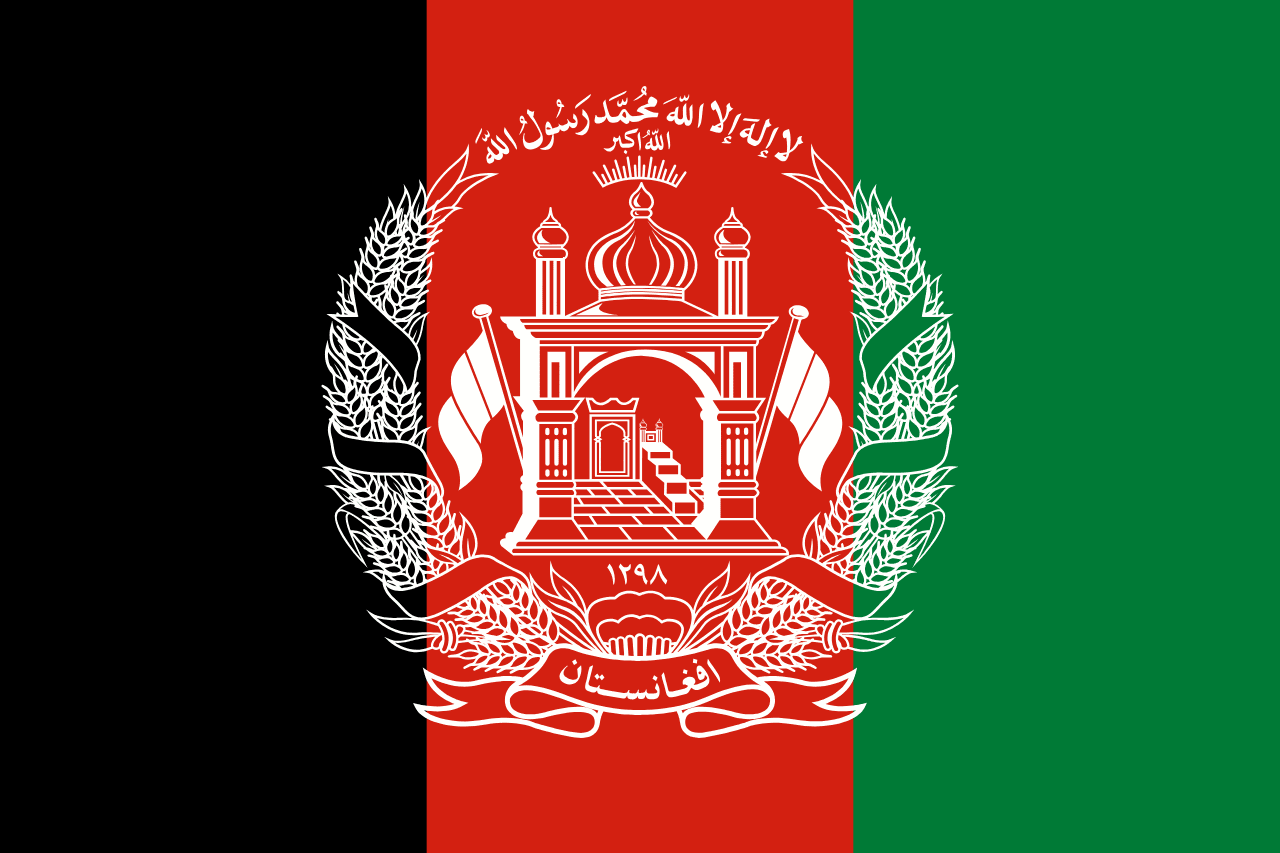
Afghanistan holds an unusual record: its national flag has been redesigned more often than that of nearly any other country, with well over a dozen changes during the 20th and 21st centuries alone. Each shift in government, from monarchy to republic to various regimes, brought new colours and emblems. Many versions featured a central emblem of a mosque with its mihrab and pulpit, framed by sheaves of wheat. The frequent redesigns make the flag a vivid visual record of the nation's turbulent political journey, a banner that has rarely stayed the same for long.
10. It Is One of the Youngest Populations in the World
With a population of roughly 45 million, Afghanistan has one of the youngest age structures on the planet. A large share of Afghans are under the age of 25, and the median age hovers in the late teens. This youthful population means schools, jobs, and cities face enormous demand, but it also represents a vast reservoir of energy and potential. Family ties run deep, and households are often large and multigenerational. Despite the immense challenges the country has faced, this young generation continues to shape Afghanistan's music, sport, technology, and arts in surprising and resilient ways.
Frequently Asked Questions
What is the capital of Afghanistan?
The capital is Kabul, a city of around 4 to 5 million people set in a mountain valley at roughly 1,800 metres above sea level. It is one of the world's highest capital cities and has been a strategic crossroads for over 3,500 years.
What is Afghanistan famous for?
Afghanistan is famous for the towering Hindu Kush mountains, its location on the ancient Silk Road, the lost Bamiyan Buddhas, the world's finest lapis lazuli, and the thunderous traditional sport of buzkashi. It is also known for its rich blend of Persian, Turkic, and Pashtun cultures.
Is there really a part of Afghanistan that touches China?
Yes. The thin Wakhan Corridor in the far northeast stretches east until it meets China, giving the two countries a short shared border of about 76 kilometres. This narrow strip was deliberately created in the 1800s as a buffer between the British and Russian empires.
Conclusion
Afghanistan is a land of staggering contrasts, where ancient Buddhas once gazed over Silk Road valleys, where blue stone from its mountains coloured the art of pharaohs and painters, and where horsemen still battle over a goat carcass in dusty arenas. Behind the modern headlines lies a country of extraordinary depth, diversity, and resilience. These ten facts only begin to reveal why Afghanistan has fascinated travellers and scholars for thousands of years.