
Stretching from the glittering Mediterranean coast deep into the burning heart of the Sahara, Algeria is a country of staggering scale and surprising contrasts. It is at once the largest nation in Africa, a crossroads of Berber, Arab, Roman, and French influences, and a land where Roman amphitheaters sit beside endless seas of sand. These ten facts reveal an Algeria that is far more layered and fascinating than the headlines suggest.
1. It Is the Largest Country in All of Africa
At roughly 2.38 million square kilometers, Algeria is the biggest country on the African continent and the tenth-largest in the world. To put that in perspective, it is bigger than all of Western Europe combined and nearly three and a half times the size of Texas. Yet the vast majority of its territory is uninhabited desert. The Sahara alone covers around four-fifths of the country, meaning Algeria's enormous size is matched by enormous emptiness. This sheer scale shapes everything about the nation, from how its people are distributed to how it manages resources and transport across distances that can swallow entire countries.
2. Most Algerians Live in a Thin Coastal Strip
With a population of around 48 million, Algeria is one of Africa's more populous nations, but its people cluster almost entirely along the northern Mediterranean coast. Cities like Algiers, Oran, and Constantine sit in a relatively narrow band where the climate is mild, the soil is fertile, and rainfall is reliable. South of the Atlas Mountains, the land empties out dramatically into the Sahara, where settlements survive around scattered oases. This means that while Algeria looks vast on a map, more than 90 percent of its citizens occupy a sliver of land hugging the sea. You can learn more in our country guide.
3. Algiers Is Known as "Algiers the White"
The capital, Algiers, is a striking Mediterranean port whose gleaming white-walled buildings cascade down hillsides toward the sea, earning it the nickname Alger la Blanche ("Algiers the White"). At its heart lies the Casbah, an ancient walled citadel and UNESCO World Heritage Site whose maze of narrow alleys, Ottoman palaces, and crowded houses preserves centuries of history. Algiers is the country's political, cultural, and economic engine, home to its parliament, universities, and grand monuments like the towering Maqam Echahid martyrs' memorial. The blend of French colonial boulevards and traditional Arab-Berber quarters gives the city a distinctive, layered character found nowhere else.
4. Berber Heritage Runs Deeper Than Arabic
While Arabic is the official language, Algeria's oldest cultural roots are Berber, or Amazigh, dating back thousands of years before the Arab conquest. The Amazigh peoples, including the Kabyle of the northern mountains and the Tuareg of the deep desert, have preserved their languages and customs across millennia. In 2016, Tamazight was recognized as an official national language alongside Arabic, a landmark moment for Berber identity. French also remains widely spoken as a legacy of the colonial era, making everyday Algerian life genuinely multilingual. This linguistic mix reflects the many civilizations that have left their mark on the land.
5. It Holds Some of the World's Finest Roman Ruins
Long before it was Algeria, this land was a wealthy province of the Roman Empire, and the ruins it left behind are extraordinary. Timgad, founded by Emperor Trajan around 100 AD, is a near-perfectly preserved Roman city laid out on a precise grid, complete with a theater, library, and triumphal arch standing in the Aurès highlands. Often called the "Pompeii of Africa," Timgad was swallowed by Saharan sand for centuries, which protected it remarkably well. Algeria also boasts Djémila and the coastal ruins of Tipaza, giving the country one of the richest collections of Roman archaeology anywhere outside Italy itself.
6. Its Economy Floats on Oil and Gas
Algeria sits atop some of the largest oil and natural gas reserves in Africa, and hydrocarbons dominate its economy, accounting for the overwhelming majority of export earnings and government revenue. Pipelines snake across the Mediterranean to supply natural gas to Italy and Spain, making Algeria a key energy partner for southern Europe. The state energy company Sonatrach is one of the largest in Africa. While this wealth has funded infrastructure and social programs, it also leaves the country vulnerable to swings in global energy prices, prompting ongoing efforts to diversify into agriculture, tourism, and renewable energy harnessing the abundant Saharan sun.
7. A Hard-Won Independence Shapes the National Spirit
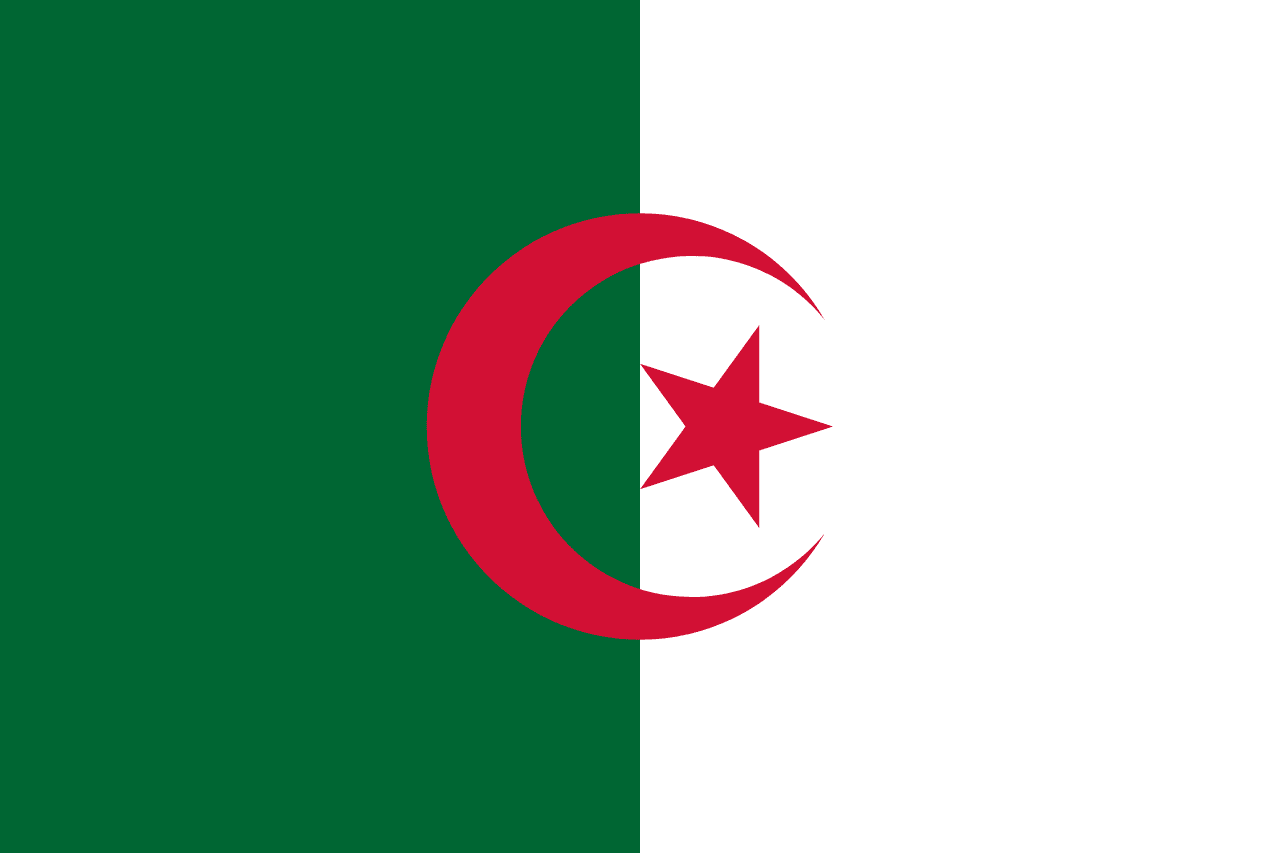
France colonized Algeria in 1830 and ruled it for 132 years, treating it not as a colony but as an integral part of France. The Algerian War of Independence, fought from 1954 to 1962, was one of the most brutal anti-colonial conflicts of the twentieth century, costing hundreds of thousands of lives. Independence on July 5, 1962, became a defining moment of national pride still celebrated every year. The struggle profoundly shaped modern Algerian identity, politics, and its foreign policy of supporting liberation movements abroad. You can also explore the symbolism of the green, white, and red flag born from this era.
8. The Sahara Hides Prehistoric Art Galleries
Deep in the southeastern desert lies Tassili n'Ajjer, a surreal plateau of eroded sandstone "rock forests" that holds one of the greatest concentrations of prehistoric art on Earth. More than 15,000 engravings and paintings, some over 12,000 years old, depict elephants, giraffes, hippos, and cattle herds, proof that the now-barren Sahara was once a green, water-rich savanna. These ancient images record a vanished world and the lives of the people who hunted and herded across it. The otherworldly landscape is so alien that filmmakers have used it to represent other planets, and it remains a UNESCO World Heritage treasure.
9. Couscous and Mint Tea Anchor the Table
Algerian cuisine is a flavorful fusion of Berber, Arab, Ottoman, and French traditions. Couscous, steamed semolina served with slow-cooked lamb, chicken, or vegetables, is the national dish and a centerpiece of family gatherings, especially on Fridays. Spicy merguez sausages, hearty chorba soup eaten during Ramadan, and savory stews seasoned with cumin, coriander, and harissa fill everyday meals. Sweets like honey-soaked makroud and almond pastries accompany sweet mint tea or strong coffee. Bread is sacred and present at nearly every meal. Sharing food is central to Algerian hospitality, where guests are treated with generosity that borders on ceremony.
10. The Fennec Fox Is a National Symbol
Algeria's wildlife reflects its split between coast and desert. The country's beloved national animal is the fennec fox, a tiny, sandy-colored creature with enormous ears that radiate heat and help it survive scorching Saharan nights and days. The national football team is even nicknamed Les Fennecs in its honor. Beyond the desert, the Atlas Mountains shelter Barbary macaques, while the critically endangered Saharan cheetah still roams remote sand seas in tiny numbers. From cork oak forests in the north to gazelles and desert monitor lizards in the south, Algeria's ecosystems are as varied as its landscapes.
Frequently Asked Questions
What is the capital of Algeria?
The capital of Algeria is Algiers, a Mediterranean port city nicknamed "Algiers the White" for its gleaming hillside buildings. It is the nation's largest city and serves as its political, cultural, and economic center, home to the historic Casbah citadel.
What is Algeria famous for?
Algeria is famous for being the largest country in Africa, for the vast Sahara Desert that covers most of its territory, and for spectacular Roman ruins like Timgad. It is also a major oil and natural gas exporter and known for its couscous, mint tea, and rich Berber heritage.
Why is most of Algeria empty?
Around 80 percent of Algeria is covered by the Sahara Desert, where extreme heat and lack of water make large-scale settlement nearly impossible. As a result, more than 90 percent of Algerians live in the fertile, milder northern coastal strip, leaving the immense southern interior almost uninhabited apart from scattered oasis towns.
Conclusion
Algeria is a country that defies easy summary, a place where ancient Roman cities, prehistoric desert art, mountain villages, and modern energy giants all coexist within the largest borders in Africa. From the white terraces of Algiers to the silent dunes of the Sahara, it rewards anyone curious enough to look beyond the surface. These ten facts are only an invitation to keep exploring one of the world's most underappreciated nations.