
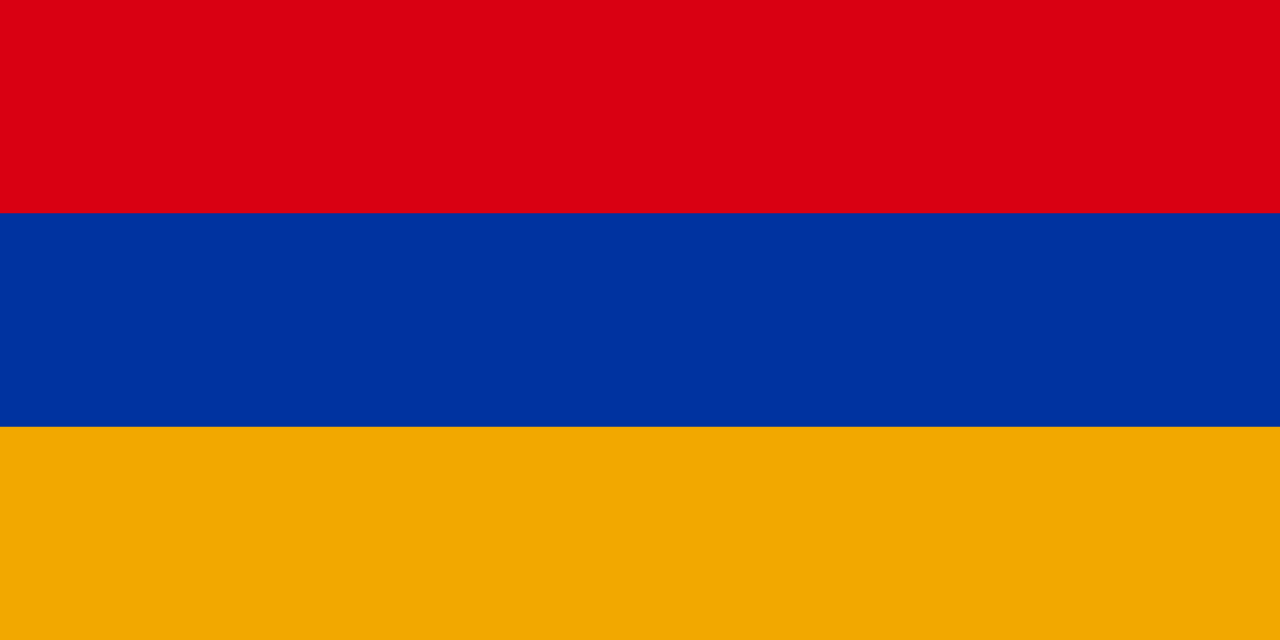
Armenia is a small, landlocked nation in the South Caucasus where snow-capped peaks, ancient stone monasteries, and a 5,500-year-old wine cellar all share the same map. It claims one of the oldest continuous national identities on Earth, a unique 38-letter alphabet, and a diaspora that dwarfs its own population. Here are ten genuinely surprising facts about this rugged, resilient, and deeply storied country.
1. It Was the First Nation to Adopt Christianity
In 301 CE, the Kingdom of Armenia became the first state in the world to declare Christianity its official religion, decades before the Roman Empire followed suit. According to tradition, Saint Gregory the Illuminator converted King Tiridates III, and the Armenian Apostolic Church has remained the spiritual heart of the nation ever since.
This deep religious heritage is carved into the landscape itself. Medieval monasteries like Geghard, partly hewn from solid rock, and Khor Virap, sitting in the shadow of Mount Ararat, draw pilgrims and travelers alike. The faith survived centuries of empire and occupation, helping Armenians preserve a distinct cultural identity even when they had no independent state to call their own.
2. Yerevan Is Older Than Rome
The capital, Yerevan, traces its founding to the fortress of Erebuni, built in 782 BCE by the Urartian king Argishti I. That makes it one of the oldest continuously inhabited cities on the planet, roughly 29 years older than the legendary founding of Rome. Locals proudly note this whenever the subject of ancient cities comes up.
Today Yerevan is home to roughly a third of Armenia's entire population. Nicknamed the "Pink City" for the rosy volcanic tuff used in many of its buildings, it blends Soviet-era planning with a buzzing café culture, sprawling outdoor markets, and the cascading limestone steps of the Cascade complex. You can learn more in our country guide.
3. Mount Ararat Is the National Symbol — But Sits in Turkey
Few national symbols are as poignant as Mount Ararat. The towering twin-peaked volcano dominates the skyline of Yerevan, appears on the national coat of arms, and is woven into countless Armenian songs, brand names, and prayers. According to the Bible, it is where Noah's Ark came to rest.
Yet Ararat lies just across the border, inside modern-day Turkey, having changed hands in the early 20th century. Armenians can gaze at their most sacred mountain every day but cannot easily set foot on it. This bittersweet reality captures something essential about Armenian history: a profound attachment to a homeland that has repeatedly been reshaped by powerful neighbors.
4. It Has Its Own Unique Alphabet
The Armenian language is an independent branch of the Indo-European family, related to no other living language. In 405 CE, the monk and scholar Mesrop Mashtots created a distinctive 36-letter alphabet (later expanded to 38) specifically to translate scripture and unify the people through literacy.
The script is so culturally treasured that a monument near Artashavan displays giant carved stone letters scattered across a hillside. Mashtots is revered as a national hero, and the world's oldest manuscript repository, the Matenadaran in Yerevan, safeguards tens of thousands of ancient texts. The flag of red, blue, and orange flies proudly above these institutions of national memory.
5. The World's Oldest Winery Was Found Here
In 2011, archaeologists exploring the Areni-1 cave complex uncovered a complete winemaking facility dating back roughly 6,100 years — the oldest known winery on Earth. They found a grape press, fermentation vats, storage jars, and even withered grape remains, evidence that Armenians were producing wine in the Copper Age.
The same cave also yielded the world's oldest known leather shoe. While Armenia is better known internationally for its brandy — Winston Churchill was reportedly a devoted fan of Armenian cognac — the country's ancient viticultural roots are fueling a modern wine renaissance, with the Areni grape leading a wave of acclaimed boutique wineries.
6. Lake Sevan Is One of the World's Largest High-Altitude Lakes
Sitting at about 1,900 meters above sea level, Lake Sevan is the jewel of Armenia and one of the largest freshwater alpine lakes in the world. It covers a vast portion of the country and serves as a beloved summer escape, ringed by beaches, medieval churches, and seafood shacks serving freshly grilled ishkhan, the prized Sevan trout.
The lake is also an environmental cautionary tale. Soviet-era drainage for irrigation and hydropower dropped its water level dramatically in the 20th century, threatening its ecosystem. Ongoing restoration efforts aim to refill and protect it, making Sevan a focal point for Armenia's conservation movement and a powerful reminder of the fragility of high-mountain ecosystems.
7. The Diaspora Outnumbers the Home Population
Armenia has a population of roughly 2.9 million, but the global Armenian diaspora is estimated at two to three times that size, with large communities in Russia, the United States, France, Lebanon, and Argentina. Cities like Los Angeles and Glendale have especially vibrant Armenian neighborhoods.
This sprawling diaspora was shaped largely by the tragedies of the early 20th century, including the genocide of 1915, which scattered survivors across the globe. Far from fading, these communities have nurtured Armenian language schools, churches, and businesses abroad, while sending remittances and investment back home. Famous figures of Armenian descent range from composer Aram Khachaturian to the Kardashian family and tennis-playing engineers in Silicon Valley.
8. Apricots and Pomegranates Define the Cuisine
The apricot is so beloved that its scientific name, Prunus armeniaca, literally means "Armenian plum," and one of the three colors on the national flag is said to represent it. Pomegranates, meanwhile, are a powerful symbol of fertility, abundance, and good fortune, appearing in art, weddings, and the iconic 1969 film The Color of Pomegranates.
Armenian cuisine is hearty and ancient. The flatbread lavash, baked against the walls of a clay tonir oven, is recognized by UNESCO as part of humanity's intangible cultural heritage. Other staples include dolma (stuffed grape leaves), khorovats (barbecue), and khash, a rich winter soup eaten communally at dawn.
9. Khachkars Are a One-of-a-Kind Art Form
Scattered across the Armenian countryside are khachkars — intricately carved stone cross-stones unique to Armenian culture. Each is a flat slab adorned with a central cross surrounded by dense, lace-like geometric and botanical patterns, with no two identical. They have served as memorials, boundary markers, and acts of devotion for over a thousand years.
The cemetery of Noratus near Lake Sevan holds the largest surviving field of these monuments, hundreds of weathered stones standing like a forest of stone lace. The craft of carving khachkars is also inscribed on UNESCO's list of intangible cultural heritage, recognizing it as a living tradition still practiced by master stonecutters today.
10. Chess Is Mandatory in Schools
Armenia takes chess so seriously that in 2011 it became one of the first countries to make the game a compulsory subject in primary schools. Children begin formal chess lessons around age six, complete with textbooks and trained instructors, as part of a national strategy to sharpen critical thinking.
The results speak for themselves. Despite its tiny population, Armenia has produced world-class grandmasters and won the prestigious Chess Olympiad team gold medal multiple times. The legendary Tigran Petrosian, world champion in the 1960s, is a national icon. For Armenians, chess is not just a pastime — it is a point of pride and a symbol of intellectual resilience.
Frequently Asked Questions
What is the capital of Armenia?
The capital is Yerevan, founded in 782 BCE and one of the world's oldest continuously inhabited cities. Home to roughly a third of the country's population, it is the political, cultural, and economic heart of Armenia, famous for its pink tuff architecture and lively café culture.
What is Armenia famous for?
Armenia is renowned for being the first nation to adopt Christianity (301 CE), its unique alphabet, ancient monasteries, Mount Ararat, the world's oldest winery, and its brandy. It is also celebrated for its rich cuisine — lavash, apricots, and pomegranates — and its dominance in international chess.
Why does Armenia teach chess in schools?
Armenia made chess a mandatory school subject in 2011 to develop logical reasoning, concentration, and problem-solving skills in children. The country has a long tradition of chess excellence, producing multiple grandmasters and winning team gold at the Chess Olympiad, so the game is woven deeply into national identity.
Conclusion
From a 6,100-year-old winery to mandatory chess class, Armenia packs an astonishing amount of history, culture, and natural beauty into a small mountainous corner of the South Caucasus. It is a land where the world's first Christian nation gazes daily at a sacred mountain just out of reach, where stone crosses bloom like lace, and where an enduring people remain fiercely connected across the globe. These ten facts only begin to reveal why Armenia rewards every traveler and curious mind who takes the time to explore it.
