
Landlocked in the heart of Eastern Europe, Belarus is one of the continent's most underexplored nations, a place where ancient primeval forest, Soviet-era boulevards, and a fierce love of root vegetables all coexist. It is a country that fiercely guards its own identity yet remains a mystery to most outsiders. These ten facts peel back the layers of a nation that is far stranger, greener, and more surprising than its quiet reputation suggests.
1. It Holds Europe's Last Primeval Forest
Straddling the border with Poland lies Belovezhskaya Pushcha, the largest surviving fragment of the immense lowland forest that once blanketed the European Plain. This UNESCO World Heritage Site contains trees that have grown undisturbed for centuries, some oaks pushing 500 years old. It is most famous as the refuge of the European bison, or wisent, the continent's heaviest land mammal, which was hunted to extinction in the wild before being painstakingly reintroduced here. Today the forest shelters hundreds of these shaggy giants alongside lynx, wolves, and wild boar. Walking beneath its ancient canopy is the closest thing to seeing Europe as it looked thousands of years ago, before the axe and the plough reshaped everything.
2. Forests and Marshes Cover Nearly Half the Country
Belarus is overwhelmingly flat, green, and watery. Roughly 40 percent of its land is forested, and the country is dotted with thousands of lakes and an extraordinary expanse of wetlands. The vast Pripyat Marshes in the south form one of the largest wetland systems in Europe, sometimes called "the lungs of Europe" for their role in absorbing carbon and filtering water. The highest point in the entire country, Dzyarzhynskaya Hara, reaches just 345 metres, barely a hill by global standards. This gentle topography, threaded by slow rivers like the Dnieper and the Neman, has shaped a landscape where you are never far from birdsong, reeds, or the smell of pine.
3. Minsk Was Rebuilt From the Ground Up
The capital, Minsk, is home to roughly two million people and is one of Eastern Europe's most striking examples of Stalinist urban planning. During the Second World War the city was almost completely destroyed, with some estimates suggesting up to 80 percent of its buildings were flattened. What rose in its place was a grand, deliberate vision of socialist architecture: monumental avenues, sweeping squares, and ornate apartment blocks lining the central Independence Avenue. The result is a remarkably clean, orderly, and spacious city that feels engineered rather than grown. Beneath it runs an efficient metro system, and above it tower wide boulevards built for parades. For lovers of mid-century planning, Minsk is a living museum.
4. Two Official Languages, One Quiet Survivor
Belarus recognises two official languages: Belarusian and Russian. In daily life, however, Russian dominates conversation, media, and government, while Belarusian, an East Slavic tongue closely related to Russian and Ukrainian, is spoken fluently by a smaller share of the population. Many Belarusians blend the two into an informal mixed speech affectionately known as trasianka. The Belarusian language carries deep cultural weight as a marker of national identity, and efforts to revive it continue through literature, music, and education. You can learn more about the nation's symbols and identity in our country guide.
5. The Name Means "White Rus"
The country's name translates roughly to "White Rus," a term whose precise origins are debated by historians. Some link it to the white linen clothing traditionally worn by the region's inhabitants, others to a sense of "pure" or "free" lands never conquered by the Mongols, and still others to medieval directional colour-coding of territories. Whatever its true root, the name connects Belarus to the broader heritage of Kievan Rus, the medieval federation from which Russia, Ukraine, and Belarus all trace cultural lineage. This shared ancestry, combined with centuries spent within the Grand Duchy of Lithuania and later the Polish-Lithuanian Commonwealth, gives Belarusian identity its distinctive layered character.
6. The Potato Is a National Obsession
If one food defines Belarusian cuisine, it is the humble potato, grown and eaten here with near-religious devotion. The national dish is draniki, crispy fried potato pancakes typically served with sour cream, and they appear on tables across the country. Belarusians are among the world's highest per-capita consumers of potatoes, and the vegetable features in soups, dumplings, and elaborate baked casseroles. Beyond the potato, the cuisine leans hearty and rustic: thick mushroom soups, rye bread, cured meats, and pork in many forms. Pickled and preserved foods help carry the population through long, cold winters, and a meal often ends with sweet pancakes or honey-laced treats.
7. It Endured Catastrophic Wartime Losses
Few nations suffered as grievously in the Second World War as Belarus. As the front line and a centre of fierce partisan resistance, the country lost an estimated quarter to a third of its entire population. Hundreds of villages were burned, sometimes with their inhabitants inside, and the village of Khatyn became a haunting national memorial to those atrocities. This trauma shaped the modern nation profoundly, embedding the memory of war into its monuments, holidays, and collective psyche. The towering Mound of Glory outside Minsk and the solemn Khatyn complex stand as reminders of a loss so vast it still echoes through every Belarusian family's history.
8. Chernobyl's Fallout Landed Mostly Here
Although the 1986 Chernobyl nuclear disaster occurred just across the border in Ukraine, prevailing winds carried the majority of the radioactive fallout into southern Belarus. A significant portion of the country's farmland was contaminated, and large areas remain restricted to this day. The catastrophe forced the resettlement of entire communities and left a lasting scar on the nation's agriculture, health, and environment. It remains one of the defining events of modern Belarusian history, a reminder of how a disaster can cross borders indifferent to maps. Reserves established in the abandoned zones have since become unexpected havens for wildlife.
9. A Powerhouse of Tractors and Heavy Machinery
Belarus retained much of its Soviet-era industrial base after independence, and manufacturing remains central to its economy. The country is a major producer of tractors and agricultural equipment, with the Minsk Tractor Works among the largest such factories in the world. Even more impressive is BelAZ, a manufacturer of gigantic mining haul trucks, including some of the biggest dump trucks ever built, capable of carrying loads measured in hundreds of tonnes. Alongside heavy machinery, Belarus exports potash fertiliser, refined petroleum products, and increasingly software, with Minsk nurturing a surprisingly vibrant technology and gaming sector.
10. It Punches Above Its Weight in Sport
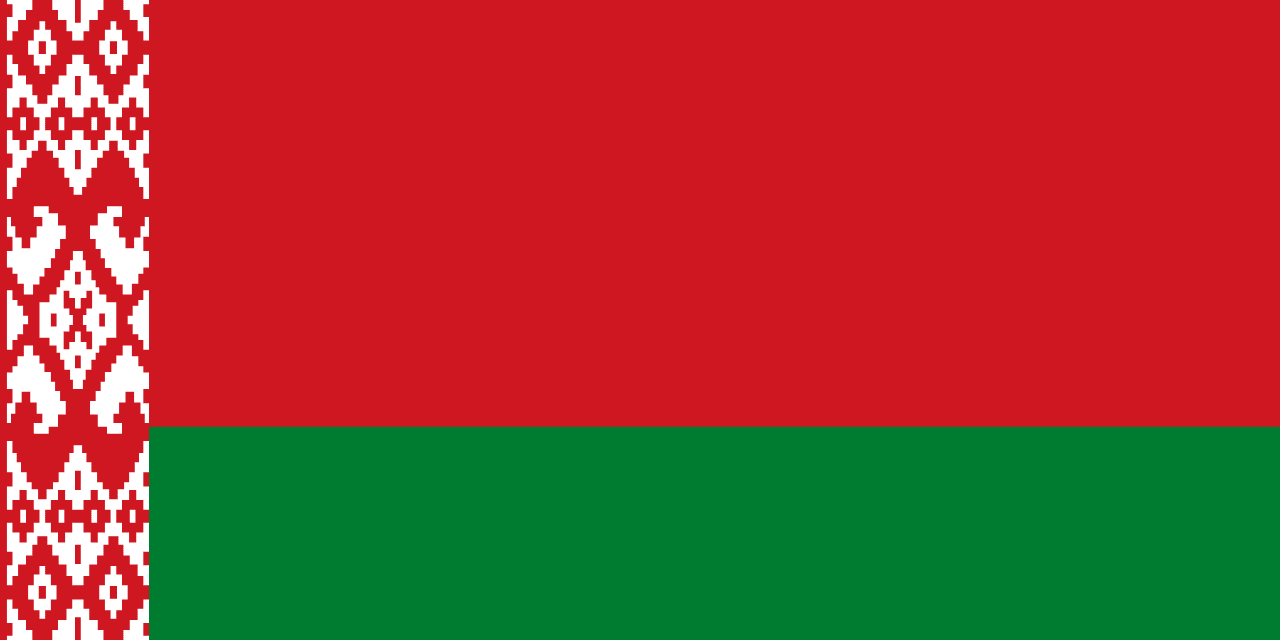
For a nation of under ten million, Belarus produces a striking number of world-class athletes. Ice hockey is something close to a national passion, heavily promoted and widely played across the country's many indoor rinks. Belarusian gymnasts, wrestlers, and rowers have collected Olympic medals, and the country has produced top-tier tennis champions who have reached the pinnacle of the global game. Biathlon, the demanding combination of cross-country skiing and rifle shooting, is especially beloved, suiting a country accustomed to long snowy winters. This athletic tradition reflects a culture that prizes discipline, endurance, and physical excellence. You can also explore the nation's striking red-and-green flag and its meaning.
Frequently Asked Questions
What is the capital of Belarus?
The capital of Belarus is Minsk, a city of roughly two million people. Almost entirely rebuilt after the Second World War, it is renowned for its grand Stalinist architecture, wide boulevards, and orderly, spacious layout, making it one of the most distinctive capitals in Eastern Europe.
What is Belarus most famous for?
Belarus is best known for Belovezhskaya Pushcha, Europe's last primeval forest and home to the European bison; for its vast forests, lakes, and marshes; for hearty potato-based cuisine like draniki; and for its Soviet-era heritage, heavy machinery, and strong sporting tradition in hockey and biathlon.
Why is Belarus called "White Russia"?
The name translates to "White Rus." Historians disagree on why, suggesting links to the white linen clothing traditionally worn there, to lands never conquered by the Mongols, or to medieval colour-coding of territories. All theories tie Belarus to the medieval heritage of Kievan Rus.
Conclusion
Belarus rewards anyone willing to look past its quiet reputation. It is a land of ancient bison-filled forests and gleaming rebuilt cities, of resilient people who endured unimaginable wartime loss, and of a culture that turns the simple potato into a point of national pride. From its layered history to its surprising industrial and sporting strengths, Belarus is a country full of contradictions and quiet wonders well worth discovering.