
Tucked into the rugged heart of the Balkans, Bosnia and Herzegovina is a country where minarets, church spires, and synagogue domes share the same skyline, and where a single street can carry you from the Ottoman East to the Austro-Hungarian West in a few footsteps. It is a land of emerald rivers, war-scarred resilience, and some of the most underrated mountain scenery in Europe. Here are ten facts that reveal why this small nation punches far above its weight.
1. Two Regions, One Tongue-Twisting Name
The country's full name reflects its two historic regions: Bosnia, the larger northern and central area drained by rivers, and Herzegovina, the smaller, sun-baked, Mediterranean-influenced south. The name "Herzegovina" comes from the German-derived title Herzog (duke), a nod to the 15th-century nobleman Stjepan Vukčić Kosača, who styled himself "Duke of Saint Sava." There is no official line dividing the two regions, so Bosnians good-naturedly debate exactly where one ends and the other begins. Most agree that Herzegovina is the karst-heavy, fig-and-pomegranate country around the city of Mostar.
2. A Capital That Hosted the Winter Olympics
Sarajevo, the capital, is one of Europe's most atmospheric cities, ringed by mountains and threaded by the Miljacka River. In 1984 it proudly hosted the Winter Olympic Games, and the bobsled track on Mount Trebević still survives as a graffiti-covered, half-overgrown relic that has become a strangely beautiful tourist attraction. Sarajevo is also where, in June 1914, Archduke Franz Ferdinand was assassinated near the Latin Bridge, the spark that ignited World War I. Today the cobbled bazaar of Baščaršija buzzes with coppersmiths and coffee houses, earning Sarajevo its nickname as the "Jerusalem of Europe."
3. Where East Meets West on a Single Street
Walk down Ferhadija Street in Sarajevo and you will cross an actual marked line on the pavement reading "Sarajevo Meeting of Cultures." On one side, Ottoman-era wooden shopfronts and domed mosques; on the other, grand Austro-Hungarian facades in stone. Few places on Earth display the meeting of European and Middle Eastern civilization so literally. This cultural layering shows up everywhere, from architecture to cuisine to the soundscape of church bells and the call to prayer overlapping at dusk. You can explore more in our country guide.
4. A Mosaic of Peoples and Faiths
With around 3.1 million people, Bosnia and Herzegovina is home to three main constituent peoples: Bosniaks (predominantly Muslim), Serbs (predominantly Orthodox Christian), and Croats (predominantly Catholic). This diversity makes it one of the most religiously plural countries in Europe. The blend is reflected in the political system, which features a rotating three-member presidency, with one member from each group serving an eight-month turn as chair. It is one of the most unusual governance structures anywhere in the world.
5. One Language, Several Names
People across the country speak what linguists consider essentially one mutually intelligible language, but it is officially called Bosnian, Croatian, or Serbian depending on the community. Both the Latin and Cyrillic alphabets are used, so signs, banknotes, and documents frequently appear in two scripts. A visitor might see a town's name written two different ways within a few hundred meters. This linguistic richness is a daily reminder of the country's layered identity, where the same sentence can carry three official names.
6. The Most Famous Bridge in the Balkans
The Stari Most, or Old Bridge, in Mostar is the country's defining landmark and a UNESCO World Heritage Site. Built by the Ottomans in 1566, this graceful single-arch stone bridge soars over the turquoise Neretva River. It was deliberately destroyed in 1993 during the Bosnian War, then painstakingly rebuilt and reopened in 2004 using original techniques and stone hauled from the same quarries. Local divers maintain a centuries-old tradition of leaping nearly 24 meters from its parapet into the cold river below, a daredevil rite of passage now celebrated with an annual competition.
7. Rivers So Clear They Look Edited
Bosnia and Herzegovina is one of Europe's last strongholds of wild, free-flowing rivers. The Una, Neretva, and Vrbas run in startling shades of emerald and aquamarine, fed by limestone springs filtered through the karst. The Kravica Waterfalls near Mostar tumble in a wide amphitheater that draws summer swimmers, while the source of the Buna at Blagaj emerges dramatically from a sheer cliff beside a centuries-old dervish monastery. Rafting, kayaking, and canyoning have turned these waterways into an adventure-tourism magnet, and conservationists fight hard to protect them from hydropower dams.
8. Coffee Is a Ritual, Not a Rush
In Bosnia and Herzegovina, coffee is a slow ceremony rather than a quick fix. Bosanska kafa (Bosnian coffee) is brewed in a small copper pot called a džezva, served with a sugar cube, a glass of water, and often a piece of Turkish delight. Locals can linger over a single cup for hours, talking with friends in a custom so central to social life it has its own untranslatable word, ćejf, meaning quiet pleasure and contentment. Refusing an invitation for coffee is nearly unthinkable.
9. Hearty Food Built for Mountain Appetites
Bosnian cuisine is a delicious legacy of Ottoman influence adapted to a cold, mountainous climate. The national star is ćevapi, small grilled minced-meat sausages served inside fluffy somun flatbread with raw onion and a spoonful of kajmak dairy cream. Equally beloved is burek, a coil of flaky pastry stuffed with meat, while pie versions filled with cheese, spinach, or potato are known as pita. Dolmas, stuffed peppers, and slow-cooked stews round out a comfort-food tradition that prizes generosity at the table above almost everything else.
10. A Tiny Sliver of Coastline
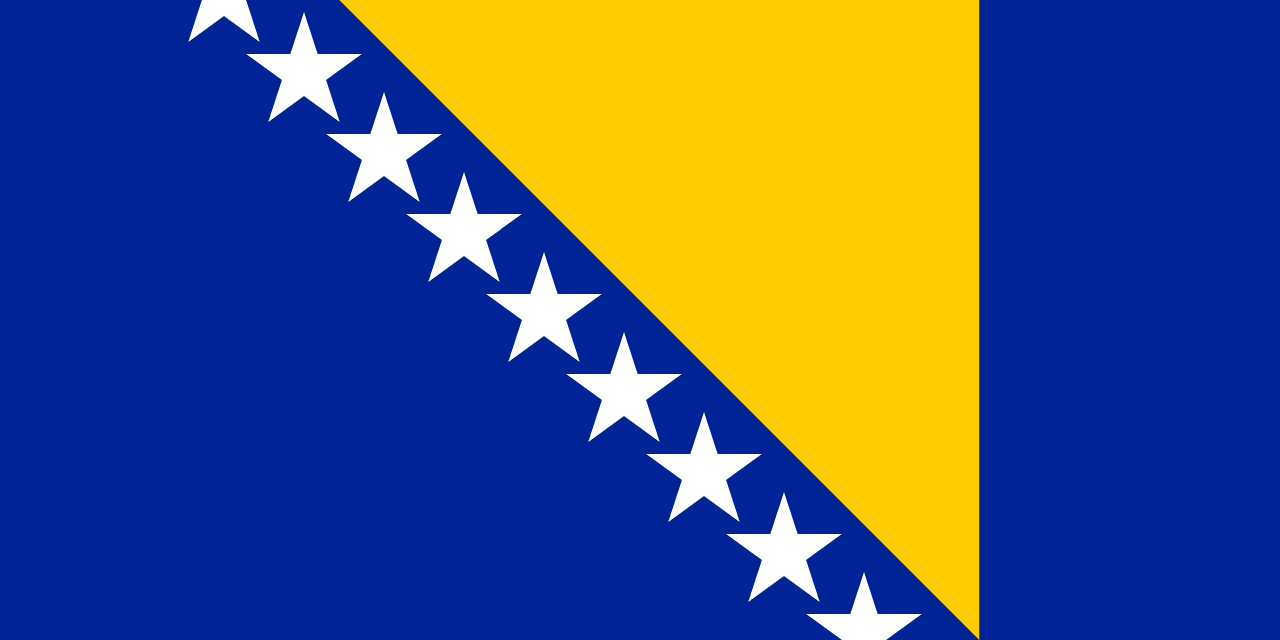
Although Bosnia and Herzegovina is overwhelmingly a landlocked mountain country, it does touch the Adriatic Sea at the town of Neum, giving it roughly 20 kilometers of coastline. This narrow strip famously splits Croatia's territory in two, which is why travelers driving down the Croatian coast briefly pass through Bosnian customs. The colors of the country's land are echoed in its flag, whose blue and yellow with white stars deliberately evoke Europe and a neutral identity above its three peoples.
Frequently Asked Questions
What is the capital of Bosnia and Herzegovina?
The capital is Sarajevo, a mountain-ringed city famous for hosting the 1984 Winter Olympics and for its Ottoman-era bazaar, Baščaršija. It is often called the "Jerusalem of Europe" because mosques, churches, and a synagogue stand within easy walking distance of one another.
What is Bosnia and Herzegovina most famous for?
It is best known for the Old Bridge (Stari Most) in Mostar, its stunningly clear rivers and waterfalls, the meeting of Eastern and Western cultures in Sarajevo, and its rich coffee and grilled-meat traditions. Its complex modern history, including the 1990s Bosnian War, also draws many history-minded visitors.
Does Bosnia and Herzegovina really have a beach?
Yes, though barely. The seaside town of Neum gives the country a tiny stretch of Adriatic coastline, around 20 kilometers long. It is the country's only access to the sea and a popular, budget-friendly summer escape for locals.
Conclusion
Bosnia and Herzegovina is a country of contrasts that somehow coexist in harmony, where Ottoman bridges, Olympic ruins, jewel-toned rivers, and three intertwined cultures create an experience found nowhere else in Europe. These ten facts only hint at its depth. Whether you come for the coffee, the canyons, or the layered history, Bosnia and Herzegovina rewards anyone curious enough to look closer.