
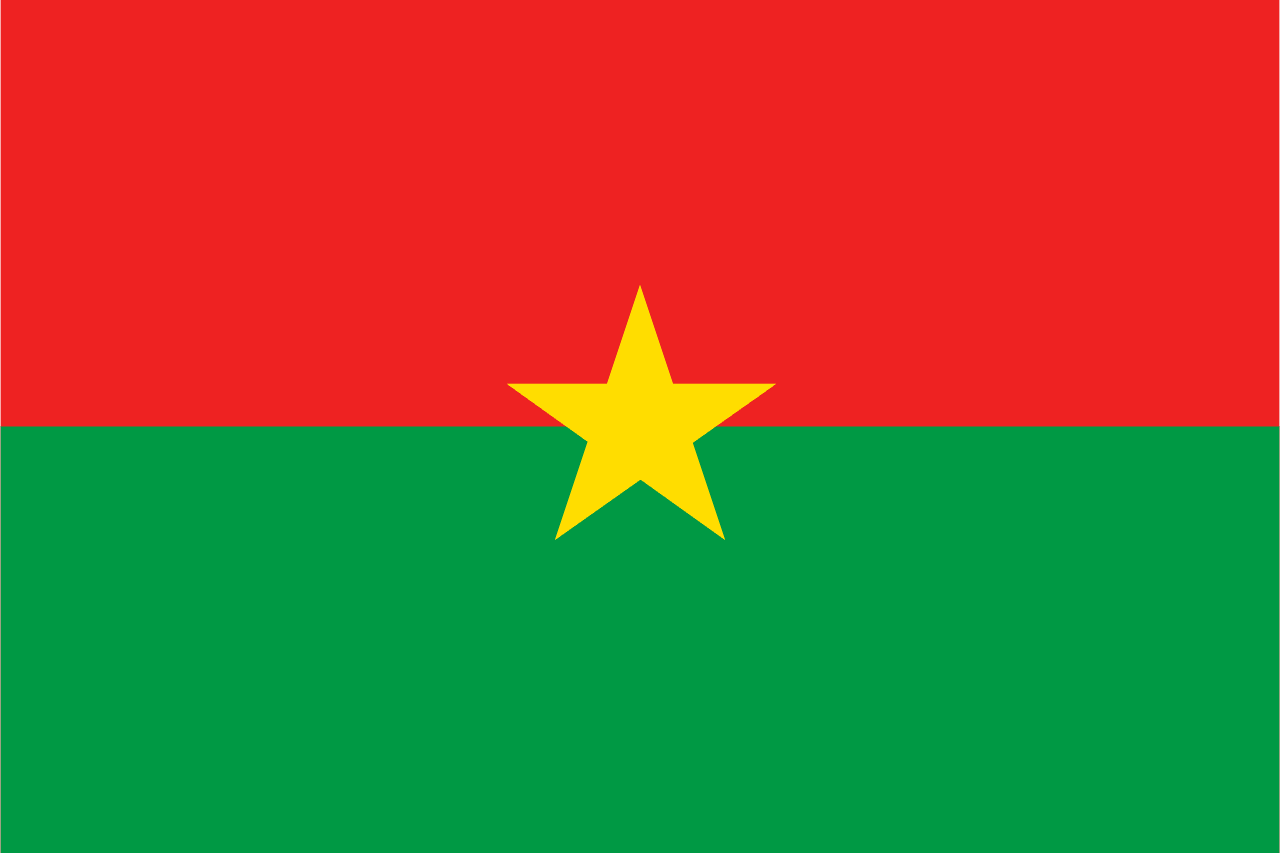
Burkina Faso is a landlocked West African nation whose very name is a defiant statement of pride, meaning "Land of Honest People" in a deliberate blend of two of its own languages. From a capital famous across Africa for cinema to a culture built around bronze, masks, and millet, this is a country far richer and more surprising than its low international profile suggests. Here are ten genuinely fascinating facts that bring Burkina Faso into focus.
1. Its Name Was Invented to Reject Its Colonial Past
Until 1984, the country was called Upper Volta (Haute-Volta), a colorless name handed down by French colonizers and based on the Volta River system that drains the land. The revolutionary leader Thomas Sankara renamed it Burkina Faso, a clever fusion of two indigenous languages: "Burkina" comes from Mooré meaning "honest" or "upright," and "Faso" comes from Dioula meaning "fatherland" or "homeland." Together they translate roughly as "Land of Upright People." The country's citizens are called Burkinabè, a word that pulls its suffix from a third language, Fula. Few nations have a name so deliberately stitched together to honor internal unity over colonial inheritance. You can learn more in our country guide.
2. Ouagadougou Is the Cinema Capital of Africa
The capital, Ouagadougou, is one of the most charming city names in the world, and locals affectionately shorten it to "Ouaga." Beyond its tongue-twisting appeal, the city hosts FESPACO, the Pan-African Film and Television Festival of Ouagadougou, the largest film festival on the continent. Held every two years since 1969, it draws filmmakers, critics, and audiences from across Africa and the diaspora to celebrate African cinema. Winners receive the coveted Étalon de Yennenga (Stallion of Yennenga), named after a legendary princess. For a city in one of the world's poorest nations, this cultural footprint is extraordinary, making Ouaga a genuine creative hub for the entire African film industry.
3. It Is Completely Landlocked and Surrounded by Six Neighbors
Burkina Faso has no coastline at all. It is hemmed in by six countries: Mali, Niger, Benin, Togo, Ghana, and Côte d'Ivoire. This central position once made it a vital crossroads for trans-Saharan trade routes, with caravans carrying gold, salt, and kola nuts across the region. The terrain is largely flat savanna, part of the semi-arid Sahel belt that stretches across the continent just south of the Sahara. The north edges toward desert, while the south enjoys more rainfall and greener vegetation. This landlocked geography shapes everything from the economy to climate vulnerability, as Burkina Faso depends heavily on its neighbors' ports for imports and exports.
4. More Than 60 Languages Are Spoken
While French remains the official language inherited from colonial rule, it is spoken fluently by only a minority. The real linguistic life of the country flows through more than 60 indigenous languages. Mooré, the language of the Mossi people, is the most widely spoken, followed by Dioula (used widely in trade and markets) and Fula. This staggering diversity reflects the dozens of ethnic groups who call the country home. In a single market in Ouaga or Bobo-Dioulasso, you might hear half a dozen languages traded back and forth in the same conversation, a testament to the everyday multilingualism that defines Burkinabè life.
5. The Mossi Kingdoms Ruled for Over 500 Years
Long before colonial borders were drawn, the central plateau was home to the powerful Mossi Kingdoms, which emerged around the 11th to 15th centuries and endured for hundreds of years. Their most prominent ruler, the Mogho Naba (King of the Mossi), still exists today as a respected traditional and ceremonial figure in Ouagadougou. Every Friday morning, the Mogho Naba performs a centuries-old ritual called the Nab-Yili, a symbolic ceremony reenacting an ancient decision not to go to war. The Mossi successfully resisted Islamic conquest and remained largely independent until the French arrived in the late 19th century, preserving a remarkable continuity of governance and tradition.
6. The Country Is Famous for Bronze, Masks, and Sculpture
Burkina Faso is one of West Africa's great art-producing nations. Its artisans are renowned for intricate bronze castings made using the ancient lost-wax technique, as well as elaborately carved wooden masks used in ceremonies by groups like the Bobo, Bwa, and Mossi. These masks, often towering and brightly painted, represent spirits and animals and play central roles in funerals, harvests, and initiations. The flag of the nation, with its red and green halves and central yellow star, reflects revolutionary ideals; you can read more in our piece on the flag. Ouagadougou also hosts SIAO, a major international craft fair celebrating this artistic heritage.
7. Tô and Grilled Chicken Define the Cuisine
The heart of Burkinabè cooking is tô (also spelled to or saghbo), a thick, stiff porridge made from millet, sorghum, or maize flour. It is eaten by hand, rolled into balls and dipped into sauces made from okra, baobab leaves, or peanuts. Another national favorite is poulet bicyclette ("bicycle chicken"), so named because the lean, free-range birds are often transported to market strapped to bicycles. Grilled over open flames and seasoned simply, it is a beloved street food. Wash it down with dolo, a traditional millet beer brewed by women and sold in communal cabarets, where it forms a central part of social and ceremonial life.
8. Gold and Cotton Power the Economy
Burkina Faso is one of Africa's leading gold producers, and mining has become the country's top export earner in recent years, overtaking agriculture in value. Yet most Burkinabè still work the land. The country is also among the continent's largest producers of cotton, often called "white gold," which has long been a cornerstone of rural livelihoods. Despite these resources, Burkina Faso remains one of the world's least developed economies, with most people engaged in subsistence farming of millet, sorghum, and maize. Frequent droughts in the Sahel and regional instability make economic life precarious, but the resilience of its farmers and miners is remarkable.
9. The Nazinga Ranch and Elephants of the South
Although much of the country is dry savanna, Burkina Faso protects pockets of striking wildlife. The Nazinga Game Ranch in the south is famous for its large, easily spotted population of elephants, along with antelopes, warthogs, baboons, and crocodiles. Farther afield, the country shares the transboundary W-Arly-Pendjari complex, a UNESCO World Heritage Site that spans Burkina Faso, Benin, and Niger and shelters one of West Africa's last populations of lions, cheetahs, and the rare West African elephant. These reserves are vital strongholds for species that have vanished from much of the surrounding region.
10. Cycling Is a National Obsession
In a country where bicycles and motorbikes vastly outnumber cars, it is fitting that cycling is a beloved national sport. The Tour du Faso, launched in 1987, is one of the most important professional cycling races in Africa, drawing riders from across the continent and beyond as they pedal through the heat of the Sahel. Bicycles and small motorcycles are the everyday lifeblood of transport, so deeply woven into daily life that even the national chicken dish is named after them. Football is hugely popular too, with the national team known as Les Étalons (the Stallions), but cycling holds a special place in the Burkinabè heart.
Frequently Asked Questions
What is the capital of Burkina Faso?
The capital is Ouagadougou, often shortened to "Ouaga," with a population of roughly two million in its metropolitan area. It is the political, administrative, and cultural center of the country and hosts FESPACO, Africa's largest film festival.
What is Burkina Faso famous for?
Burkina Faso is best known for the FESPACO film festival, its rich tradition of bronze casting and ceremonial masks, its gold and cotton exports, and its distinctive name meaning "Land of Upright People." It is also celebrated for warm hospitality and vibrant music and craft scenes.
Why is the chicken dish called "bicycle chicken"?
The famous grilled dish poulet bicyclette earns its name because the lean, free-range chickens are traditionally brought to market tied to the back of bicycles. The birds' active, free-roaming lives give the meat its firm texture and rich flavor.
Conclusion
Burkina Faso may rarely make global headlines, but its identity is vivid and self-assured, from a name that proudly rejects colonialism to a capital that anchors African cinema. With its enduring Mossi traditions, world-class craftsmanship, hearty cuisine, and elephant-roamed reserves, this Sahelian nation rewards anyone willing to look closer. The "Land of Upright People" stands as a reminder that cultural richness has nothing to do with wealth or fame.