
Cambodia is a country where the past is never far away, from the colossal stone faces of Angkor watching over the jungle to the slow brown sweep of the Mekong River. Wedged between Thailand, Laos, and Vietnam, this Southeast Asian nation of roughly 18 million people packs an outsized share of history, flavor, and natural drama into its borders. Here are ten genuinely surprising facts that go far beyond the guidebook clichés.
1. Angkor Wat Is the Largest Religious Monument on Earth
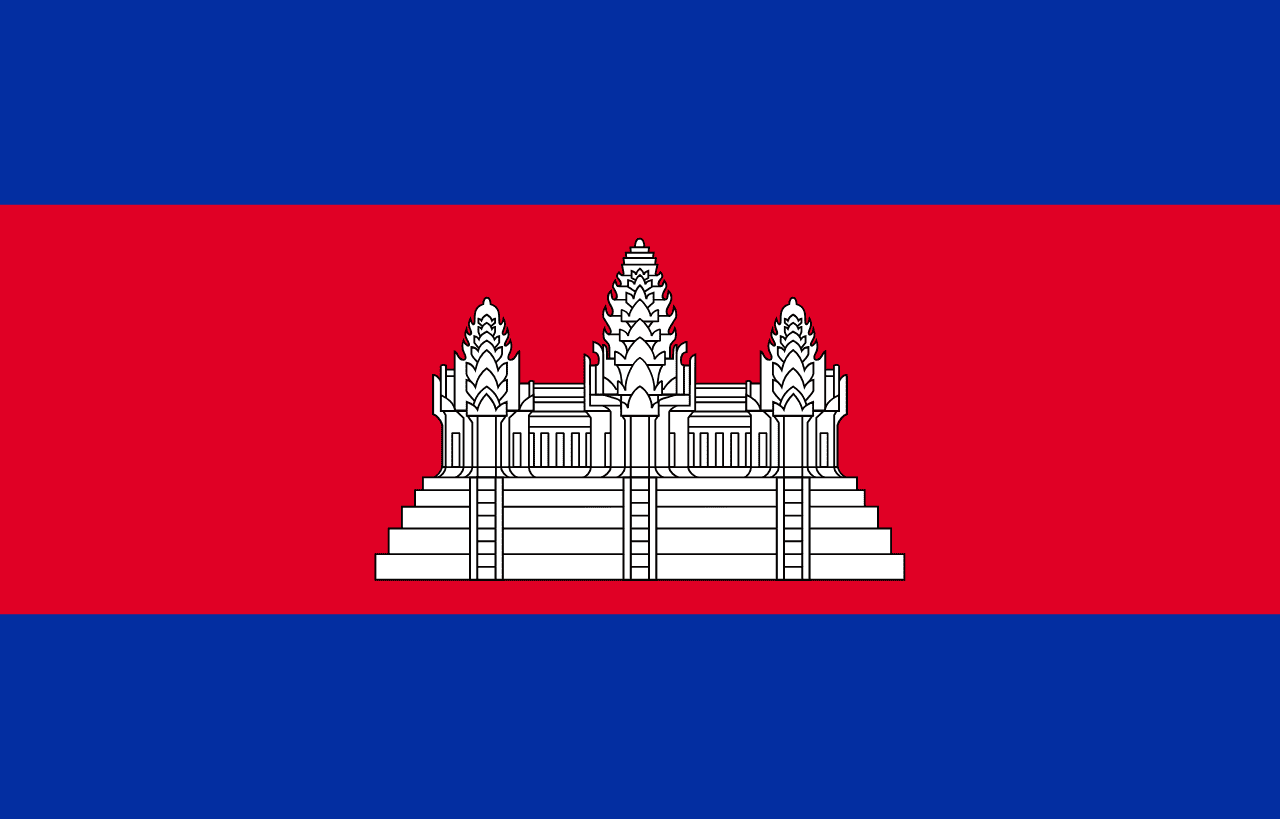
Built in the early 12th century by King Suryavarman II, Angkor Wat sprawls across roughly 400 acres, making it the single largest religious structure in the world. Originally constructed as a Hindu temple dedicated to Vishnu, it was gradually converted into a Buddhist site, a transformation that mirrors Cambodia's own spiritual journey. The temple is so central to national identity that it appears on the country's flag, the only national flag in the world to feature a building. Its towers represent the peaks of Mount Meru, the mythical home of the gods, and its bas-reliefs stretch for nearly a kilometer, depicting epic battles and Hindu legends carved into sandstone.
2. Angkor Was Once the World's Biggest City
Long before London or Beijing reached such scale, the Khmer capital of Angkor may have been the largest pre-industrial urban settlement on the planet. Aerial laser surveys (LiDAR) have revealed a vast hidden network of roads, canals, reservoirs, and suburbs sprawling over an area larger than modern New York City. At its peak around the 12th and 13th centuries, the metropolis is estimated to have supported as many as 750,000 to one million people, sustained by an extraordinary hydraulic system that managed monsoon waters for rice agriculture. The eventual decline of this water network likely contributed to the empire's collapse.
3. The Mekong Reverses Its Flow Every Year
Cambodia is home to one of the planet's strangest natural phenomena. Each monsoon season, the Tonlé Sap River actually reverses direction, pushing water back up into the Tonlé Sap Lake, which swells to several times its dry-season size. This annual pulse turns the lake into Southeast Asia's largest freshwater body and one of the most productive inland fisheries on Earth. Floating villages, complete with schools, shops, and floating gardens, rise and fall with the water. The flood deposits nutrient-rich sediment that feeds the surrounding rice fields, making this rhythm the literal lifeblood of Cambodian agriculture and protein supply.
4. The Khmer Language Has One of the World's Longest Alphabets
Khmer, spoken by the overwhelming majority of Cambodians, uses a script descended from ancient South Indian Brahmi writing. With around 33 consonants, numerous vowels, and dependent vowel forms, it is often cited as having one of the longest alphabets of any language in the world. Unlike neighboring Thai, Lao, and Vietnamese, Khmer is not a tonal language, which surprises many visitors expecting the sing-song quality of the region. The script has been in use for well over a thousand years, with the oldest dated Khmer inscription going back to the 7th century, making it a remarkable thread of cultural continuity.
5. Phnom Penh Was Once Called the "Pearl of Asia"
Cambodia's capital, Phnom Penh, sits at the confluence of three rivers and was nicknamed the "Pearl of Asia" during the French colonial era for its elegant boulevards and architecture. Today it blends gilded landmarks like the Royal Palace and the Silver Pagoda with bustling markets and a fast-growing skyline. The city takes its name from a legend about a wealthy woman named Penh who discovered Buddha statues in a tree floating down the river and built a hill (phnom) and temple to house them. Learn more in our country guide.
6. The Country Endured One of the 20th Century's Darkest Chapters
Between 1975 and 1979, the Khmer Rouge regime under Pol Pot attempted to force Cambodia into an agrarian utopia, emptying cities and abolishing money, schools, and religion. An estimated 1.5 to 2 million people, roughly a quarter of the population, died from execution, forced labor, starvation, and disease. The legacy of this genocide still shapes the nation, and sites like the Tuol Sleng Genocide Museum and the Choeung Ek "Killing Fields" now serve as solemn memorials. Cambodia's remarkable recovery and resilience in the decades since stand as a testament to the strength of its people.
7. Fish and Rice Define the National Diet
Cambodian cuisine, known as Khmer food, is built around rice and freshwater fish, often expressed in the common greeting equivalent to "have you eaten rice yet?" One of the most distinctive ingredients is prahok, a pungent fermented fish paste used to flavor countless dishes. The unofficial national dish, fish amok, is a delicate steamed curry of fish, coconut milk, and aromatic kroeung spice paste, served in a banana leaf. Khmer food tends to be milder and less fiery than Thai cuisine, balancing sour, sweet, salty, and bitter notes, often using lime, tamarind, and lemongrass rather than heavy chili heat.
8. Cambodia Has the Region's Famous Spider Snack
In the town of Skuon, north of Phnom Penh, deep-fried tarantulas are a celebrated local delicacy. These crispy, palm-sized spiders, seasoned with garlic and salt, became a popular food source during the hardship of the Khmer Rouge years and have since turned into a curiosity that draws adventurous travelers. Beyond spiders, Cambodian markets offer crickets, silkworms, and other edible insects, reflecting a practical and protein-rich approach to food that long predated the global "entomophagy" trend. For locals, these snacks are simply a normal, tasty part of roadside life.
9. Traditional Dance Tells Stories With Every Finger
The Royal Ballet of Cambodia, or Apsara dance, is recognized by UNESCO as part of humanity's intangible cultural heritage. Dancers train for years to achieve the extraordinary flexibility needed to bend their fingers backward into graceful, symbolic gestures, with each pose carrying a specific meaning. The dancers' elaborate golden costumes and headdresses echo the celestial apsara figures carved into the walls of Angkor centuries ago. Nearly wiped out when so many artists perished under the Khmer Rouge, this living art form was painstakingly revived by surviving masters and remains a powerful emblem of national pride and continuity.
10. Riel and Dollars Circulate Side by Side
Cambodia operates one of the world's most unusual dual-currency economies. While the official currency is the Cambodian riel, the US dollar is so widely used that ATMs dispense dollars and prices are frequently quoted in them. In practice, riel notes often serve as small change for amounts below a dollar, effectively functioning like coins. This system took root after years of instability eroded confidence in the local currency. The economy itself leans heavily on garment manufacturing, tourism centered on Angkor, and agriculture, with rice exports playing a growing role on the world stage.
Frequently Asked Questions
What is the capital of Cambodia?
The capital is Phnom Penh, located where the Mekong, Tonlé Sap, and Bassac rivers meet. It is Cambodia's largest city and its political, economic, and cultural center, home to the Royal Palace and many of the nation's most important institutions.
What is Cambodia most famous for?
Cambodia is best known for Angkor Wat, the largest religious monument in the world and the heart of the ancient Khmer Empire. The country is also widely recognized for its Khmer cuisine, the tragic history of the Khmer Rouge era, and its warm, resilient people.
Is it true that Cambodians eat fried spiders?
Yes. In the town of Skuon, deep-fried tarantulas seasoned with garlic and salt are a genuine local delicacy. Along with crickets and silkworms, edible insects and arachnids are a normal and protein-rich part of Cambodian street food culture.
Conclusion
From the soaring towers of Angkor to a river that runs backward, Cambodia is a country of astonishing contrasts and quiet resilience. Its ancient temples, distinctive cuisine, and revived traditions reveal a culture that has survived profound hardship and continues to flourish. These ten facts are only an invitation to dig deeper into one of Southeast Asia's most fascinating nations.
