
Colombia is the only South American country with coastlines on both the Caribbean Sea and the Pacific Ocean, and it packs snow-capped Andean peaks, Amazon rainforest, and palm-fringed beaches into a single, dazzling nation. It is a place where emeralds glitter, salsa pulses through the streets, and rivers literally turn into rainbows. These ten facts reveal a Colombia far richer and stranger than the headlines suggest.
1. The Only South American Nation Touching Two Oceans
Colombia sits at the northwestern corner of South America, sharing borders with Panama, Venezuela, Ecuador, Peru, and Brazil. It is the continent's only country with shoreline on both the Caribbean Sea and the Pacific Ocean, giving it an extraordinary geographic range. The Andes mountains split into three parallel ranges as they enter the country, carving deep valleys where most Colombians live. Beyond the highlands lie the vast Amazon basin in the south and the sweeping grasslands of Los Llanos in the east. To dive deeper into the country's regions and travel highlights, explore our country guide, which maps out everything from the coast to the cordilleras.
2. Bogota Sits Higher Than Almost Any Major City
The capital, Bogota, sprawls across a high Andean plateau at roughly 2,640 meters (about 8,660 feet) above sea level, making it one of the highest large capital cities on Earth. Founded in 1538, it is home to more than 7 million people and serves as Colombia's political, financial, and cultural engine. The cool, spring-like climate stays mild year-round despite sitting near the equator, thanks to the altitude. Bogota's historic La Candelaria district brims with colonial churches and street art, while the world-class Gold Museum displays thousands of pre-Hispanic gold artifacts that inspired the legend of El Dorado.
3. The Second Most Biodiverse Country on the Planet
Colombia ranks as the second most biodiverse country in the world after neighboring Brazil, despite being far smaller. It hosts an astonishing share of the planet's species packed into its mountains, jungles, and wetlands. Colombia is the global champion for bird and orchid diversity, home to roughly 1,900 bird species, more than any other nation. It also shelters thousands of butterfly, amphibian, and plant species found nowhere else. This richness flows from the country's tangle of ecosystems, from cloud forests to coral reefs, each acting like an isolated island that nurtures unique life.
4. A Population as Diverse as Its Landscapes
With around 52 to 54 million people, Colombia is the third most populous country in Latin America after Brazil and Mexico. Its population is a vibrant blend of Indigenous, European, and African heritage, woven together over five centuries. Spanish is the official language, but the country also recognizes dozens of Indigenous and Creole languages, including the English-based Creole spoken on the islands of San Andres and Providencia. Most Colombians cluster in the Andean highlands and along the Caribbean coast, while the Amazon and eastern plains remain sparsely populated, leaving huge swaths of wilderness virtually untouched.
5. The World's Coffee Capital With a UNESCO-Protected Landscape
Colombian coffee is so iconic that the country's Coffee Cultural Landscape, a region of steep green hillsides dotted with small family farms, is a UNESCO World Heritage Site. Colombia is among the world's largest producers of high-quality Arabica beans, grown in the fertile volcanic soils of the central Andes. The famous fictional farmer Juan Valdez, created in the 1950s, became one of the most recognizable advertising figures in coffee history. Beyond coffee, Colombia is also the world's leading source of emeralds and a major exporter of cut flowers, supplying a huge portion of the roses sold worldwide.
6. Home to a Lost City Older Than Machu Picchu
Hidden deep in the Sierra Nevada de Santa Marta, the Ciudad Perdida, or "Lost City," is an archaeological marvel built by the Tairona people around 800 AD, roughly 650 years before Peru's Machu Picchu. Abandoned during the Spanish conquest, it lay forgotten until treasure hunters rediscovered it in 1972. Reaching its 1,200 moss-covered stone terraces requires a demanding multi-day trek through dense jungle, river crossings, and steep climbs. Descendants of the Tairona, including the Kogi and Wiwa peoples, still consider the site sacred and continue to live in the surrounding mountains, guarding ancestral traditions.
7. Salsa, Cumbia, and a Carnival Recognized by UNESCO
Music is the heartbeat of Colombian culture. The coastal city of Cali styles itself the world's salsa capital, hosting dazzling festivals and dance schools that produce some of the planet's finest salsa dancers. Cumbia, with its African and Indigenous roots, is considered a national rhythm, while vallenato accordion music tells stories of everyday coastal life. Colombia gave the world superstar artists like Shakira and Carlos Vives. The Barranquilla Carnival, one of the largest in the Americas, has been declared a Masterpiece of the Oral and Intangible Heritage of Humanity by UNESCO for its riot of costumes, parades, and folkloric performances.
8. A River That Bursts Into a Rainbow of Colors
In the remote Serrania de la Macarena, the Cano Cristales is often called the "River of Five Colors" or the "Liquid Rainbow." For a few months each year, usually between June and November, a unique aquatic plant called Macarenia clavigera turns the riverbed brilliant shades of red, pink, yellow, green, and blue. The effect, triggered by precise sunlight and water conditions, creates one of the most surreal natural spectacles on Earth. The remote location and seasonal nature make it a bucket-list destination for travelers willing to venture far off the beaten path to witness it.
9. The Land of Magical Realism and a Nobel Laureate
Colombia's most famous literary son, Gabriel Garcia Marquez, won the Nobel Prize in Literature in 1982 and helped define the genre of magical realism. His masterpiece, One Hundred Years of Solitude, drew on the dreamlike atmosphere of Colombia's Caribbean coast and his hometown of Aracataca. The novel has sold tens of millions of copies and been translated into dozens of languages. This blend of the everyday and the fantastical mirrors the country itself, where ancient legends, soaring mountains, and vibrant street life coexist. Literature here is a source of immense national pride.
10. A Flag Whose Colors Tell a Story
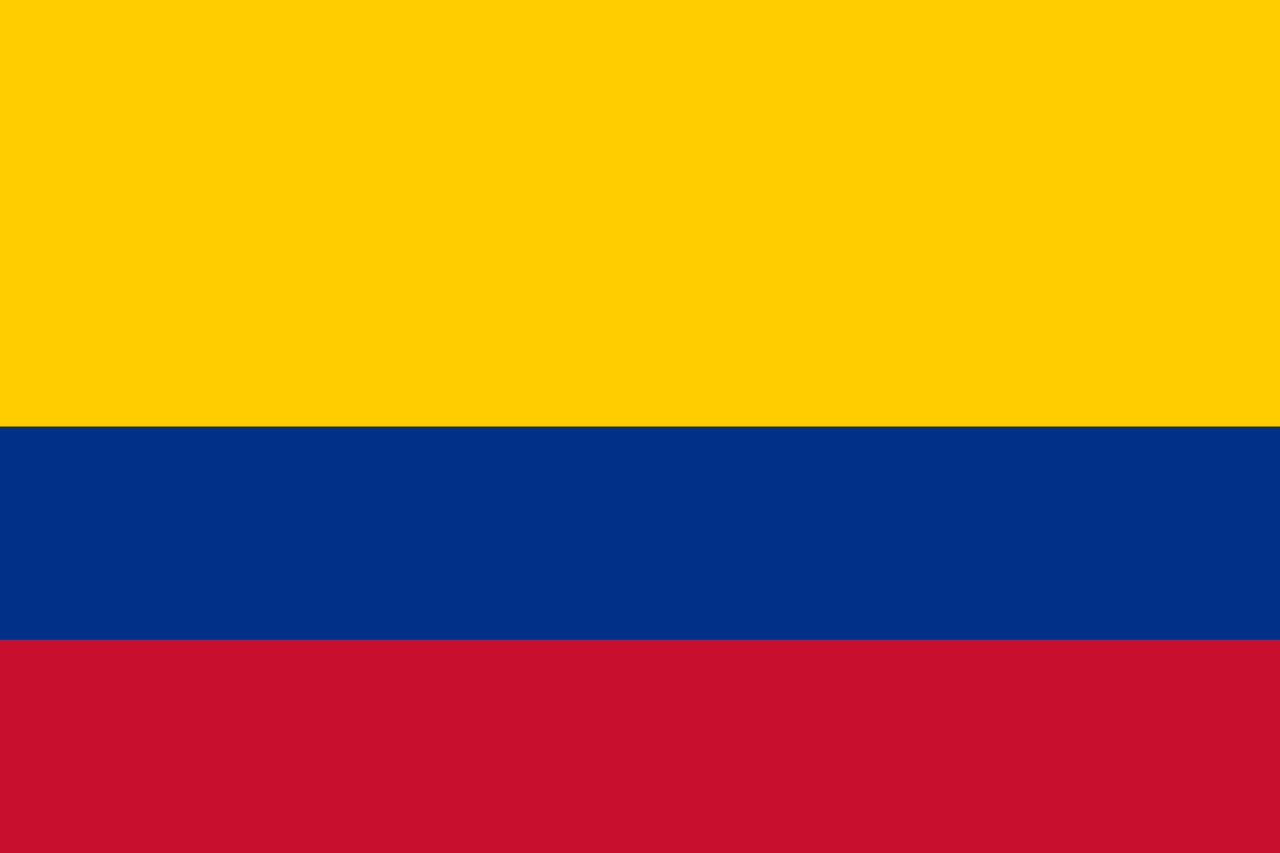
Colombia's national flag features three horizontal bands of yellow, blue, and red, with the yellow stripe taking up the top half. Popular tradition holds that yellow represents the country's gold and abundant resources, blue stands for the two oceans and rivers, and red honors the blood spilled fighting for independence from Spain. Colombia declared independence in 1810 and finally secured it after Simon Bolivar's decisive victory at the Battle of Boyaca in 1819. The country was even named after explorer Christopher Columbus. Learn the full symbolism and history behind the design in our guide to the Colombian flag.
Frequently Asked Questions
What is the capital of Colombia?
The capital of Colombia is Bogota, officially Bogota D.C., a sprawling Andean city of more than 7 million people perched at about 2,640 meters above sea level. It is the nation's political, economic, and cultural center.
What is Colombia most famous for?
Colombia is world-famous for its premium coffee, dazzling emeralds, and extraordinary biodiversity. It is also celebrated for salsa music, the colorful Barranquilla Carnival, Nobel laureate Gabriel Garcia Marquez, and stunning destinations like Cartagena's walled old town and the Lost City.
Is there really a rainbow river in Colombia?
Yes. The Cano Cristales river in the Serrania de la Macarena turns vivid shades of red, yellow, green, and blue for several months each year, thanks to a special aquatic plant. It is widely considered one of the most beautiful rivers in the world.
Conclusion
From two-ocean coastlines and a high-altitude capital to a liquid rainbow and a city lost to the jungle, Colombia is a country of jaw-dropping extremes and warm-hearted people. Its biodiversity, music, coffee, and literature have all left a mark on the wider world. These ten facts only hint at the wonders waiting here, so keep exploring and let Colombia surprise you.