
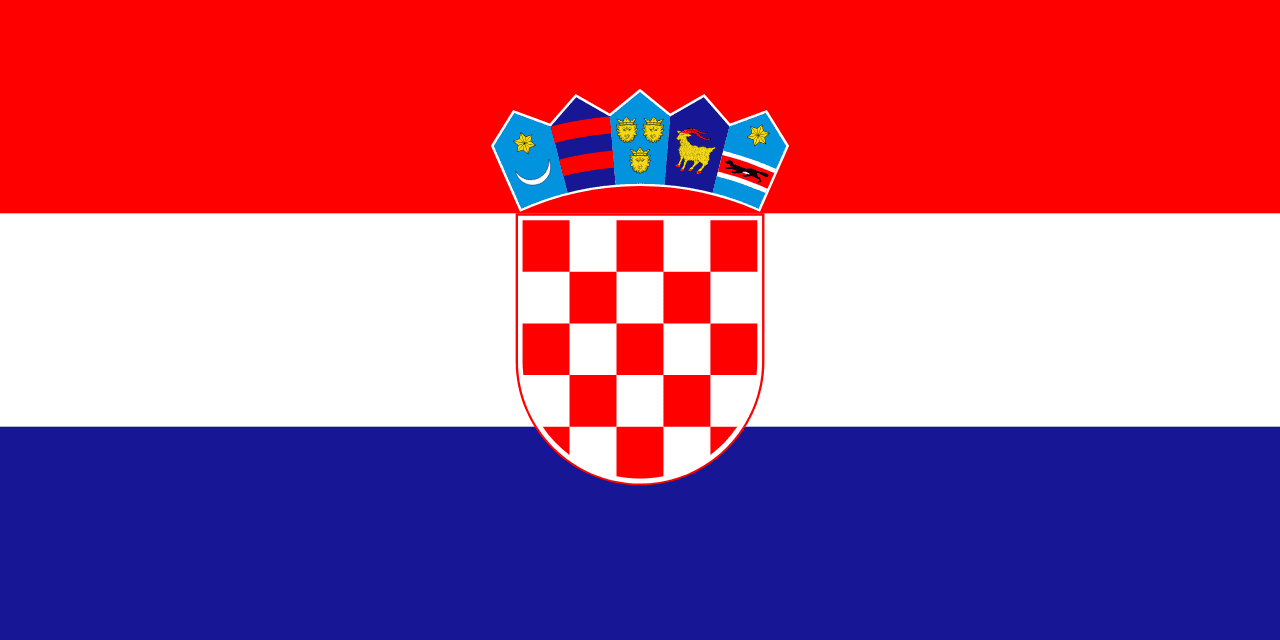
Croatia is a slender, boomerang-shaped country curling along the eastern Adriatic, where Roman ruins, walled medieval towns, and turquoise island channels sit within a few hours' drive of bear-filled forests and waterfall-laced lakes. It punches far above its size of roughly 3.8 million people, having gifted the world everything from the necktie to the Dalmatian dog. Here are ten genuinely interesting facts that go well beyond the postcards.
1. It Has More Than a Thousand Islands
Croatia's coastline is one of the most fragmented in the world, scattered with over 1,000 islands, islets, and reefs along roughly 1,800 kilometres of mainland shore. Only around 50 of these islands are permanently inhabited, leaving hundreds of uninhabited rocks and coves that look almost untouched. The largest islands, Cres and Krk, rival each other for the title of biggest, while glamorous Hvar claims to be one of the sunniest spots in Europe with well over 2,700 hours of sunshine a year. This jigsaw of limestone islands, deep channels, and hidden bays is the reason Croatia has become one of the Mediterranean's great sailing destinations, drawing yachts and ferries that weave between the islands all summer long.
2. Zagreb Is a Capital With an Upper and Lower Town
Zagreb, the capital and largest city, grew from two rival medieval hilltop settlements, Gradec and Kaptol, which only formally united into one city in the late 19th century. That history survives in the layout: the historic Gornji Grad (Upper Town) of cobbled streets, gas lamps still lit by hand each evening, and the colourful tiled roof of St. Mark's Church sits above the bustling Donji Grad (Lower Town) with its grand Austro-Hungarian boulevards, museums, and parks. Zagreb is also home to quirky attractions like the Museum of Broken Relationships, a globally beloved collection of donated objects and the stories of love affairs gone wrong. The city anchors Croatia's government, universities, and arts scene.
3. The Necktie Was Born Here
One of Croatia's most surprising cultural exports is the necktie. During the 17th century, Croatian mercenaries serving in France wore distinctive knotted neck scarves that caught the eye of the Parisian court. The French adopted the style and called it la cravate, a word widely believed to derive from "Croat." From that fashion borrowing grew the modern tie worn in boardrooms worldwide. Croatians are proud enough of the connection that the country celebrates Cravat Day on October 18th each year. If you want to learn more about the nation's symbols and identity, our Croatia flag guide explores the red-and-white checkerboard that appears on everything from jerseys to government buildings.
4. Dubrovnik's Walls Have Starred on Screen
The walled Old Town of Dubrovnik, a UNESCO World Heritage Site, is ringed by massive stone fortifications that have stood for centuries and once protected an independent maritime republic. In recent years the city became globally famous as the filming location for King's Landing in Game of Thrones, sending tourism soaring. Visitors can walk the complete circuit of the walls, gazing down over a sea of terracotta rooftops and out to the glittering Adriatic. Long before television fame, Dubrovnik thrived as the Republic of Ragusa, a wealthy trading rival to Venice that pioneered remarkably modern ideas, including one of the earliest organised quarantine systems and an early abolition of the slave trade.
5. Plitvice Lakes Are a Cascade of Sixteen Pools
Croatia's oldest and most famous national park, Plitvice Lakes, is a staircase of 16 terraced lakes connected by tumbling waterfalls and surrounded by dense beech and fir forest. The lakes glow in vivid shades of turquoise, emerald, and azure thanks to mineral-rich water and natural travertine dams that grow over time as plants and bacteria deposit calcium carbonate. Wooden walkways let visitors stroll directly over the water and beside the falls. The park is also part of a wider wilderness that shelters brown bears, wolves, and lynx, making it one of the wildest corners of the Mediterranean basin. It earned UNESCO World Heritage status back in 1979.
6. Croatian Is Written in Two Alphabets' Shadow
The official language, Croatian, is a South Slavic language written in the Latin alphabet, but its written heritage runs surprisingly deep. For centuries Croatians used Glagolitic, one of the oldest known Slavic scripts, with distinctive angular characters carved into stone tablets like the famous 11th-century Baška Tablet. Today modern Croatian features special letters such as č, ć, š, ž, and đ, and a wealth of regional dialects, including the Kajkavian heard around Zagreb and the Chakavian of the coast and islands. Many older coastal residents also speak Italian, a legacy of long Venetian and Habsburg influence along the Adriatic shore.
7. The Dalmatian Dog Comes From the Dalmatian Coast
The spotted Dalmatian dog takes its name from Dalmatia, the historic region stretching along Croatia's southern coastline. Early depictions and written references tie the breed to this area, where the energetic, eye-catching dogs were used as carriage escorts and guard animals. The name stuck and travelled the world, later cemented in popular imagination by Disney's 101 Dalmatians. Dalmatia itself is a spectacular strip of coast and islands centred on cities like Split and Zadar, where Roman heritage runs deep. To explore the regions, cities, and travel highlights in more detail, see our full Croatia country guide.
8. Split Was Built Inside a Roman Emperor's Palace
The coastal city of Split grew up literally inside the walls of Diocletian's Palace, a sprawling retirement complex built around 1,700 years ago by the Roman emperor Diocletian, who was born in the region. Rather than crumbling into a museum piece, the palace became the living heart of the city. Today residents still inhabit apartments built into ancient Roman walls, cafés spill into stone courtyards, and the emperor's former mausoleum serves as the cathedral. Laundry hangs from windows above 1,700-year-old masonry. This rare blend of everyday life and antiquity makes Split's old centre a UNESCO World Heritage Site and one of the most atmospheric urban spaces in Europe.
9. Football Punches Above the Country's Weight
For a nation of fewer than four million people, Croatia has an extraordinary record in football. The national team reached the final of the 2018 FIFA World Cup, finishing as runners-up, and earned third place at the 2022 tournament, results that would be remarkable for countries many times its size. Players like Luka Modrić, who won the Ballon d'Or in 2018, have become national heroes. The team's red-and-white checkerboard jerseys are instantly recognisable. Sport is woven into national pride here, and beyond football Croatia has produced world-class talent in basketball, water polo, handball, and tennis, with stars such as Goran Ivanišević winning Wimbledon.
10. It Joined the EU Recently and the Euro Even More Recently
Croatia declared independence from Yugoslavia in 1991, an event followed by a difficult war for independence through the mid-1990s. The country has since reoriented firmly toward Europe, becoming the European Union's 28th member state on July 1st, 2013, making it one of the bloc's newest members. The European journey continued in January 2023, when Croatia adopted the euro as its currency, retiring the kuna, and simultaneously joined the border-free Schengen Area. For travellers this means smoother crossings and a single currency across much of the trip, and it marks how far the young nation has come in just three decades.
Frequently Asked Questions
What is the capital of Croatia?
The capital of Croatia is Zagreb, the country's largest city and its political, cultural, and economic centre. Set inland in the north, Zagreb blends a historic medieval Upper Town with grand 19th-century boulevards, museums, parks, and a lively café culture.
What is Croatia famous for?
Croatia is famous for its stunning Adriatic coastline and more than a thousand islands, the walled city of Dubrovnik, the turquoise waterfalls of Plitvice Lakes, and Roman heritage like Diocletian's Palace in Split. It is also known for inventing the necktie and for its remarkably successful national football team.
Did Croatia really invent the necktie?
Yes, in a sense. The modern necktie traces back to the knotted neck scarves worn by Croatian soldiers in 17th-century France. The French adopted the look and named it la cravate, a term linked to the word "Croat," and Croatia even marks Cravat Day every October 18th.
Conclusion
From islands and emperor's palaces to Ballon d'Or winners and the humble necktie, Croatia packs an astonishing amount of history, nature, and cultural surprise into a compact corner of the Adriatic. Whether you come for the beaches, the waterfalls, the food, or the football, this young-but-ancient nation rewards every traveller who takes the time to look beyond the postcard.