
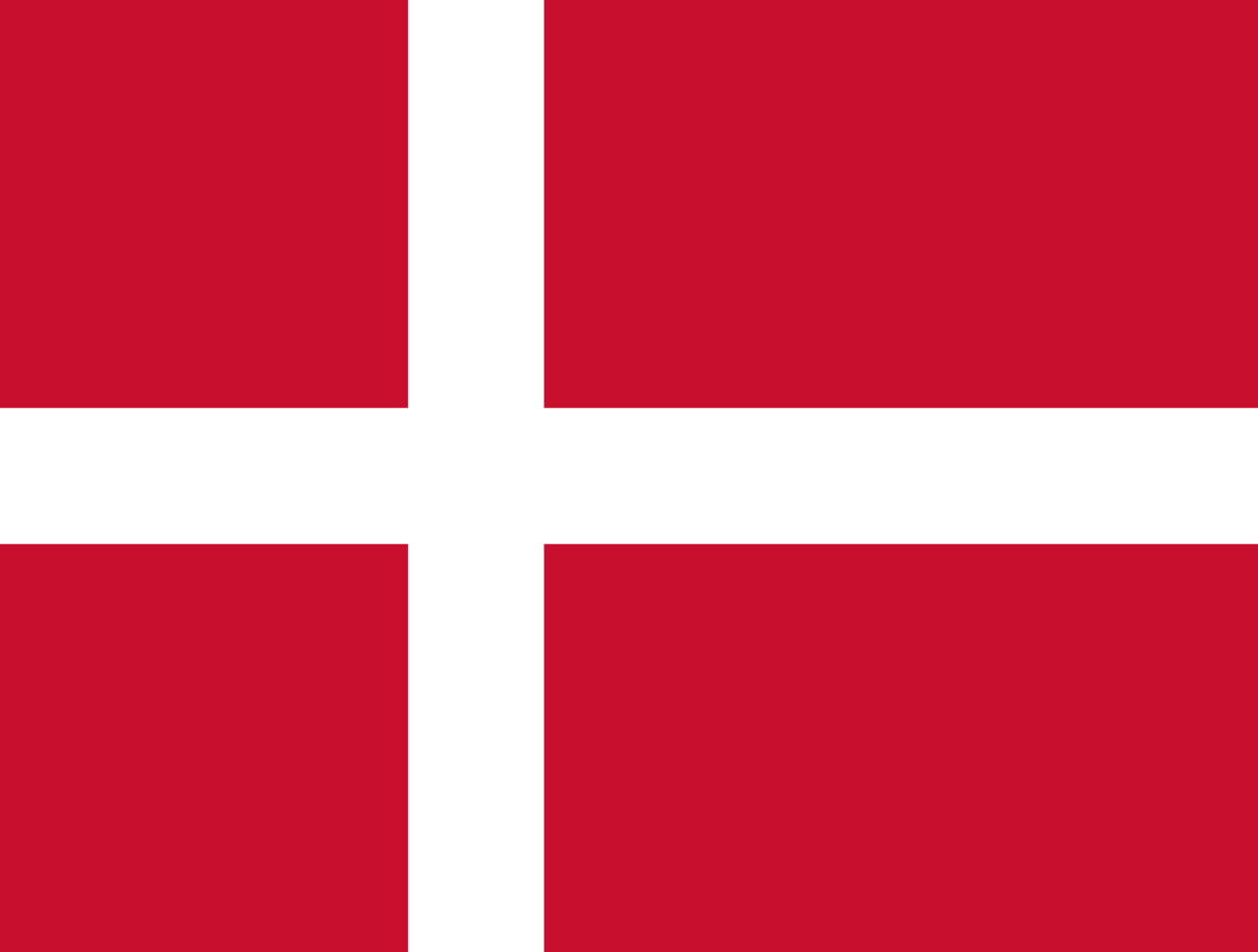
Denmark may be one of Europe's smaller nations, but it punches far above its weight in design, happiness, and historical clout. This is a land where Vikings once launched their longships, where the world's oldest monarchy still reigns, and where a cozy candlelit concept called hygge became a global obsession. Here are ten genuinely fascinating facts that reveal why this little Scandinavian kingdom is so endlessly intriguing.
1. It's an Archipelago of More Than 400 Islands
Denmark looks compact on a map, but it is geographically scattered, made up of the Jutland peninsula plus more than 400 islands, of which around 70 are inhabited. The two largest are Zealand, home to Copenhagen, and Funen, birthplace of Hans Christian Andersen. Despite all this water, no point in Denmark is more than about 50 kilometres from the sea, and the country boasts roughly 7,300 kilometres of coastline. The terrain is famously flat: the highest natural point, Møllehøj, rises a modest 170 metres. This low, sea-laced landscape has shaped a maritime culture stretching back to the Viking Age. To dig deeper into the country's makeup, see our country guide.
2. Copenhagen Is One of the World's Greenest Capitals
The capital, Copenhagen, sits on the eastern edge of Zealand and is repeatedly ranked among the most liveable and sustainable cities on Earth. More than half its residents commute by bicycle, supported by an extensive network of dedicated cycle lanes and bridges. The city aims for ambitious carbon-neutral goals and is dotted with harbour baths where locals swim in clean water right in the centre of town. Copenhagen also houses the Folketing (parliament), royal palaces, and the iconic Little Mermaid statue. Its colourful Nyhavn waterfront, once a rowdy sailors' district, is now one of the most photographed spots in all of Scandinavia.
3. It Has the World's Oldest Continuous Monarchy
Denmark's royal line is widely considered the oldest continuous monarchy in the world, tracing back more than a thousand years to Gorm the Old and his son Harald Bluetooth in the 10th century. Yes, that Bluetooth: the wireless technology is named after the king, and its logo combines the runes for his initials. Queen Margrethe II reigned for over 50 years before abdicating in 2024 in favour of her son, King Frederik X. The monarchy remains deeply popular, serving as a unifying symbol of Danish identity and continuity across an extraordinary sweep of history.
4. The Vikings Called This Place Home
Denmark was a heartland of the Viking Age, roughly from the 8th to the 11th centuries. Danish seafarers raided and traded across Europe, settled in England's "Danelaw," and even produced King Cnut the Great, who ruled a North Sea empire spanning Denmark, England, and Norway. The Jelling Stones, massive runic monuments raised by Harald Bluetooth, are a UNESCO World Heritage Site often called "Denmark's birth certificate" because they record the kingdom's conversion to Christianity. Today you can explore reconstructed longships and burial mounds across the country, connecting modern Danes to their formidable ancestors.
5. Danes Are Among the Happiest People on Earth
Denmark consistently ranks at or near the top of the World Happiness Report. Much of this contentment is credited to a strong social safety net, trust in institutions, short working hours, and a healthy work-life balance. But Danes also point to a cultural concept: hygge, roughly meaning cosy contentment, the warm feeling of candles, good food, and company on a dark winter evening. The country's population of around 6 million enjoys universal healthcare, free education, and generous parental leave, all funded by some of the highest taxes in the world, a trade-off most Danes broadly support.
6. Danish Is a Language Famous for Its Tricky Sounds
The official language is Danish, a North Germanic tongue closely related to Norwegian and Swedish. Speakers of those languages can often read Danish easily but find it surprisingly hard to understand when spoken, thanks to features like the stød, a kind of glottal catch in the voice, and a tendency to soften or swallow consonants. Danish has given English a few words too, and most Danes speak excellent English as a second language. The country also recognises German as a minority language in southern Jutland, near the border it shares with Germany.
7. Lego Was Invented Here
The world's most famous interlocking toy bricks were born in the small Danish town of Billund. Carpenter Ole Kirk Christiansen founded the company in 1932, coining the name "Lego" from the Danish phrase leg godt, meaning "play well." The plastic brick in its modern form arrived in 1958, and Lego is now one of the largest and most valuable toy brands on the planet. Billund is also home to the original Legoland theme park. It is a perfect example of Danish design philosophy: simple, clever, durable, and beloved by generations around the globe.
8. Smørrebrød and Pastries Define the Cuisine
Danish food balances hearty tradition with cutting-edge innovation. The national staple is smørrebrød, an open-faced sandwich on dense rye bread, artfully topped with pickled herring, roast beef, liver pâté, or shrimp. And while the world calls them "Danish pastries," Danes call them wienerbrød ("Viennese bread"), a buttery, flaky treat enjoyed daily. In recent decades, Copenhagen became the epicentre of the "New Nordic" movement, with restaurants like Noma repeatedly named among the world's best, championing local, foraged, and seasonal ingredients and reshaping fine dining globally.
9. It's a Renewable Energy Pioneer
Denmark is a world leader in wind power. On especially blustery days, the country can generate more electricity from wind turbines than it actually consumes, exporting the surplus to neighbours. Danish firms helped pioneer the modern wind-turbine industry, and the iconic offshore wind farms dotting Danish waters have become a model studied worldwide. This green ambition fits the broader national character: pragmatic, design-conscious, and forward-looking. Alongside wind, Denmark invests heavily in cycling infrastructure, district heating, and sustainable architecture, making it one of the most environmentally progressive economies on the planet.
10. The Faroe Islands and Greenland Belong to the Kingdom
Although mainland Denmark is small, the Kingdom of Denmark is vast. It includes two autonomous territories: the Faroe Islands in the North Atlantic and Greenland, the world's largest island, much of it covered by an immense ice sheet. Both self-govern in most domestic matters while Copenhagen handles defence and foreign affairs. This makes Denmark an Arctic power with a footprint stretching from the temperate fields of Jutland all the way to the polar north. Greenland alone is roughly 50 times the size of Denmark proper, a striking contrast in scale.
Frequently Asked Questions
What is the capital of Denmark?
The capital of Denmark is Copenhagen, located on the island of Zealand. It is the country's largest city and its political, cultural, and economic centre, renowned for its cycling culture, colourful Nyhavn harbour, and the famous Little Mermaid statue.
What is Denmark famous for?
Denmark is famous for its Viking heritage, the world's oldest monarchy, Lego, the cosy concept of hygge, and consistently ranking among the happiest countries on Earth. It is also celebrated for cutting-edge design, wind energy leadership, and New Nordic cuisine. You can also learn about its red-and-white flag, the Dannebrog.
Is Denmark really that flat?
Yes, remarkably so. Denmark's highest natural point, Møllehøj, reaches only about 170 metres above sea level. The lack of mountains, combined with strong coastal winds, is exactly what makes the country such an ideal place for wind power and cycling.
Conclusion
From Viking longships and runic stones to wind turbines and Lego bricks, Denmark blends deep history with bold modern thinking in a way few nations manage. It is a small kingdom with an enormous reach, geographically, culturally, and creatively. These ten facts only scratch the surface, so keep exploring and discover even more about this happy, inventive corner of Scandinavia.
