
El Salvador may be the smallest country on the Central American mainland, but it packs an outsized amount of wonder into its borders: a chain of smoking volcanoes, world-class surf breaks, ancient Maya ruins frozen in ash, and a national dish so beloved it has its own holiday. Squeezed between Guatemala, Honduras, and the Pacific Ocean, this tiny nation of roughly 6.4 million people punches far above its weight. Here are ten facts that reveal why El Salvador is one of the most surprising corners of the Americas.
1. The Smallest Country in Central America
At roughly 21,000 square kilometers, El Salvador is the smallest and most densely populated country on the Central American mainland. It is the only nation in the region without a Caribbean coastline, facing instead entirely toward the Pacific Ocean. Despite its compact size, the geography is astonishingly varied: a narrow coastal lowland gives way to a central plateau studded with volcanoes, then rises into cooler mountain ranges along the Honduran border. You can drive from black-sand surf beaches to misty cloud-forest peaks in a couple of hours. To get a fuller picture of its borders, regions, and neighbors, see our country guide, which maps out the lay of this remarkably condensed land.
2. Known as "The Land of Volcanoes"
El Salvador's nickname, El Pulgarcito de América ("the Tom Thumb of America"), reflects its small size, but it is equally famous as the "Land of Volcanoes." More than 20 volcanoes dot the country, and several remain active. The Santa Ana volcano (Ilamatepec), the highest in the country, is crowned by a stunning turquoise crater lake that hikers can reach in a morning's climb. The 2005 eruption of Santa Ana was a vivid reminder that this landscape is still very much alive. These volcanoes also enrich the soil, which is why some of the world's finest coffee grows on their fertile slopes.
3. A Capital Cradled by Volcanoes
San Salvador, the bustling capital, sits in a valley directly beneath the San Salvador volcano, locally nicknamed El Boquerón ("the big mouth") for its gaping crater. Founded in the 16th century, the city has been repeatedly rocked and rebuilt after earthquakes, earning it the somber title "Valley of the Hammocks." Today it is the country's economic and cultural heart, home to colonial churches, lively markets, the striking Metropolitan Cathedral where Archbishop Óscar Romero is buried, and a growing food and arts scene. The surrounding metropolitan area holds a large share of the nation's population.
4. The Pupusa Is the National Obsession
If El Salvador has a culinary soul, it is the pupusa: a thick, hand-pressed corn (or rice) tortilla stuffed with cheese, refried beans, chicharrón, or loroco flowers, then griddled until golden. They are typically served with curtido, a tangy fermented cabbage slaw, and a thin tomato salsa. Pupusas are so central to national identity that the second Sunday of November is celebrated as National Pupusa Day. The dish dates back to the indigenous Pipil people and is now El Salvador's most famous cultural export, with pupuserías popping up wherever Salvadoran communities settle abroad.
5. A World-Class Surfing Destination
El Salvador's Pacific coast has quietly become one of the planet's premier surf destinations. Spots like El Tunco, El Sunzal, and Punta Roca near La Libertad offer long, consistent right-hand point breaks that draw surfers from around the world. The country has leaned into this reputation, hosting major international surfing competitions and branding stretches of its shoreline as "Surf City." Beyond the waves, these beaches deliver dramatic sunsets, volcanic black sand, and a laid-back atmosphere that has made surf tourism a fast-growing pillar of the economy.
6. The Maya Pompeii at Joya de Cerén
Around 600 AD, the eruption of the Loma Caldera volcano buried a small Maya farming village under layers of ash. Because the residents fled and left everything behind, the site, Joya de Cerén, preserved everyday life in extraordinary detail: thatched homes, gardens, ceramic pots still holding food, and even sleeping mats. Discovered by a bulldozer operator in 1976, it is the best-preserved example of pre-Hispanic daily life in the Americas and is often called the "Pompeii of the Americas." It became El Salvador's only UNESCO World Heritage Site, offering a rare window into the lives of ordinary ancient people rather than just kings.
7. A Bold Move Into Bitcoin
In 2021, El Salvador made global headlines by becoming the first country in the world to adopt Bitcoin as legal tender alongside the U.S. dollar. The decision was controversial and closely watched by economists and governments everywhere. It reflected a broader reality: El Salvador abandoned its own currency, the colón, and officially dollarized its economy in 2001. Remittances from Salvadorans living abroad, particularly in the United States, also play an enormous role in the economy, accounting for a substantial share of national income and supporting countless families back home.
8. Scarred and Healed by Civil War
El Salvador's recent history was shaped by a brutal civil war that raged from 1980 to 1992 between the U.S.-backed government and the leftist FMLN guerrillas. The conflict claimed tens of thousands of lives and drove waves of migration abroad. The 1992 Chapultepec Peace Accords ended the fighting and transformed the FMLN into a legitimate political party. The assassination of Archbishop Óscar Romero in 1980, a champion of the poor who was later canonized as a saint, remains one of the war's defining moments. Modern El Salvador continues to grapple with this legacy while building a new identity.
9. Spanish and a Living Indigenous Tongue
Spanish is the official language and is spoken by virtually everyone, but it carries a distinctly Salvadoran flavor, including widespread use of voseo (using vos instead of tú). The country's indigenous heritage survives in Nahuat (Pipil), a language related to the Nahuatl of central Mexico. Though critically endangered with only a handful of native speakers remaining, Nahuat is the subject of dedicated revival programs in schools and communities. Its influence lingers everywhere in place names like Cuscatlán, Izalco, and Ahuachapán, echoing the Pipil civilization that thrived here long before the Spanish arrived.
10. Lakes, Volcanoes, and a Tiny National Bird
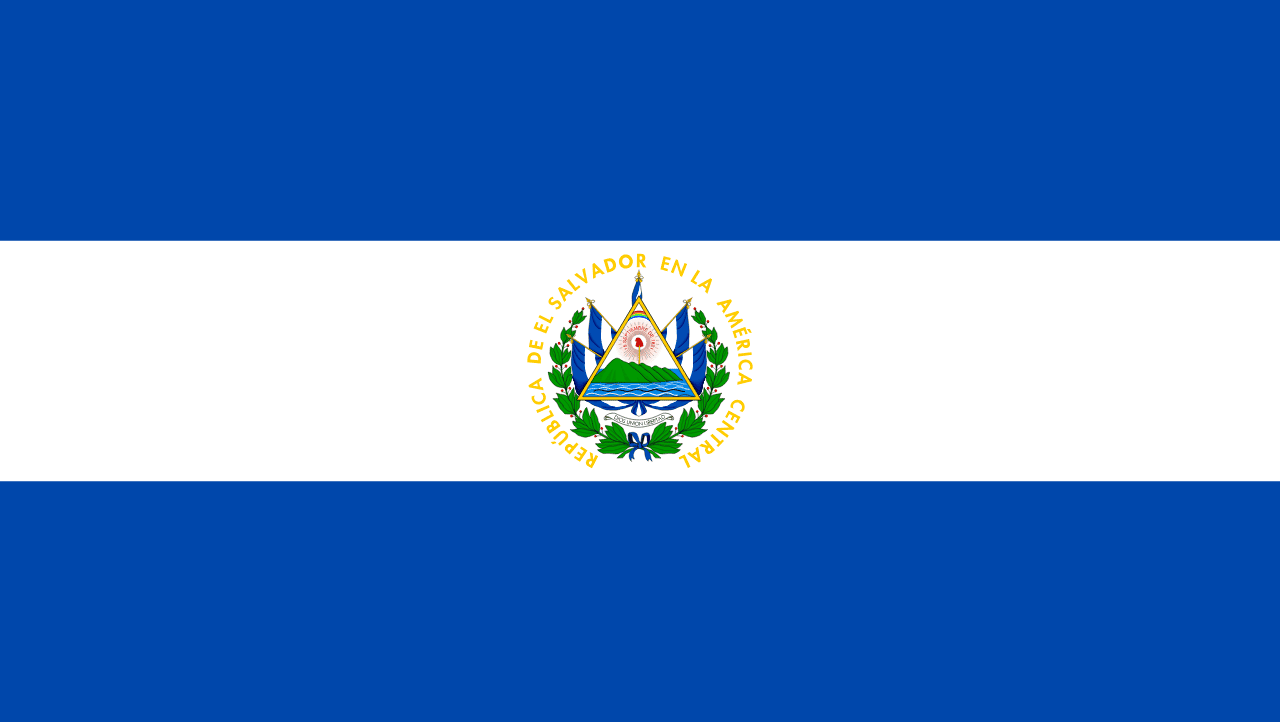
El Salvador's compact landscape hides serene natural treasures. Lake Coatepeque is a stunning crater lake whose waters shift between deep blue and emerald green, ringed by volcanic peaks. Lake Ilopango, another crater lake near the capital, was formed by a massive ancient eruption. The national flower is the flor de izote (yucca blossom), whose petals are actually eaten in traditional dishes, and the national bird is the torogoz (turquoise-browed motmot), instantly recognizable by its long racket-tipped tail feathers. You can spot this colorful bird depicted in national symbols, much like the imagery celebrated on the country's flag.
Frequently Asked Questions
What is the capital of El Salvador?
The capital of El Salvador is San Salvador, a large city nestled in a valley beneath the San Salvador volcano. It is the country's political, economic, and cultural center, home to historic cathedrals, museums, markets, and the majority of the nation's commerce.
What is El Salvador famous for?
El Salvador is famous for its many volcanoes (earning it the nickname "Land of Volcanoes"), its delicious pupusas, world-class Pacific surf breaks, and for being the first country to adopt Bitcoin as legal tender. It is also known as the smallest yet most densely populated nation in mainland Central America.
Why is El Salvador called "El Pulgarcito de América"?
The affectionate nickname translates to "the Tom Thumb of America," referring to El Salvador's tiny size relative to its neighbors. The phrase was popularized by Nobel laureate Gabriela Mistral and celebrates how such a small country manages to hold so much energy, culture, and natural beauty within its borders.
Conclusion
From ash-buried Maya villages and turquoise crater lakes to surf-soaked Pacific beaches and the world's most famous pupusa, El Salvador proves that great things come in small packages. Its resilient people have weathered earthquakes, eruptions, and civil war while preserving a vibrant culture and a fierce national pride. Whether you come for the volcanoes, the waves, or the food, El Salvador rewards every traveler and curious mind with discoveries far bigger than its map suggests.
