
Tucked into the far north of Europe, Finland is a land of silver lakes, endless forests, and winters so dark and summers so bright that time itself seems to bend. It is the country that gave the world the sauna, the mobile phone giant Nokia, and a peculiar national obsession with silence, coffee, and heavy metal. Here are ten genuinely surprising facts about one of Europe's most distinctive nations.
1. It Is Officially the World's Happiest Country
For year after year running, Finland has topped the United Nations' World Happiness Report, leaving its Nordic neighbours trailing behind. The ranking is not about giddy joy but about something Finns call quiet contentment: trust in institutions, low corruption, free education and healthcare, and a deep connection to nature. Finns themselves often react to the title with bemused skepticism, joking that they are simply very good at managing their expectations. The Finnish concept of sisu — a stoic, gritty inner resilience in the face of hardship — captures the national character better than any survey. You can read more in our country guide.
2. A Country Built on 188,000 Lakes
Finland is nicknamed "the land of a thousand lakes," but that is a wild undercount. There are roughly 188,000 lakes scattered across the country, alongside around 180,000 islands, making it one of the most water-rich nations on Earth. Lake Saimaa, the largest, is a labyrinth of bays, channels, and forested islets in the southeast. Add to this that forests cover about three-quarters of the land area, and you have a country where it is genuinely difficult to stand anywhere without a tree or a body of water in view. This watery wilderness shapes everything from summer cottage culture to the national diet.
3. Helsinki Is a Young, Sea-Facing Capital
Helsinki, home to roughly 650,000 people in the city proper and well over a million in the greater region, sits on a rocky peninsula jutting into the Gulf of Finland. Founded in 1550 by the Swedish king, it only became the capital in 1812 after Russia took control of Finland. Its compact centre is famous for clean Neoclassical and Art Nouveau architecture, the gleaming white Lutheran Cathedral, and a thriving design scene. Just offshore lies Suomenlinna, an 18th-century sea fortress spread across several islands and now a UNESCO World Heritage Site, reachable by a short public ferry ride.
4. Finnish Is Unlike Almost Any Other European Language
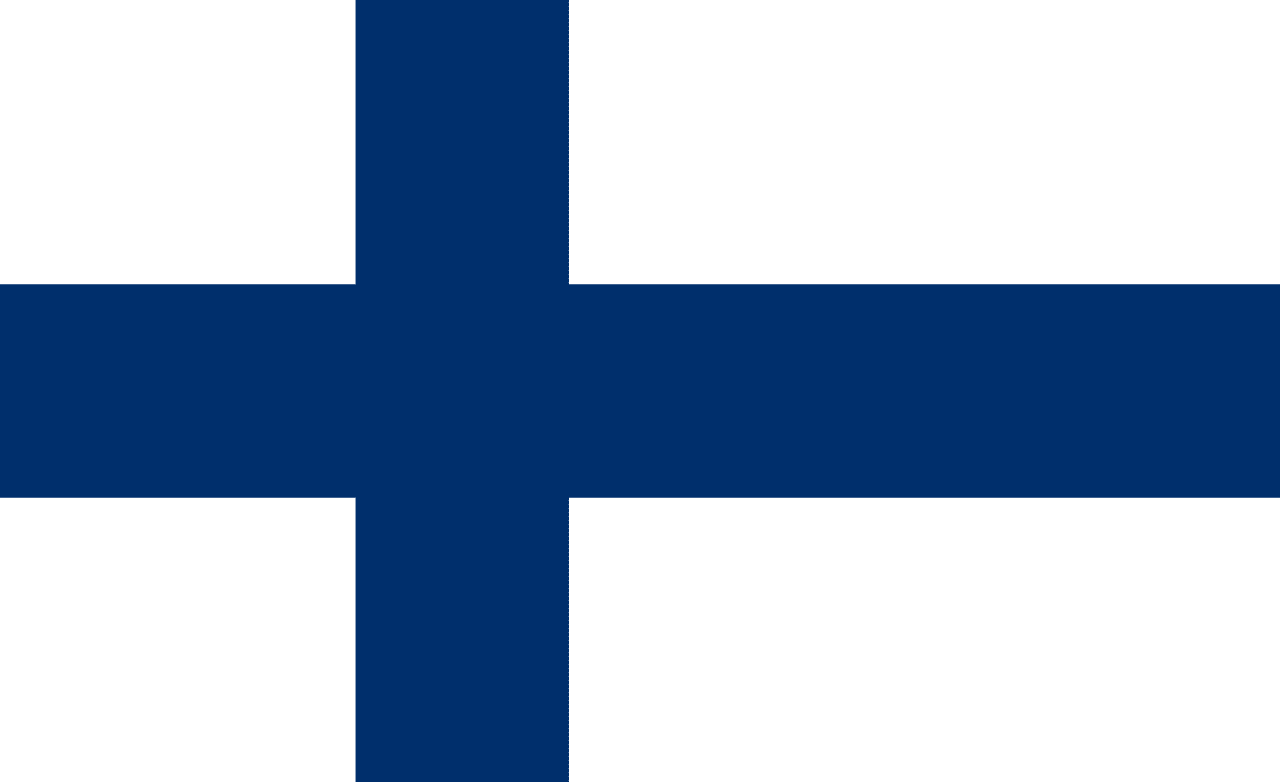
Most European tongues belong to the vast Indo-European family, but Finnish is a Finno-Ugric language, distantly related to Estonian and, more remotely, Hungarian. It has no grammatical gender, no future tense, and an eye-watering fifteen grammatical cases that pile suffixes onto words instead of using prepositions. Roughly 87 percent of the population speaks Finnish as a first language, while Swedish is the other official language, spoken by a small minority and visible on every road sign. In the far north, the indigenous Sami peoples speak their own languages. The country's flag, a blue cross on white, symbolises its lakes and snow.
5. There Are More Saunas Than Cars
The sauna is not a luxury in Finland — it is a near-sacred institution. The country has an estimated three million saunas for a population of just 5.6 million, meaning almost every home, summer cottage, and apartment block has one. Finns of all ages bathe naked, beat themselves gently with birch branches, and then plunge into an icy lake or roll in the snow. Business deals, family gatherings, and even some parliamentary discussions have unfolded in the steamy heat. The word "sauna" is itself one of the very few Finnish words to enter global vocabulary, and UNESCO recognises Finnish sauna culture as intangible heritage.
6. The Land of the Midnight Sun and Polar Night
Because nearly a quarter of Finland lies above the Arctic Circle, the country experiences dramatic extremes of light. In the far north, the sun does not set for weeks in summer — the famous midnight sun — while in winter the opposite happens, with the "kaamos," or polar night, plunging the region into prolonged darkness. This is also prime territory for witnessing the aurora borealis, or Northern Lights, which dance across the sky on clear, cold nights up to 200 times a year in Lapland. The combination of darkness and snow has made Finnish Lapland a global magnet for winter tourism.
7. Rovaniemi Claims to Be the Home of Santa Claus
In the Lapland city of Rovaniemi, just on the Arctic Circle, sits the official Santa Claus Village, where visitors meet Father Christmas year-round and post letters with a special Arctic postmark. Finland has cannily marketed itself as the true homeland of Santa, drawing hundreds of thousands of tourists annually. The wider region of Lapland is also home to the Sami people and their reindeer herds — and yes, reindeer genuinely outnumber humans across much of the north, wandering freely and occasionally holding up traffic on remote roads.
8. A Nation That Loves Coffee, Metal, and Quirky Sports
Finns are among the world's heaviest coffee drinkers per capita, often downing several cups a day. They also embrace eccentric competitions with deadpan enthusiasm: Finland hosts world championships in wife-carrying, air guitar, mobile-phone throwing, and swamp football. The country is also a global heavyweight in heavy metal music, boasting more metal bands per capita than almost anywhere on Earth — and a metal band, Lordi, even won the Eurovision Song Contest in 2006. This blend of reserve and playful absurdity is a defining Finnish trait.
9. From Nokia to a High-Tech Welfare State
Finland transformed from a poor, war-scarred agrarian nation into one of the world's most advanced economies within a single lifetime. For years the telecom company Nokia was the dominant force, at one point producing the world's best-selling mobile phones. Though Nokia's handset dominance faded, Finland remains a technology and engineering powerhouse, with strong forestry, paper, and design industries. Its education system, which downplays standardised testing and trusts teachers, is regularly cited as one of the best in the world, and the country consistently ranks near the top for press freedom and gender equality.
10. Independence Forged Through Hardship
Finland spent centuries under Swedish rule, then a hundred years as an autonomous Grand Duchy within the Russian Empire, before declaring independence on 6 December 1917 amid the chaos of the Russian Revolution. Its survival was tested almost immediately: during the 1939–40 Winter War, vastly outnumbered Finnish troops on skis inflicted heavy losses on the invading Soviet army, an episode of national defiance still remembered with pride. That hard-won sovereignty, defended again in the Second World War, helps explain why Finland values both its independence and, more recently, its 2023 decision to join NATO.
Frequently Asked Questions
What is the capital of Finland?
The capital is Helsinki, a sea-facing city of around 650,000 people on the Gulf of Finland. It became the capital in 1812 and is now the country's hub for government, design, commerce, and culture, complete with the offshore UNESCO sea fortress of Suomenlinna.
What is Finland most famous for?
Finland is best known for its saunas, its 188,000 lakes and vast forests, the Northern Lights of Lapland, and being repeatedly named the world's happiest country. It also gave us the phone company Nokia, a celebrated education system, and the official home of Santa Claus in Rovaniemi.
Why does Finland have so many saunas?
The sauna has been central to Finnish life for thousands of years, originally serving as a place to wash, give birth, and even prepare the dead. Today it is a social ritual for relaxation and bonding, and with roughly three million saunas the country has nearly one for every two people.
Conclusion
From its mirror-still lakes and Arctic light to its steamy saunas, eccentric sports, and quiet resilience, Finland is a country that defies easy summary. It blends cutting-edge technology with a profound reverence for nature, and stoic restraint with a sly sense of humour. These ten facts only open the door — Finland rewards anyone curious enough to step through it.