
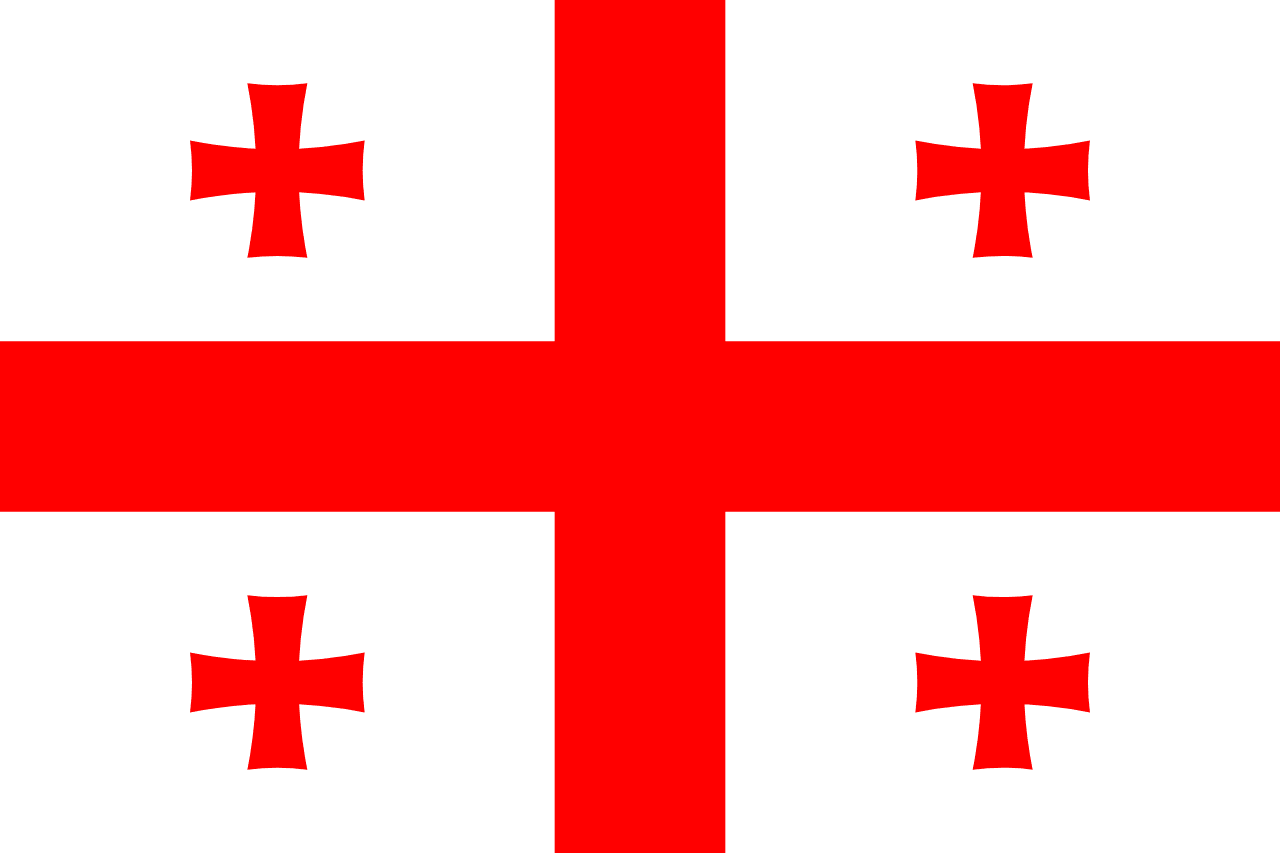
Straddling the rugged frontier between Europe and Asia, Georgia is a country where snow-dusted Caucasus peaks tumble down to subtropical Black Sea beaches, and where a 8,000-year-old wine tradition still flows from clay vessels buried in the earth. Few nations pack so much history, hospitality, and dramatic scenery into a space smaller than the U.S. state of South Carolina. Here are ten genuinely fascinating facts about this proud and ancient land.
1. It Sits on the Crossroads of Europe and Asia
Georgia occupies one of the most geographically contested seams on the planet, wedged between the Greater and Lesser Caucasus mountain ranges with Russia to the north, Turkey and Armenia to the south, and Azerbaijan to the east. To the west lies the Black Sea, giving the country a warm, humid coastline that contrasts sharply with its alpine interior. Whether Georgia belongs to Europe or Asia has been debated for centuries, and the answer is genuinely ambiguous. Culturally and politically, Georgians overwhelmingly identify with Europe, while geographers often place the country in Western Asia. This in-between identity has shaped everything from its architecture to its cuisine.
2. Tbilisi Was Founded Beside Warm Springs
The capital, Tbilisi, takes its name from the Georgian word tbili, meaning "warm," a reference to the natural sulfur hot springs that bubble up beneath the city. Legend holds that King Vakhtang Gorgasali discovered the springs in the 5th century when his hunting falcon fell into one. Today the domed brick bathhouses of the Abanotubani district still draw visitors seeking a soak. Tbilisi is a city of striking contrasts, where crumbling Art Nouveau balconies, Soviet-era apartment blocks, and bold contemporary glass structures all crowd the banks of the Mtkvari River. It remains the political, cultural, and economic heart of the nation. For more, see our country guide.
3. The Georgian Alphabet Is One of Only 14 in the World
Georgian is written in its own unique script that bears no resemblance to Latin, Cyrillic, or Arabic letters. Its flowing, rounded characters are so distinctive that UNESCO inscribed the "Living Culture of Three Writing Systems of the Georgian Alphabet" on its list of Intangible Cultural Heritage. Linguists count Georgian among only around fourteen alphabets in use across the entire world today. The language itself belongs to the Kartvelian family, which is unrelated to Indo-European, Turkic, or Semitic tongues, making it a true linguistic isolate cluster. With its clusters of consonants and grammatical complexity, Georgian is considered one of the harder languages for outsiders to master.
4. Winemaking Began Here 8,000 Years Ago
Georgia is widely regarded as the birthplace of wine. Archaeologists have found grape residue in clay pots dating back roughly 8,000 years, making it the oldest known winemaking region on Earth. The traditional method uses a large egg-shaped clay vessel called a qvevri, which is buried underground to ferment and age the wine. This technique, recognized by UNESCO, produces distinctive amber-hued white wines that have become a global sensation among natural-wine enthusiasts. With several hundred indigenous grape varieties, Georgia offers a depth of viticulture found almost nowhere else, and wine is woven deeply into family life, religion, and the famous Georgian feast.
5. The Supra Feast Comes With a Master of Ceremonies
No fact captures Georgian culture better than the supra, a ritual feast that can stretch for hours. Tables groan under endless dishes, and the gathering is presided over by a tamada, or toastmaster, whose job is to deliver eloquent, often poetic toasts to ancestors, peace, friendship, and country. Guests are expected to drink and respond in turn, and a skilled tamada is considered an artist in his own right. Hospitality is sacred in Georgia; an old proverb declares that "a guest is a gift from God." Turning away a visitor or skimping on a welcome is almost unthinkable in traditional Georgian society.
6. Khachapuri Is the Beloved National Comfort Food
If Georgia has a signature dish, it is khachapuri, a warm bread boat filled with molten cheese. The most theatrical version, Adjaruli khachapuri, is shaped like a canoe and crowned with a runny egg and a knob of butter that diners stir into the bubbling cheese before tearing off the crust to dip. Equally cherished are khinkali, juicy soup-filled dumplings twisted into a knot at the top, which are eaten by hand and never with the doughy stem. Sweet-toothed travelers seek out churchkhela, a candle-shaped snack of walnuts dipped repeatedly in thickened grape juice. Georgian food blends Persian, Turkish, and Mediterranean influences into something entirely its own.
7. Christianity Arrived Astonishingly Early
Georgia was one of the first nations on Earth to adopt Christianity as a state religion, converting in the early 4th century, around 326 AD, thanks largely to a woman known as Saint Nino. This makes its Christian heritage older than that of most European countries. The Georgian Orthodox Church remains a powerful cultural force, and the landscape is dotted with ancient stone churches and monasteries perched on cliffs and hilltops. Sites like Svetitskhoveli Cathedral in the old royal capital of Mtskheta and the cliffside cave monastery of Vardzia testify to more than a millennium of devotion and remarkable medieval Georgian architecture.
8. The Caucasus Mountains Hide Europe's Highest Villages
Georgia's portion of the Greater Caucasus is staggeringly dramatic, with peaks soaring above 5,000 meters. Tucked into these mountains is Svaneti, a remote region famous for its medieval defensive stone towers and some of the highest permanently inhabited villages in Europe. The hamlet of Ushguli sits at over 2,000 meters and is a UNESCO World Heritage Site. These valleys preserve the Svan language and centuries-old traditions that survived precisely because the terrain was so hard to reach. The mountains are also home to the Caucasian tur, a wild goat, alongside brown bears, lynx, and wolves roaming the upper forests.
9. A Small Country With a Population Around 3.7 Million
Despite its outsized cultural footprint, Georgia is home to only about 3.7 to 3.8 million people, with roughly a third of them living in greater Tbilisi. The population is overwhelmingly ethnic Georgian, with Azerbaijani, Armenian, and other minorities adding to the mix. Georgians have a fierce attachment to their homeland and a diaspora scattered across the globe. The country also includes the autonomous regions of Adjara and Abkhazia and the disputed territory of South Ossetia, a reminder of the complex political tensions that have shaped modern Georgia since it regained independence from the Soviet Union in 1991.
10. Georgians Are Wrestling and Rugby Powerhouses
For such a small nation, Georgia punches far above its weight in physical sports. Wrestling and judo are national passions, rooted in the ancient Georgian folk wrestling style called chidaoba, and the country regularly produces Olympic and world champions on the mat. Weightlifting is another stronghold. In recent decades rugby union has surged in popularity to become arguably the most beloved team sport, with the national team, nicknamed the Lelos, qualifying for multiple Rugby World Cups and routinely dominating European tier-two competition. Georgia's distinctive red-and-white five-cross flag is now a familiar sight in stadiums across the continent.
Frequently Asked Questions
What is the capital of Georgia?
The capital is Tbilisi, a vibrant city of around 1.1 million people on the banks of the Mtkvari River. Its name comes from the Georgian word for "warm," honoring the natural sulfur hot springs that still feed the city's historic bathhouses.
What is Georgia most famous for?
Georgia is best known as the birthplace of wine, with an 8,000-year winemaking tradition using buried clay qvevri vessels. It is also celebrated for its legendary hospitality, hearty cuisine like khachapuri and khinkali, dramatic Caucasus mountain scenery, and ancient Christian heritage.
Is the country of Georgia the same as the U.S. state of Georgia?
No, they are completely unrelated and simply share a name in English. The country of Georgia is a sovereign nation in the Caucasus with its own ancient language and alphabet, while Georgia in the United States is one of the fifty American states named after King George II of Britain.
Conclusion
From the oldest wine cellars on Earth to soaring mountain towers and a script all its own, Georgia is a country that constantly surprises. Its blend of ancient traditions, warm hospitality, and breathtaking landscapes makes it one of the world's most rewarding places to explore. These ten facts only hint at the depth of a nation that has guarded its unique identity for thousands of years.