
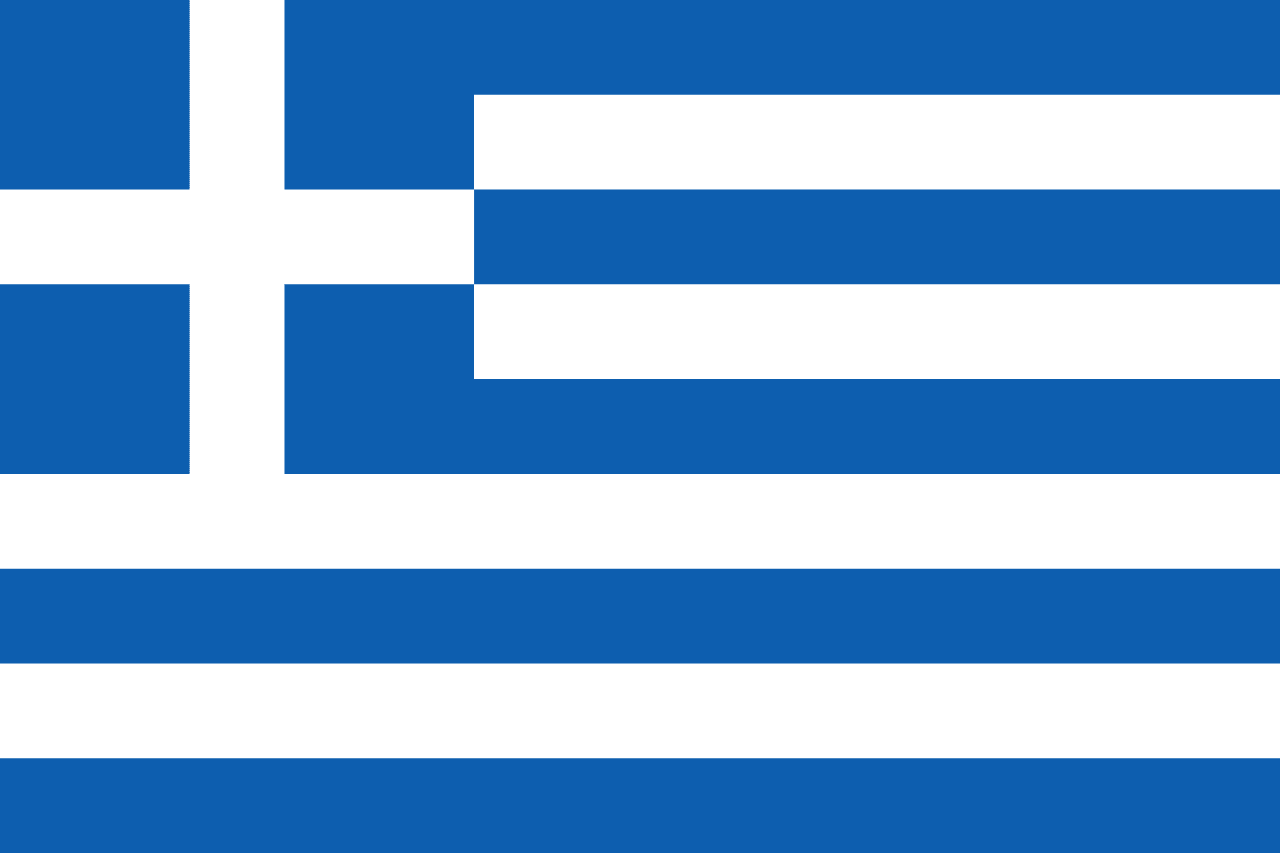
Greece is the kind of country where you can sip coffee in a cafe older than most nations, then catch a ferry to an island where whitewashed villages cling to volcanic cliffs. It gave the world democracy, theatre, the Olympic Games, and the alphabet you are partly reading right now. Beyond the ancient marble, though, lies a living country of fishing harbours, mountain villages, and some of the longest-lived people on Earth.
1. Roughly Six Thousand Islands, but Only a Couple Hundred Inhabited
Greece is scattered across the Aegean, Ionian, and Mediterranean seas in a way few countries can match. Estimates put the number of Greek islands and islets at around 6,000, yet only somewhere between 200 and 230 are actually inhabited. The rest are sun-baked rocks, seabird sanctuaries, or private retreats. This watery geography means Greece has one of the longest coastlines in the world, stretching well over 13,000 kilometres despite the country being relatively compact.
The islands fall into clusters with personalities of their own: the volcanic, postcard-perfect Cyclades like Santorini and Mykonos; the lush, green Ionian islands such as Corfu; and the vast Dodecanese near the Turkish coast. No point in Greece is more than about 137 kilometres from the sea, which shapes everything from the diet to the national obsession with shipping.
2. Eighty Percent Mountains, From Sea Level to Olympus
For a country famous for beaches, Greece is astonishingly mountainous. Around 80 percent of its terrain is hills and mountains, with the Pindus range running like a spine down the mainland. The crown jewel is Mount Olympus, rising to 2,917 metres at the peak called Mytikas. In ancient mythology this was literally the home of the gods, a misty throne for Zeus and the Olympian pantheon.
This rugged landscape historically divided Greece into isolated valleys and city-states, which is part of why ancient Greece never unified into a single empire until much later. Today the mountains feed dramatic gorges, including the Samaria Gorge on Crete, one of the longest in Europe, where hikers descend 16 kilometres through towering rock walls toward the Libyan Sea.
3. Athens Has Been Lived In for Over Seven Thousand Years
Athens, the capital, is one of the oldest continuously inhabited cities on the planet, with a recorded history stretching back more than 3,400 years and human settlement going back roughly 7,000. Crowning the city is the Acropolis, the rocky citadel topped by the Parthenon, a temple to the goddess Athena built in the 5th century BCE. The greater Athens metropolitan area is home to a large share of Greece's roughly 10 million people, making it the unmistakable beating heart of the nation. You can learn more in our country guide.
4. The Greek Language Is Over Three Thousand Years Old
Greek has the longest documented history of any living Indo-European language, with written records spanning more than 3,400 years. The Mycenaean Linear B tablets date to around the 14th century BCE, and the language has been spoken continuously ever since. English borrows thousands of Greek roots, especially in science and medicine, words like democracy, philosophy, mathematics, telephone, and biology all trace back to Greek.
The Greek alphabet, adapted from the Phoenicians around the 9th century BCE, was revolutionary because it added distinct letters for vowels. That innovation became the ancestor of the Latin and Cyrillic alphabets, meaning a huge slice of the world writes in scripts descended from Greek.
5. The Birthplace of Democracy and the Olympic Games
The word democracy comes from the Greek demos (people) and kratos (power), and the concept was pioneered in Athens around 508 BCE under the reformer Cleisthenes. Citizens gathered to vote directly on laws, an idea that would echo across millennia. Greece also gave us the Olympic Games, first held at Olympia in 776 BCE in honour of Zeus and revived in modern form in Athens in 1896. The country is the permanent symbolic home of the Games, which is why the Olympic flame is always lit at ancient Olympia before every modern Olympics.
6. Greeks Are Among the World's Most Devoted Coffee Drinkers
Greek cafe culture is legendary. Sitting for hours over a single drink is not laziness here, it is a way of life, and the social ritual of meeting friends for coffee runs deep. In summer the drink of choice is the frappe, a frothy iced instant coffee invented by accident in Thessaloniki in 1957 at a trade fair when a Nestle representative could not find hot water. The freddo espresso and freddo cappuccino have since become national staples.
This relaxed sociability ties into a broader Greek concept called filoxenia, literally friend to a stranger, the deeply rooted tradition of hospitality toward guests that visitors often remark on.
7. Home to a Famous Blue Zone of Longevity
The Greek island of Ikaria in the eastern Aegean is one of the world's five recognised Blue Zones, regions where people live remarkably long lives. Residents are several times more likely than the average European to reach 90, and many stay active and sharp well into old age. Researchers credit a combination of a Mediterranean diet rich in olive oil, vegetables, legumes, and herbal teas, plus afternoon naps, strong community bonds, and an unhurried relationship with time. The island is sometimes jokingly called the place where people forget to die.
8. Olive Oil Is Practically Liquid Heritage
Greece is the third-largest producer of olive oil in the world, after Spain and Italy, but it ranks among the very highest in consumption per person. Greeks consume an extraordinary amount of olive oil annually, more than almost any other nation, and a large share of their production is premium extra virgin grade. Olive cultivation in Greece dates back thousands of years, and the olive branch was an ancient symbol of peace and victory, awarded to Olympic champions. Alongside oil, Greek cuisine shines with dishes like moussaka, souvlaki, fresh seafood, tangy feta, and honey-soaked baklava, all best enjoyed slowly and shared.
9. Shipping Is the Hidden Engine of the Economy
Though tourism grabs the headlines, Greece quietly dominates global shipping. Greek shipowners control one of the largest merchant fleets in the world by tonnage, transporting a significant share of goods across the oceans. This seafaring tradition stretches back to antiquity, when Greek traders and colonists spread across the Mediterranean and Black Sea. Tourism is the other pillar, with the country welcoming tens of millions of visitors a year, often more arrivals than its own population, drawn by the islands, ruins, and that endless coastline.
10. A Refuge for Monk Seals and Loggerhead Turtles
Greece's seas are a vital sanctuary for some of the Mediterranean's rarest creatures. The critically endangered Mediterranean monk seal, one of the world's most threatened marine mammals, finds some of its most important breeding habitats in Greek waters, particularly around the Northern Sporades, where a national marine park protects them. Loggerhead sea turtles nest on beaches in Zakynthos and the Peloponnese, while the wild kri-kri goat survives in the gorges of Crete. The flag of the nation flies proudly over these protected coasts, which you can read about in our flag guide.
Frequently Asked Questions
What is the capital of Greece?
The capital of Greece is Athens, one of the oldest continuously inhabited cities in the world. It is the country's political, cultural, and economic centre, famous for the Acropolis and the Parthenon that overlook the modern city.
What is Greece most famous for?
Greece is best known as the birthplace of Western civilisation, democracy, philosophy, and the Olympic Games. It is also celebrated for its thousands of sun-drenched islands, ancient ruins, Mediterranean cuisine, olive oil, and warm hospitality.
Why do people on Ikaria live so long?
The island of Ikaria is a Blue Zone where many residents live past 90. The longevity is linked to a plant-rich Mediterranean diet, daily physical activity, afternoon naps, strong family and community ties, and a relaxed, low-stress pace of life.
Conclusion
From mountain-capped Olympus to the quiet beaches where sea turtles return to nest, Greece blends the ancient and the living in a way few places can. It is a country that invented ideas the whole world still uses, yet remains delightfully unhurried about enjoying a coffee or a meal by the sea. These ten facts are only an invitation, the real reward is in exploring further.