
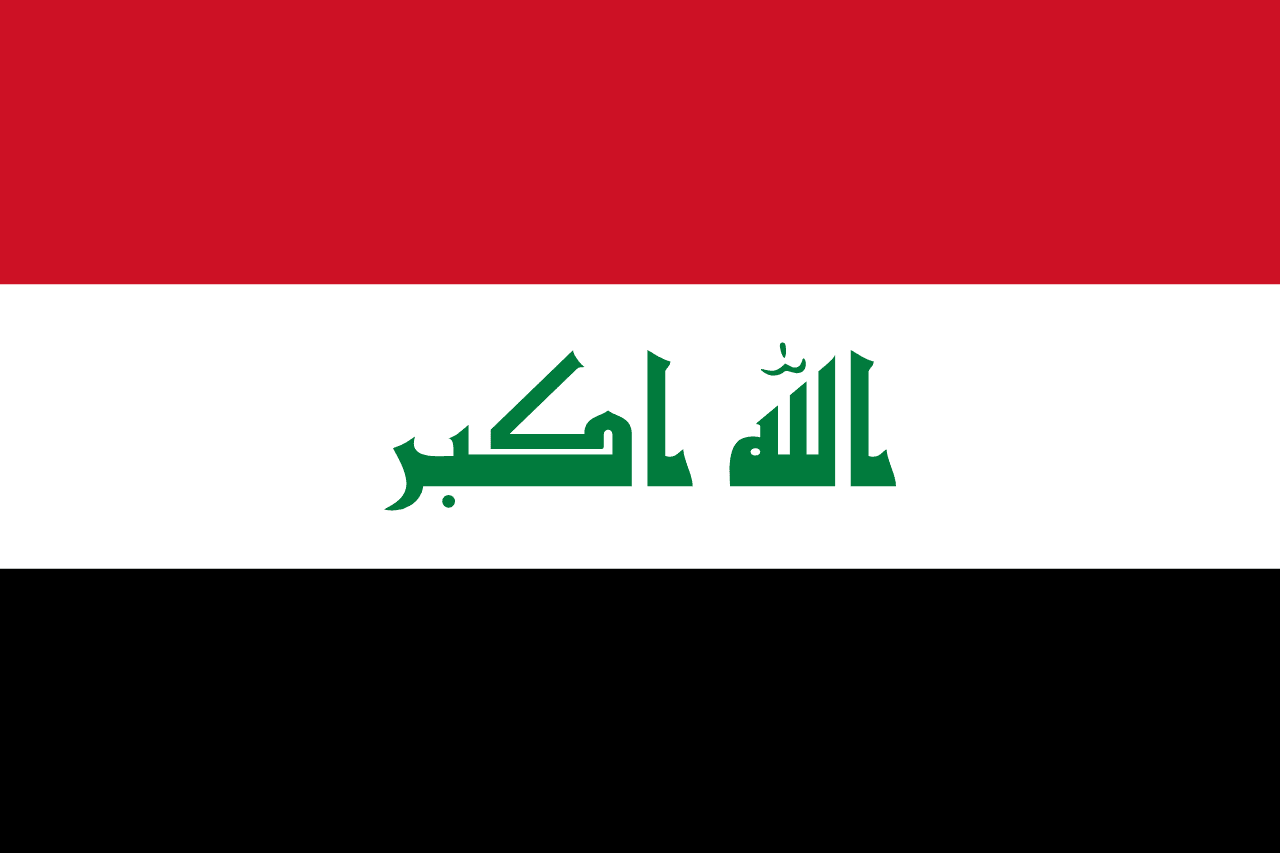
Long before the word "history" existed, people in the land we now call Iraq were already writing it down. This is Mesopotamia, the "land between two rivers," where humanity invented cities, the wheel, and the written word. Modern Iraq carries that staggering legacy while navigating one of the most eventful chapters of any nation on Earth. Here are ten facts that reveal why Iraq is far more than the headlines suggest.
1. It Is the Cradle of Civilization
Iraq sits atop ancient Mesopotamia, widely regarded as the birthplace of urban civilization. Around 4000 BCE, the Sumerians founded some of the world's first cities here, including Uruk and Ur. It was in this fertile crescent that humans developed the earliest known writing system, cuneiform, pressing wedge-shaped marks into clay tablets to record harvests, laws, and stories. The "Epic of Gilgamesh," considered the oldest surviving great work of literature, was composed in this region. Many everyday concepts we take for granted, from the 60-minute hour to organized agriculture and codified law, trace their origins to the societies that flourished between the Tigris and Euphrates rivers thousands of years ago.
2. Two Great Rivers Define the Country
Iraq's geography is shaped by the Tigris and Euphrates, the twin rivers that gave Mesopotamia its name. Both flow from the highlands of Turkey through Iraq before joining near the south to form the Shatt al-Arab waterway, which empties into the Persian Gulf. For millennia these rivers have made an otherwise arid land bloom, supporting farming and dense human settlement. The terrain ranges dramatically: snow-capped mountains in the Kurdish north, vast deserts in the west, and the famous marshlands of the south. The country's modest coastline on the Persian Gulf is short but strategically vital, giving Iraq access to global shipping and its crucial oil exports.
3. Baghdad Was Once the World's Greatest City
The capital, Baghdad, is far more than a modern political center. Founded in 762 CE by the Abbasid Caliphate, it quickly became the largest and most cultured city in the world. During the Islamic Golden Age, Baghdad's legendary House of Wisdom drew scholars who translated Greek, Persian, and Indian texts and made breakthroughs in mathematics, astronomy, and medicine. The word "algebra" comes from work done here by the scholar al-Khwarizmi. At its peak around 1000 CE, Baghdad may have been the first city in history to reach a population of one million. Today it remains Iraq's beating heart, home to several million people and the seat of national government.
4. A Population of Roughly 48 Million
Iraq is home to approximately 48 million people, making it one of the more populous nations in the Middle East. The population is notably young, with a large share under the age of 25, which gives the country a dynamic and fast-growing demographic profile. Most Iraqis live in cities, with major urban centers including Baghdad, Basra in the oil-rich south, Mosul in the north, and Erbil in the Kurdistan region. This urban concentration follows the historic pattern of settlement along the great rivers and around centers of trade and government, while the surrounding deserts remain sparsely populated.
5. A Rich Mosaic of Peoples and Languages
Iraq is ethnically and linguistically diverse. The two official languages are Arabic, spoken by the Arab majority, and Kurdish, spoken in the autonomous Kurdistan region of the north. Smaller communities speak Turkmen, Assyrian Neo-Aramaic, and other tongues. Religiously, the country is predominantly Muslim, divided between Shia and Sunni traditions, with historic communities of Christians, Yazidis, and others adding to the cultural fabric. This mosaic is reflected in everything from regional cuisine to music and dress. To see how the nation symbolizes its identity, explore the design and meaning behind the Iraqi flag, which carries the phrase "God is Great" across its central white band.
6. Home to Ancient Babylon and the Hanging Gardens
Few names in history resonate like Babylon, and its ruins lie roughly 85 kilometers south of Baghdad. This was the capital of King Hammurabi, whose famous law code is one of the earliest written legal systems, and later of Nebuchadnezzar II, builder of the legendary Ishtar Gate. The Hanging Gardens of Babylon were counted among the Seven Wonders of the Ancient World, though scholars still debate exactly where they stood. Iraq holds several UNESCO World Heritage Sites, including the ancient cities of Ashur, Hatra, and the spiral-minaret mosque of Samarra. For archaeologists, the country is one giant open-air museum of human achievement.
7. Dates, Kebabs, and a Beloved National Dish
Iraqi cuisine is ancient and deeply flavorful, built on rice, flatbread, lamb, and an abundance of spices. The unofficial national dish is masgouf, freshwater carp from the Tigris that is split open, seasoned, and slow-grilled beside an open fire, a tradition stretching back to ancient Mesopotamia. Hearty stews known as tashreeb and dolma, vegetables stuffed with rice and meat, are family favorites. Iraq has also long been one of the world's leading producers of dates, with the palm groves of the south historically yielding hundreds of varieties. Sweetened tea and strong coffee accompany meals and the country's famously warm hospitality.
8. An Economy Built on Oil
Iraq sits on some of the largest proven oil reserves on the planet, ranking among the top nations globally. Petroleum dominates the economy, accounting for the overwhelming majority of government revenue and exports. The southern fields around Basra and the northern fields near Kirkuk are especially productive. While oil wealth gives Iraq enormous economic potential, the country has worked to rebuild infrastructure and diversify after decades of conflict and sanctions. Agriculture, particularly dates, wheat, and barley grown in the river valleys, remains important, as do efforts to develop tourism around the country's extraordinary historical sites.
9. The Mesopotamian Marshes and Their Wildlife
In Iraq's south lie the Mesopotamian Marshes, a vast wetland sometimes called the possible site of the biblical Garden of Eden. These marshes are home to the Marsh Arabs, or Ma'dan, who have lived in reed houses and traveled by canoe for thousands of years. Drained in the 1990s, the wetlands have since been partly restored and were named a UNESCO World Heritage Site in 2016. They support migrating birds, water buffalo, and unique aquatic life. Elsewhere, the northern mountains shelter wildlife adapted to rugged terrain, making Iraq's ecosystems more varied than its desert reputation might suggest.
10. Football Is a National Passion
Sport unites Iraqis like little else, and football reigns supreme. In one of the most emotional moments in the country's modern history, the Iraqi national team won the 2007 AFC Asian Cup, defeating Saudi Arabia in the final. The victory sparked nationwide celebrations that briefly transcended the divisions of a difficult era, with players and fans of every background rejoicing together. The team, nicknamed the "Lions of Mesopotamia," remains a powerful source of pride. Beyond football, traditional pastimes and a vibrant poetry culture, with public recitations and competitions, reflect a society that has long prized both physical and artistic expression.
Frequently Asked Questions
What is the capital of Iraq?
The capital of Iraq is Baghdad, founded in 762 CE and once the largest, most learned city in the world during the Islamic Golden Age. It remains the country's political, cultural, and economic center, home to several million people.
What is Iraq famous for?
Iraq is famous for being the cradle of civilization, the home of ancient Mesopotamia, Babylon, and the invention of writing. It is also known worldwide for its vast oil reserves, its date palms, the Tigris and Euphrates rivers, and grilled masgouf fish.
Did the Garden of Eden really exist in Iraq?
Many scholars and traditions place the biblical Garden of Eden in the Mesopotamian Marshes of southern Iraq, where the Tigris and Euphrates meet. While this can never be proven, the lush, restored wetlands certainly look the part and remain ecologically remarkable.
Conclusion
Iraq is a country where the deepest roots of human history meet the challenges and promise of the modern world. From the world's first cities and the splendor of medieval Baghdad to the restored marshes of the south and the roar of football stadiums, Iraq rewards anyone willing to look beyond the headlines. These ten facts only begin to capture a nation that quite literally helped write the story of civilization.