
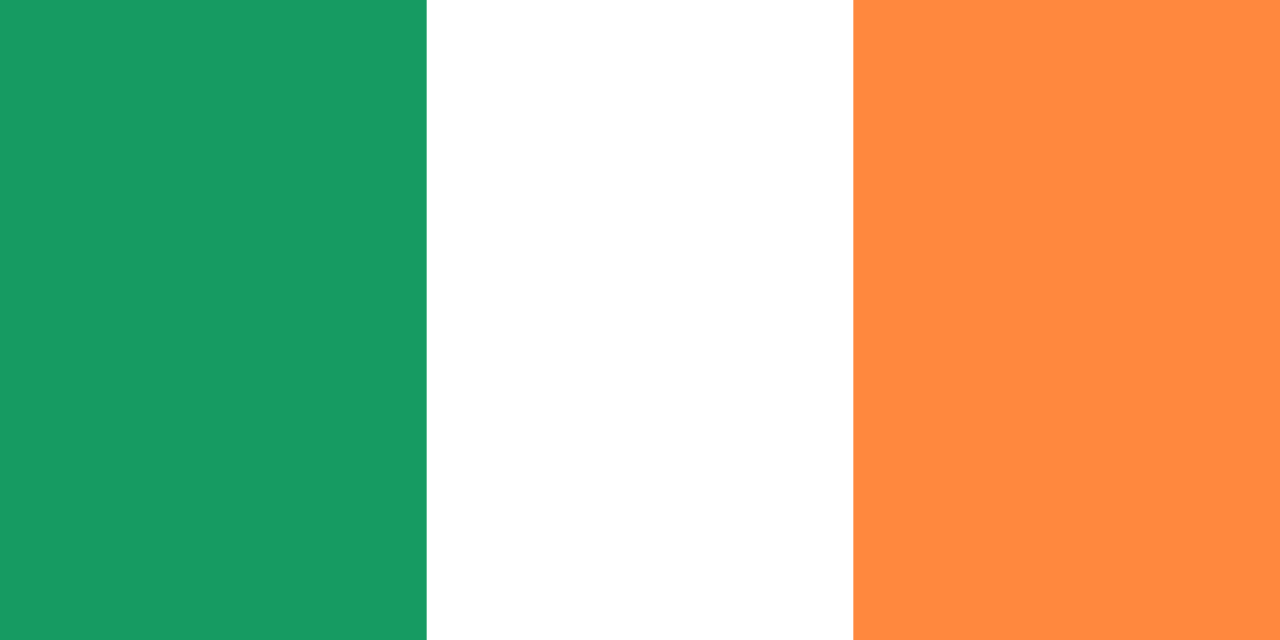
Ireland is a small island with an outsized influence on the wider world, exporting poets, musicians, saints and storytellers far beyond its rain-soaked green hills. Tucked into the far northwest of Europe, it pairs windswept Atlantic cliffs with cosy pubs and a literary tradition that punches well above its weight. Here are ten genuinely interesting facts that reveal why this island captivates students and travellers alike.
1. An Island Split Between Two Countries
When people say "Ireland," they usually mean the Republic of Ireland, which covers about five-sixths of the island. The remaining northeastern corner is Northern Ireland, which is part of the United Kingdom. This partition dates to 1921, leaving a single landmass shared by two distinct political entities with their own currencies, the Republic using the euro and the North using the pound sterling.
Despite the border, the island shares a deeply intertwined geography, history and culture. The Good Friday Agreement of 1998 brought an end to decades of conflict known as "the Troubles," and today the once-fortified border is largely invisible, a quiet symbol of hard-won peace. You can read more in our country guide.
2. Nicknamed the Emerald Isle for Good Reason
Ireland's famously vivid green landscape is no marketing invention. A mild, maritime climate and abundant rainfall, courtesy of weather systems rolling in off the Atlantic, keep the grass growing nearly year-round. The warm North Atlantic Drift moderates temperatures so that the island rarely sees extreme heat or deep freezes despite its northern latitude.
All that moisture means lush pastures perfect for the dairy and cattle farming that defines the rural economy. The trade-off is the weather's legendary unpredictability, with locals joking you can experience all four seasons in a single afternoon. The result is a patchwork of forty shades of green, immortalised in song and poetry alike.
3. Dublin: A Capital Built on Literature
Dublin, sitting on the east coast where the River Liffey meets the Irish Sea, is the capital and largest city of the Republic, home to roughly a quarter of the country's population in its greater metropolitan area. Founded by Vikings over a thousand years ago, it grew into a Georgian city of elegant brick terraces and wrought-iron doorways.
Dublin is a UNESCO City of Literature, having produced an astonishing roster of writers including James Joyce, Oscar Wilde, W.B. Yeats and Samuel Beckett. Joyce's novel Ulysses is set entirely in the city over a single day, the 16th of June, celebrated annually as "Bloomsday." The Trinity College Library holds the medieval Book of Kells, one of the world's most beautiful illuminated manuscripts.
4. The Irish Language Survives Against the Odds
Irish, also called Gaelic, is the first official language of the Republic and one of the oldest written languages in Europe. Although English is spoken by nearly everyone in daily life, Irish remains a powerful symbol of identity. It is taught in every school and appears on road signs, official documents and place names across the country.
Regions where Irish is still the everyday community language are called the Gaeltacht, found mostly along the rugged western and southern coasts. The language has even shaped global vocabulary, giving English words like "galore," "smithereens" and "slogan." Far from being a museum piece, Irish enjoys a modern revival through TV, radio and a growing network of Irish-speaking schools.
5. Famine That Reshaped the Nation
The Great Famine of the 1840s, caused when a potato blight destroyed the staple crop that millions depended on, is one of the most defining events in Irish history. Roughly a million people died and another million emigrated, mostly to North America, in just a few years.
The population, which had approached eight million before the famine, was halved and has never fully recovered. Today the island is home to around seven million people, with about 5.4 million in the Republic. This catastrophe seeded a vast Irish diaspora, and an estimated 70 million people worldwide now claim Irish ancestry, far outnumbering those living on the island itself.
6. No Native Snakes on the Island
Ireland genuinely has no native snakes, and the real reason is geography rather than legend. After the last Ice Age, rising seas isolated the island before snakes could migrate across from mainland Europe, so they simply never arrived. The famous story that Saint Patrick banished them is a charming myth, since there were never any to banish.
The island's wildlife is correspondingly distinctive, with relatively few reptiles or amphibians. The common lizard is the only native reptile. Along the wild Atlantic coastline you can spot puffins, gannets and gray seals, while red deer roam Killarney National Park, descendants of herds present since prehistoric times.
7. A Surprising Modern Economic Powerhouse
Once one of Western Europe's poorer countries, Ireland transformed itself into a high-tech and pharmaceutical hub. Its low corporate tax rate, English-speaking workforce and EU membership attracted the European headquarters of giants like Google, Apple, Meta and Pfizer, clustered largely around Dublin.
This boom, nicknamed the "Celtic Tiger," made Ireland one of the wealthiest nations in the EU by GDP per capita, though that figure is inflated by multinational accounting. The economy weathered a severe crash in 2008 before rebounding strongly. Beyond tech, Ireland remains a major exporter of agricultural products, especially butter, beef and whiskey, blending cutting-edge industry with deep rural roots.
8. The Birthplace of Halloween
Halloween traces its origins to the ancient Celtic festival of Samhain, celebrated in Ireland over two thousand years ago to mark the end of harvest and the start of winter. People believed the boundary between the living and the dead thinned on this night, so they lit bonfires and wore disguises to ward off wandering spirits.
Irish emigrants carried these customs to America, where the turnip lanterns of home evolved into the familiar carved pumpkin. So the next time you don a costume in October, you are taking part in a tradition rooted in Irish soil. The country also gave the world the eerie figure of the banshee from its rich folklore.
9. Castles, Cliffs and a Stone You Kiss
Ireland is dotted with an extraordinary number of castles, ruins and prehistoric monuments. Newgrange, a passage tomb in County Meath, is older than both Stonehenge and the Egyptian pyramids, and each winter solstice its inner chamber is precisely aligned to fill with sunlight.
On the west coast, the Cliffs of Moher rise dramatically above the Atlantic, drawing more than a million visitors a year. Perhaps the quirkiest landmark is the Blarney Stone at Blarney Castle, which visitors lean backwards to kiss in the hope of gaining the "gift of the gab," or eloquent persuasive speech. You can also explore the symbolism of the country's tricolour flag.
10. A Pub Culture and the Black Stuff
The Irish pub is a cultural institution exported to nearly every corner of the globe, prized as a place for conversation, music and community rather than just drinking. Traditional Irish music sessions, where musicians gather informally with fiddles, tin whistles and bodhrán drums, are a beloved fixture of nightlife.
Ireland is also the home of Guinness, the iconic dark stout first brewed in Dublin in 1759 by Arthur Guinness, who famously signed a 9,000-year lease on the brewery. Saint Patrick's Day, on the 17th of March, began as a religious holiday but has become a global celebration of Irish identity, turning rivers and monuments green from Chicago to Sydney.
Frequently Asked Questions
What is the capital of Ireland?
The capital of the Republic of Ireland is Dublin, located on the east coast at the mouth of the River Liffey. It is the country's largest city, its political and economic centre, and a UNESCO City of Literature famous for writers like James Joyce and Oscar Wilde.
What is Ireland most famous for?
Ireland is famous for its lush green landscapes, friendly people, traditional music and pub culture, and Guinness stout. It is also renowned for its literary giants, Saint Patrick's Day celebrations, dramatic coastal scenery like the Cliffs of Moher, and a worldwide diaspora of tens of millions.
Why are there no snakes in Ireland?
There are no native snakes in Ireland because the island became cut off by rising seas after the last Ice Age, before snakes could migrate there from mainland Europe. The legend that Saint Patrick drove them out is a myth, since the creatures never reached the island in the first place.
Conclusion
From an island split between two countries to the birthplace of Halloween, Ireland blends ancient legend with modern reinvention in a way few places can match. Its green hills, literary genius, resilient language and warm hospitality make it endlessly rewarding to explore. These ten facts only open the door to a country whose story keeps unfolding.