
Jordan is a small country with an outsized story to tell, where Bedouin caravans once crossed desert trade routes, prophets walked, and Roman legions built cities that still stand today. Wedged between Israel, Syria, Iraq, Saudi Arabia, and the Red Sea, it has spent millennia as the crossroads of empires while remaining a rare island of calm in a turbulent neighbourhood. From a rose-red city carved into cliffs to the lowest dry land on the planet, here are ten facts that reveal why Jordan punches far above its weight.
1. Petra Was "Lost" to the West for Over 600 Years
Jordan's most famous treasure, Petra, was the capital of the Nabataean kingdom, a clever Arab people who grew rich controlling the incense and spice trade around 300 BCE. They carved monumental facades, temples, and tombs directly into rose-coloured sandstone cliffs and engineered a sophisticated network of dams and channels to harvest water in the desert.
After the Romans absorbed the kingdom and trade routes shifted, Petra faded from memory. To Europeans it became a legend until Swiss explorer Johann Ludwig Burckhardt, disguised as an Arab traveller, talked his way into the hidden valley in 1812. Today Petra is a UNESCO World Heritage Site and one of the New Seven Wonders of the World.
2. The Dead Sea Is the Lowest Point on Earth's Land Surface
On Jordan's western edge lies the Dead Sea, whose shoreline sits roughly 430 metres below sea level, making it the lowest exposed land on the planet. It is also one of the saltiest bodies of water in the world, nearly ten times saltier than the ocean, which is why swimmers bob on the surface like corks without any effort.
The extreme salinity means almost nothing lives in it, hence the name. Visitors slather themselves in the mineral-rich black mud, prized for centuries for its supposed healing properties. Worryingly, the sea is shrinking by more than a metre each year as the Jordan River that feeds it is diverted for farming and drinking water.
3. Amman Is One of the World's Oldest Continuously Inhabited Cities
Jordan's capital, Amman, is a sprawling city built across a series of hills, or jabals. People have lived here for some 9,000 years, and it appears in the Bible as Rabbath Ammon, capital of the Ammonites. The Greeks and Romans later renamed it Philadelphia, the "city of brotherly love."
Modern Amman is a study in contrasts: a gleaming Roman amphitheatre that once seated 6,000 spectators sits in the bustling downtown, while uphill neighbourhoods buzz with art galleries, rooftop cafes, and shawarma stands. Built mostly from pale local limestone, it is often called the "White City." You can learn more in our Jordan country guide.
4. Roughly Half the Population Lives in or Around the Capital
Jordan is home to about 11.6 million people, and an extraordinary share of them, well over four million, live in Greater Amman. This makes Jordan one of the most urbanised countries in the Arab world, with the vast majority of citizens clustered in the cooler, wetter northwest while the eastern deserts remain almost empty.
The population has also been shaped profoundly by waves of refugees. Jordan has absorbed Palestinians, Iraqis, and more recently hundreds of thousands of Syrians fleeing war. This generosity has strained resources but given the country a remarkably diverse, resilient society where hospitality is treated as a sacred duty.
5. The Wadi Rum Desert Has Doubled as the Surface of Mars
In Jordan's south lies Wadi Rum, a vast valley of red sand, towering sandstone monoliths, and natural rock bridges. T. E. Lawrence (Lawrence of Arabia) passed through during the Arab Revolt of World War I, and the landscape is so otherworldly that filmmakers have used it to portray alien planets.
Movies including The Martian, Dune, Rogue One, and Lawrence of Arabia were all shot here. Bedouin tribes still live in the area, offering camel treks, jeep safaris, and nights in desert camps under some of the clearest, most star-filled skies on Earth. It is protected as a UNESCO site for both its scenery and its ancient petroglyphs.
6. Mansaf Is More Than a Meal, It's a National Ritual
Jordan's national dish, mansaf, is a generous platter of lamb cooked in a tangy sauce of fermented dried yoghurt called jameed, served over rice and flatbread and topped with toasted almonds and pine nuts. Traditionally it is eaten communally from a single large tray, scooped up with the right hand.
Mansaf is the centrepiece of weddings, funerals, and major celebrations, a symbol of Bedouin hospitality and honour. Beyond it, Jordanian tables overflow with mezze: hummus, falafel, smoky baba ghanoush, and crisp fattoush. For dessert, few can resist knafeh, a warm cheese pastry soaked in syrup that the nearby city of Nablus made famous across the region.
7. Jordan Is Almost Entirely Landlocked, With a Tiny Sliver of Coast
For a country bordered by so much desert, Jordan's access to the sea is astonishingly small. Its only coastline is about 26 kilometres of shore on the Gulf of Aqaba at the far southern tip, the country's single seaport and gateway to the Red Sea.
Despite its modest length, this coast is a jewel. The warm, calm waters of Aqaba shelter vibrant coral reefs and colourful marine life, making it a popular spot for diving and snorkelling. The port is also economically vital, handling most of Jordan's imports and exports and serving as a free-trade zone designed to boost the resource-poor nation's commerce.
8. The Country Has Almost No Oil, So It Bets on Brains and Tourism
Unlike its oil-rich Gulf neighbours, Jordan is poor in natural resources, with little oil and chronic water scarcity. Instead, the economy leans on services, tourism, skilled labour, and exports of phosphates and potash mined from the Dead Sea. Remittances sent home by Jordanians working abroad are another crucial lifeline.
Education is a point of national pride, and Jordan boasts one of the most highly literate, well-trained workforces in the region, supplying doctors, engineers, and teachers across the Middle East. Tourism remains a pillar too, drawing travellers to Petra, the Dead Sea, and Wadi Rum, though it rises and falls with regional stability.
9. Arabic Is Official, but English Opens Many Doors
The official language is Arabic, and Jordanians speak a distinctive Levantine dialect in daily life while using Modern Standard Arabic for writing, news, and formal occasions. The script and the spoken language are a deep source of cultural identity tying the country to the wider Arab world.
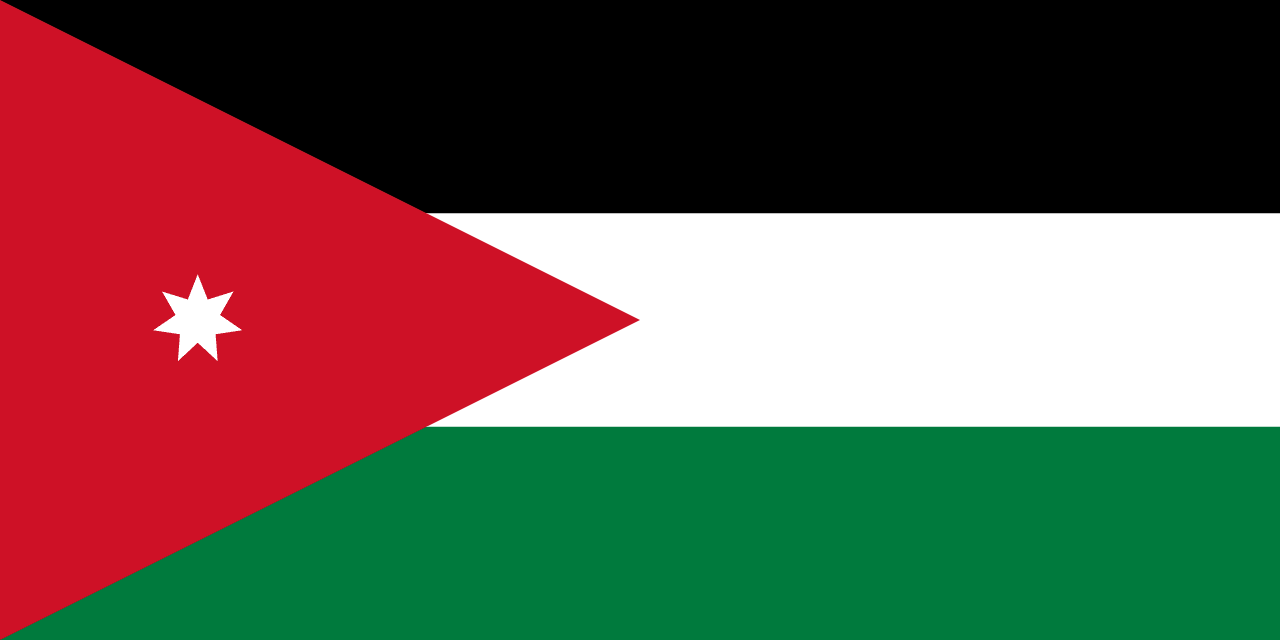
English is widely taught in schools and commonly spoken in cities, business, tourism, and higher education, so visitors rarely struggle to get by. This bilingualism reflects Jordan's outward-looking, modern outlook. You can spot the country's white star and three horizontal bands in our guide to the Jordanian flag, whose colours honour historic Arab dynasties.
10. The Arabian Oryx Was Brought Back From Extinction Here
Jordan's deserts and reserves shelter surprising wildlife, including the Nubian ibex, sand cats, striped hyenas, and migratory birds that pass through on the journey between Europe, Asia, and Africa. The crown jewel of conservation, though, is the Arabian oryx, a striking white antelope with long straight horns.
Hunted to extinction in the wild by the 1970s, the oryx was carefully bred in captivity and reintroduced at Jordan's Shaumari Wildlife Reserve, part of a regional effort to restore the species to its native range. Reserves such as Dana Biosphere protect a remarkable range of habitats, from Mediterranean highlands to sandstone desert, in a country smaller than many would expect.
Frequently Asked Questions
What is the capital of Jordan?
The capital of Jordan is Amman, a hilly city of more than four million people in the northwest of the country. It is one of the oldest continuously inhabited cities on Earth and serves as Jordan's political, cultural, and economic heart, mixing Roman ruins with a lively modern arts and cafe scene.
What is Jordan most famous for?
Jordan is best known for Petra, the ancient Nabataean city carved into rose-coloured rock and counted among the New Seven Wonders of the World. It is also famous for the Dead Sea, the lowest point on land, and the dramatic desert scenery of Wadi Rum, beloved by filmmakers and adventurers alike.
Can you really float in the Dead Sea?
Yes, and it is one of the strangest sensations a traveller can have. The Dead Sea's water is so dense with salt and minerals that your body floats effortlessly on the surface, making it nearly impossible to sink. Visitors often read a newspaper while bobbing along, then coat themselves in the mineral mud said to nourish the skin.
Conclusion
Jordan proves that a country need not be large or oil-rich to be unforgettable. With Petra's carved temples, the buoyant Dead Sea, Mars-like deserts, and a tradition of hospitality that turns a meal into a ceremony, it offers wonders at every turn. Pair its ancient history with a forward-looking, educated population, and Jordan emerges as one of the most rewarding places to explore in the entire Middle East.