
Tucked between Switzerland and Austria in the heart of the Alps, Liechtenstein is so small you could drive across it in about fifteen minutes, yet it remains one of Europe's most curious and successful nations. It is a principality ruled by a prince, has no airport and no army, and quietly produces some of the things you probably use without ever knowing where they came from. Here are ten genuinely surprising facts about this Alpine micro-state.
1. It is one of only two doubly landlocked countries on Earth
Liechtenstein holds a rare geographic distinction: it is one of just two doubly landlocked countries in the world, the other being Uzbekistan. This means it is not only landlocked itself, but every one of its neighbours is landlocked too. To reach the open ocean from Vaduz, you would have to cross at least two international borders no matter which direction you travelled. Wedged between Switzerland and Austria, the country has no coastline, no navigable sea route, and no maritime trade of its own. For a nation that thrives on global finance and exports, this remoteness from the sea is a quirk of geography that makes its prosperity all the more remarkable. You can read more in our country guide.
2. The whole country is shaped by the Rhine and the Alps
Liechtenstein measures just about 160 square kilometres, making it the sixth-smallest country in the world. Despite that, its landscape is dramatic. The Rhine River forms the entire western border with Switzerland, while the eastern two-thirds of the country rise steeply into the Rätikon range of the Alps. The highest point, the Grauspitz, reaches 2,599 metres. This split between flat, fertile Rhine valley and rugged mountain slopes means most of the population lives in the lowland strip, while the highlands are reserved for forests, alpine pastures, and hiking trails that connect to a network spanning the surrounding region.
3. Vaduz is a capital without a railway station
Vaduz, the capital, is home to only around 5,000 people, making it one of the least populous capital cities in the world. Curiously, Vaduz has no train station of its own. Although a railway line operated by Austrian Federal Railways crosses the country, its handful of stops are in other villages, so visitors arriving by rail typically alight at Schaan-Vaduz or take a bus from Sargans in Switzerland. The town is dominated by Vaduz Castle, perched on a hillside above the centre, and is also famous for its modern art museum, the Kunstmuseum, whose sleek black cube of a building stands in striking contrast to the alpine backdrop.
4. The Prince still holds real political power
Liechtenstein is a constitutional monarchy, but unlike most European royals, its head of state wields genuine authority. Following a 2003 referendum, Prince Hans-Adam II secured expanded powers, including the right to veto legislation, dismiss the government, and appoint judges. In return, the constitution grants citizens the right to call a referendum to abolish the monarchy entirely, an unusual balance of power found nowhere else. The princely House of Liechtenstein is one of Europe's oldest noble families, and for centuries its members actually lived in Vienna and Austria rather than the territory that bears their name. They did not move their primary residence to Vaduz Castle until the twentieth century.
5. It was once the world's biggest maker of false teeth
For decades, Liechtenstein quietly dominated a surprising global market: artificial teeth. The company Ivoclar Vivadent, based in Schaan, became one of the world's leading manufacturers of dental ceramics and false teeth, exporting millions of units worldwide. Manufacturing, not banking, is in fact the largest sector of the economy. The country also produces precision instruments, heating systems, and power tools, with the firm Hilti, known for its red construction tools, headquartered here. Despite a population smaller than many town suburbs, Liechtenstein has one of the highest rates of industrial output per capita anywhere on the planet.
6. There are more registered companies than residents
Liechtenstein's reputation as a low-tax financial centre led to a striking statistic: for many years there were more registered companies and holding entities than there were people living in the country. With a population of roughly 40,000, the principality attracted tens of thousands of foreign businesses drawn by favourable corporate laws and banking secrecy. In recent years, under international pressure, the country has reformed its tax transparency rules and signed cooperation agreements to shed its image as a tax haven. Even so, financial services, alongside manufacturing, help give Liechtenstein one of the highest GDP-per-capita figures in the world.
7. German is the official language, but the locals speak Alemannic
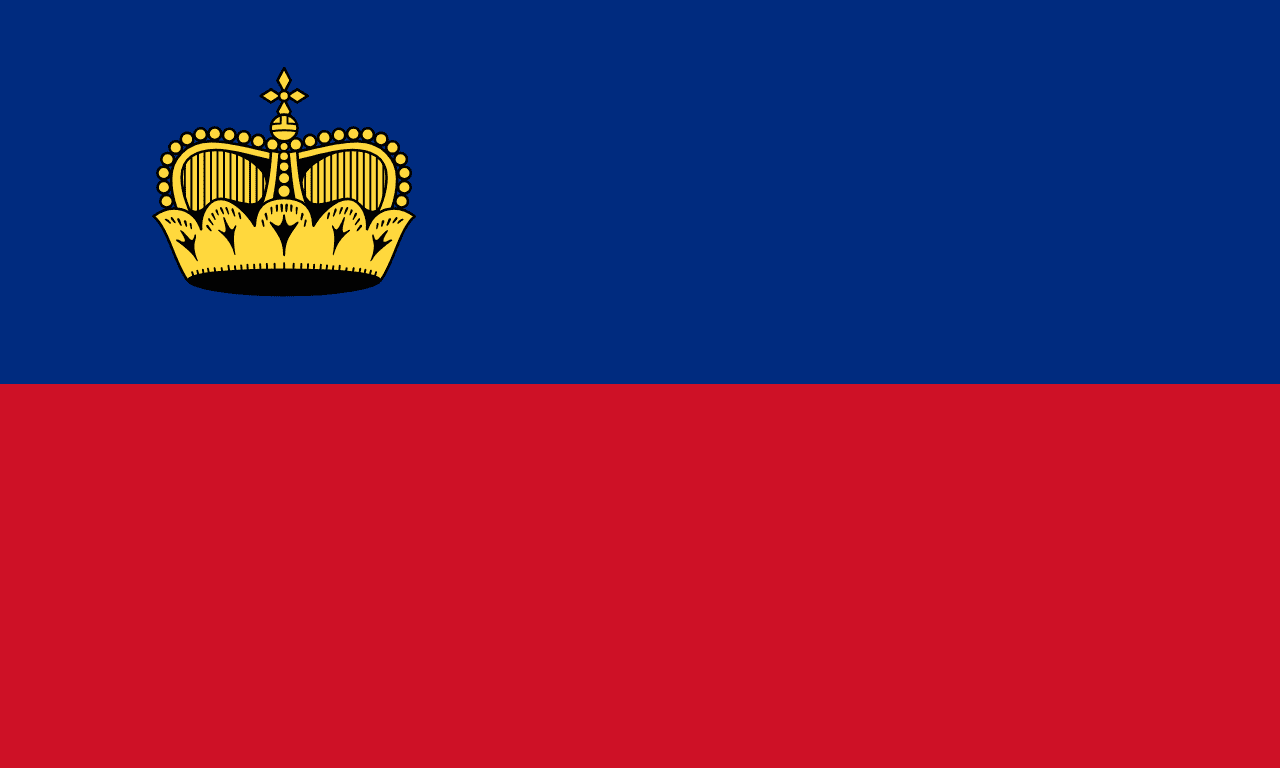
The official language is German, used in government, schools, and the press. In everyday life, however, Liechtensteiners speak an Alemannic dialect closely related to the Swiss German spoken across the border. This dialect can be difficult even for standard German speakers to follow. The country has strong cultural and historical ties to its German-speaking neighbours, yet it has carefully preserved its own identity and traditions. Its flag of blue over red, topped with a golden crown, reflects this distinct national character, the crown having been added in 1937 to distinguish it from the nearly identical flag of Haiti.
8. You can rent the entire country for the night
In one of the most unusual tourism offerings ever conceived, Liechtenstein once made it possible to rent the whole country for corporate events and gatherings. For a substantial nightly fee, visitors could effectively take over the principality, complete with customised street signs, a temporary currency, and the use of local venues, accommodating hundreds of guests across its villages. The scheme, launched through online lodging platforms, was a tongue-in-cheek but real demonstration of just how compact and tight-knit the nation is. Few other countries on Earth are small enough that such an arrangement could even be imagined, let alone marketed to the world.
9. It went to war once and came back with an extra soldier
Liechtenstein abolished its army in 1868 because it was too expensive to maintain, and the country has had no standing military ever since. According to a much-loved national legend, the last time its soldiers saw action was during the Austro-Prussian War, when 80 men were dispatched and 81 returned, the extra being an Italian friend they had made along the way. Whatever the truth of the tale, no Liechtensteiner has died in a military conflict in well over a century. The principality maintained strict neutrality through both World Wars, helping it preserve its independence while empires collapsed around it.
10. It hosts a winter sports tradition far bigger than its size
For such a tiny nation, Liechtenstein has produced an extraordinary number of world-class alpine skiers. Its most celebrated athlete, Hanni Wenzel, won multiple Olympic and World Cup titles, and the country has collected more Winter Olympic medals per capita than almost any other. The mountain resort of Malbun, the principality's main ski area, sits high in the Alps and serves as the training ground for these champions. Beyond skiing, Liechtensteiners cherish alpine traditions such as cattle drives, mountain festivals, and the celebration of National Day on 15 August, when the entire country gathers in the meadow below Vaduz Castle.
Frequently Asked Questions
What is the capital of Liechtenstein?
The capital is Vaduz, a small town of around 5,000 people on the banks of the Rhine. It is the seat of government and home to Vaduz Castle, the official residence of the reigning prince, as well as the national parliament and the Kunstmuseum art gallery.
What is Liechtenstein famous for?
Liechtenstein is famous for being one of the world's smallest and wealthiest countries, for its ruling prince and fairytale castle, and for being doubly landlocked. It is also known for high-tech manufacturing, including false teeth and Hilti power tools, and as a former tax haven.
Does Liechtenstein really have no army?
Yes. Liechtenstein abolished its military in 1868 on grounds of cost and has remained without one ever since. The country relies on neutrality and its close relationship with Switzerland for security, and it has stayed out of armed conflict for more than 150 years.
Conclusion
Liechtenstein proves that a country measured in mere kilometres can still hold an outsized place in the world. From its doubly landlocked geography and powerful prince to its army of false teeth and its Olympic ski champions, this Alpine principality is full of surprises that reward anyone willing to look closer. The next time someone dismisses it as a dot on the map, you will know just how much story is packed into that dot.
