
Nauru is a speck of land in the central Pacific so small that you could walk around its entire coastline in an afternoon, yet its story is one of the most dramatic on Earth. This tiny republic rode a wave of phosphate wealth to become one of the richest places per person on the planet, then watched that fortune vanish almost as quickly as it arrived. Here are ten facts that reveal why Nauru is unlike anywhere else in the world.
1. It Is the World's Smallest Island Republic
Nauru covers just about 21 square kilometres (roughly 8 square miles), making it the third-smallest country on Earth by land area, behind only Vatican City and Monaco. It is, however, the smallest republic in the world and the smallest independent island nation. The whole country is a single raised coral island sitting alone in the Pacific, with no surrounding archipelago to call its own. Its nearest neighbour, the island of Banaba in Kiribati, lies some 300 kilometres away. With a population of around 12,000 people, Nauru also ranks among the least-populated sovereign states anywhere, a place where the entire nation could fit comfortably inside a single large stadium.
2. It Is the Only Country in the World With No Official Capital
Nauru holds a genuinely unique distinction: it is the only sovereign state that has no official capital city. The district of Yaren, on the southern coast, is widely listed as the de facto capital because it is home to the parliament, the government offices, and the international airport. But this is a matter of convenience rather than law, as no district has ever been formally designated as the capital. Nauru is divided into 14 administrative districts in total, and government functions are simply concentrated in Yaren. You can learn more in our country guide, which digs deeper into how this unusual arrangement works.
3. Phosphate Mining Once Made It One of the Richest Nations on Earth
For much of the 20th century, Nauru's interior was a treasure trove of high-grade phosphate, formed over millennia from seabird droppings and marine deposits. This phosphate was prized as agricultural fertiliser and exported in enormous quantities. By the 1970s and 1980s, Nauru boasted one of the highest per-capita incomes in the world, rivalling wealthy Western nations. The government distributed wealth generously, residents paid little or no tax, and the country invested heavily abroad. For a brief, astonishing moment, this dot in the Pacific was richer per person than almost anywhere on Earth.
4. Mining Stripped Away Most of the Island's Surface
That wealth came at a staggering environmental cost. Decades of strip-mining gouged out the phosphate, leaving the central plateau, known as "Topside," a jagged moonscape of bare coral pinnacles. By some estimates around 80 percent of the island's land surface was rendered uninhabitable, forcing nearly the entire population to crowd onto the narrow coastal strip. When the phosphate reserves were largely exhausted, the easy money disappeared, plunging Nauru into economic crisis. Today, efforts to rehabilitate the scarred interior continue, a sobering reminder of what unrestrained resource extraction can do to a fragile island.
5. Nauruan Is the National Language
Nauruan is the official national language and is spoken by the vast majority of the population. It is a Micronesian language with a complex sound system, and notably it has no close relatives, standing somewhat apart from its Pacific neighbours. English is widely used in government, commerce, and education, making the country effectively bilingual. Because the Nauruan-speaking community is so small, the language is considered vulnerable, and there have been ongoing efforts to document and preserve it. This linguistic distinctiveness is yet another way that Nauru, despite its size, maintains a strong and singular identity.
6. It Has the Shortest National Coastline of Any Country
Because Nauru is a single small oval island, it has one of the shortest national coastlines in the world, ringing the island in roughly 30 kilometres. A coastal road, the country's main thoroughfare, loops around the entire island in less than half an hour by car. There are no rivers, no large natural harbours, and just a thin fringe of fertile land where coconut palms and homes cluster between the ocean and the mined-out interior. For visitors, this means the whole nation is intimate and walkable, with the Pacific never more than a short stroll away from anywhere you happen to be.
7. The Island's People Have Distinct Clan Traditions
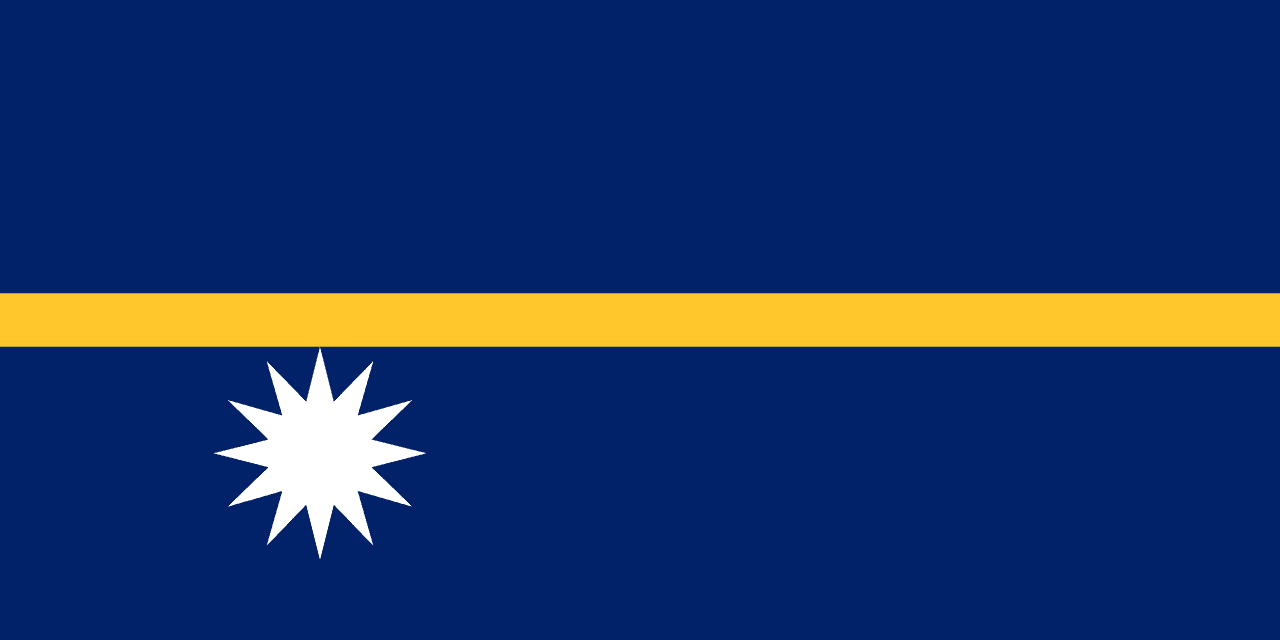
Nauruan society was traditionally organised into 12 clans or tribes, a heritage still reflected in the 12-pointed star on the national flag. Each point of that star represents one of the original clans, while the flag's single horizontal yellow line stands for the Equator and the white star's position marks Nauru's location just south of it against the blue Pacific. Traditional life centred on fishing, the harvesting of coconuts and pandanus, and a remarkable practice of catching and rearing frigatebirds. Kinship and community remain deeply important, with most Nauruans tracing their ancestry through these clan lines.
8. Catching Frigatebirds Is a Treasured Custom
One of Nauru's most distinctive cultural traditions is the catching and taming of frigatebirds. Skilled hunters would lure the large seabirds with bait, capture them, and keep them as semi-domesticated animals, sometimes training them to return after flying out to sea. This practice is woven into Nauruan identity and folklore, a uniquely local relationship between people and wildlife. Fishing also played a central role: Nauruans developed clever techniques for raising milkfish in the brackish waters of Buada Lagoon, a freshwater pond nestled in the island's interior, ensuring a reliable food source even on such a small and isolated landmass.
9. Australian Rules Football Is the National Obsession
For a country with so few people, Nauru is wildly passionate about sport, and the national favourite is Australian rules football. The game arrived through close historical ties with Australia and became deeply embedded in island life, with local leagues and enthusiastic crowds. Weightlifting is another national strength: Nauru has produced champion lifters who have competed and medalled at the Commonwealth Games, bringing the tiny nation moments of genuine sporting glory on the international stage. Given that the entire population could fit in a modest arena, the sheer level of athletic achievement per capita is remarkable.
10. It Is Home to Buada Lagoon and a Fragile Tropical Ecosystem
Despite the damage inland, Nauru still holds pockets of natural beauty. The most striking is Buada Lagoon, a calm freshwater body surrounded by lush vegetation and palms in the island's interior, offering a green contrast to the mined plateau around it. The surrounding Pacific waters host coral reefs, tropical fish, and seabirds, including the frigatebirds central to local tradition. The island sits just below the Equator, giving it a hot, humid tropical climate year-round. As a low-lying nation, Nauru is also on the front line of climate change, with rising seas posing a real long-term threat to its narrow coastal living space.
Frequently Asked Questions
What is the capital of Nauru?
Nauru is unique in having no officially designated capital. The district of Yaren serves as the de facto capital because it hosts the parliament, government buildings, and the country's international airport, but no district has ever been formally named the capital in law.
What is Nauru famous for?
Nauru is best known for its phosphate mining boom, which briefly made it one of the wealthiest nations per person on Earth, and for the dramatic economic and environmental consequences that followed once the phosphate ran out. It is also famous as the world's smallest island republic.
Can you really walk around the entire country?
Almost. A single ring road circles the whole island in roughly 30 kilometres, and you can drive around all of Nauru in under half an hour. Energetic walkers can circumnavigate the coastline on foot in a single long day, making it one of the few countries you can experience in its entirety so easily.
Conclusion
Nauru proves that a nation's significance has nothing to do with its size. From its boom-and-bust phosphate fortune to its frigatebird-catching traditions, its capital-less government, and its passion for Australian rules football, this tiny Pacific republic packs an extraordinary amount of history and character into 21 square kilometres. It stands as both a marvel of resilience and a cautionary tale, and there is always more to discover about this remarkable corner of Oceania.