
Panama is the slender, S-shaped isthmus where two oceans nearly touch and two continents finally meet, a country whose entire identity has been shaped by the simple fact that it sits in everyone's way. Best known for the canal that slices it in half, Panama is also a land of rainforest skyscrapers, jungle islands governed by Indigenous councils, and a capital where colonial ruins sit a short taxi ride from glittering bank towers. These ten facts reveal a nation far richer and stranger than its famous shortcut suggests.
1. A Bridge Between Two Continents and Two Oceans
Panama forms the narrow land bridge connecting North and South America, and at its slimmest the country is only about 50 kilometers wide. This isthmus is one of the most geographically important strips of land on Earth: roughly three million years ago it rose from the sea, joining two continents that had been separate, allowing animals to migrate between them in what scientists call the Great American Biotic Interchange. Because of its curving shape, Panama runs more east-to-west than north-to-south, which produces a famous quirk: at the canal, ships traveling from the Atlantic to the Pacific actually move from northwest to southeast. You can watch the sun rise over the Pacific and set over the Atlantic.
2. The Canal That Changed the World
The Panama Canal, opened in 1914, is the country's defining landmark and one of the great engineering feats in history. Stretching about 80 kilometers, it uses a system of locks to lift ships nearly 26 meters up to Gatun Lake, an artificial lake that was once the largest in the world, before lowering them back down on the far side. The original French attempt in the 1880s collapsed amid disease and bankruptcy, killing thousands; the United States completed it and controlled the Canal Zone until handing full sovereignty to Panama in 1999. Today thousands of vessels pass through annually, and tolls form a cornerstone of the national economy. A massive expansion in 2016 added a third set of locks for super-sized ships.
3. Panama City: A Skyline in the Jungle
Panama City, the capital, is one of the most striking cities in the Americas, with a forest of mirrored skyscrapers rising along the Pacific coast. It is the only capital in the world that contains a tropical rainforest within its limits, the Parque Natural Metropolitano, where you can spot sloths and toucans minutes from downtown. The city wears its history in layers: the ruins of Panamá Viejo, sacked by the pirate Henry Morgan in 1671, sit a short distance from the cobblestoned colonial quarter of Casco Viejo, now a UNESCO-protected neighborhood full of cafes and restored plazas. You can explore the city's evolution further in our country guide.
4. A Population as Mixed as Its Map
Panama is home to roughly 4.6 million people, and the population is remarkably diverse. Most Panamanians are mestizo, of mixed European and Indigenous ancestry, but the country also has significant Afro-Caribbean communities descended from West Indian workers who came to build the railway and canal, along with Chinese, Lebanese, and Jewish minorities. Around half the entire population lives in the Panama City metropolitan area, making the country heavily urbanized while vast stretches of jungle remain nearly empty. This concentration along the canal corridor reflects centuries of history in which the route between the oceans, rather than farmland, drew people together.
5. Spanish Rules, but Many Tongues Are Spoken
Spanish is Panama's official language and the everyday tongue of most citizens, but the country is genuinely multilingual. Because of the long American presence and Panama's role as a global trade hub, English is widely understood in business and tourism, and many Afro-Caribbean Panamanians grow up speaking an English-based creole. Several Indigenous languages survive and thrive, including Ngäbere and Guna, the latter spoken across the islands of the Guna Yala region. This linguistic patchwork mirrors a small nation that has always been a crossroads, where sailors, merchants, laborers, and Indigenous peoples have lived side by side for generations.
6. Indigenous Nations Govern Their Own Lands
Panama is notable for granting its Indigenous peoples a high degree of self-government through territories called comarcas, which function almost like semi-autonomous regions. The most famous is Guna Yala, an archipelago of hundreds of palm-fringed Caribbean islands run by the Guna people through their own congress and laws. The Guna are renowned for the mola, a brilliantly colored textile made by layering and stitching fabric into geometric and animal designs, traditionally worn as panels on women's blouses. These molas have become emblems of Panamanian craft worldwide. Other comarcas belong to the Ngäbe-Buglé and Emberá-Wounaan peoples, who maintain distinct traditions deep in the rainforest.
7. Folklore, Polleras, and a Country That Loves to Dance
Panamanian culture comes most alive through its folklore, centered on the Azuero Peninsula, the spiritual heartland of national tradition. Here you find the pollera, an exquisitely embroidered full dress considered one of the most beautiful folk costumes in the world; a fine pollera can take months to make and cost a small fortune. The national dance and music is the tamborito, driven by hand drums and call-and-response singing, while modern Panama gave the world its own popular genres. Carnival, celebrated in the days before Lent, is the biggest party of the year, with water trucks soaking dancing crowds, parades of queens, and nonstop music in towns like Las Tablas.
8. Ceviche, Sancocho, and Fried Everything
Panamanian food is humble, hearty, and built around the sea and the soil. The unofficial national dish is sancocho, a restorative chicken and root-vegetable soup flavored with culantro, often eaten as a hangover cure. Coastal markets overflow with ceviche, raw fish cured in lime and onion, sold cheaply by the cup. Everyday staples include patacones (twice-fried green plantains), arroz con pollo, and hojaldras or carimañolas for breakfast. Because of its location, Panama also enjoys excellent coffee from the highlands around Boquete, where the prized Geisha variety fetches some of the highest prices in the world at international auctions, putting this small country firmly on the map for coffee connoisseurs.
9. One of the Most Biodiverse Countries on Earth
For its small size, Panama packs in astonishing natural wealth, hosting more bird species than the United States and Canada combined. Its position as a land bridge made it a meeting point for species from both continents, and its forests shelter jaguars, ocelots, harpy eagles, and countless frogs, including dazzling poison-dart species. The Darién Gap, a roadless expanse of jungle and swamp on the Colombian border, is so wild and impenetrable that it forms the only break in the Pan-American Highway that otherwise runs from Alaska to Argentina. Offshore, Coiba National Park protects pristine reefs and was once a feared prison island, leaving its ecosystems largely undisturbed for decades.
10. Baseball, Boxing, and a Salsa-Singing President
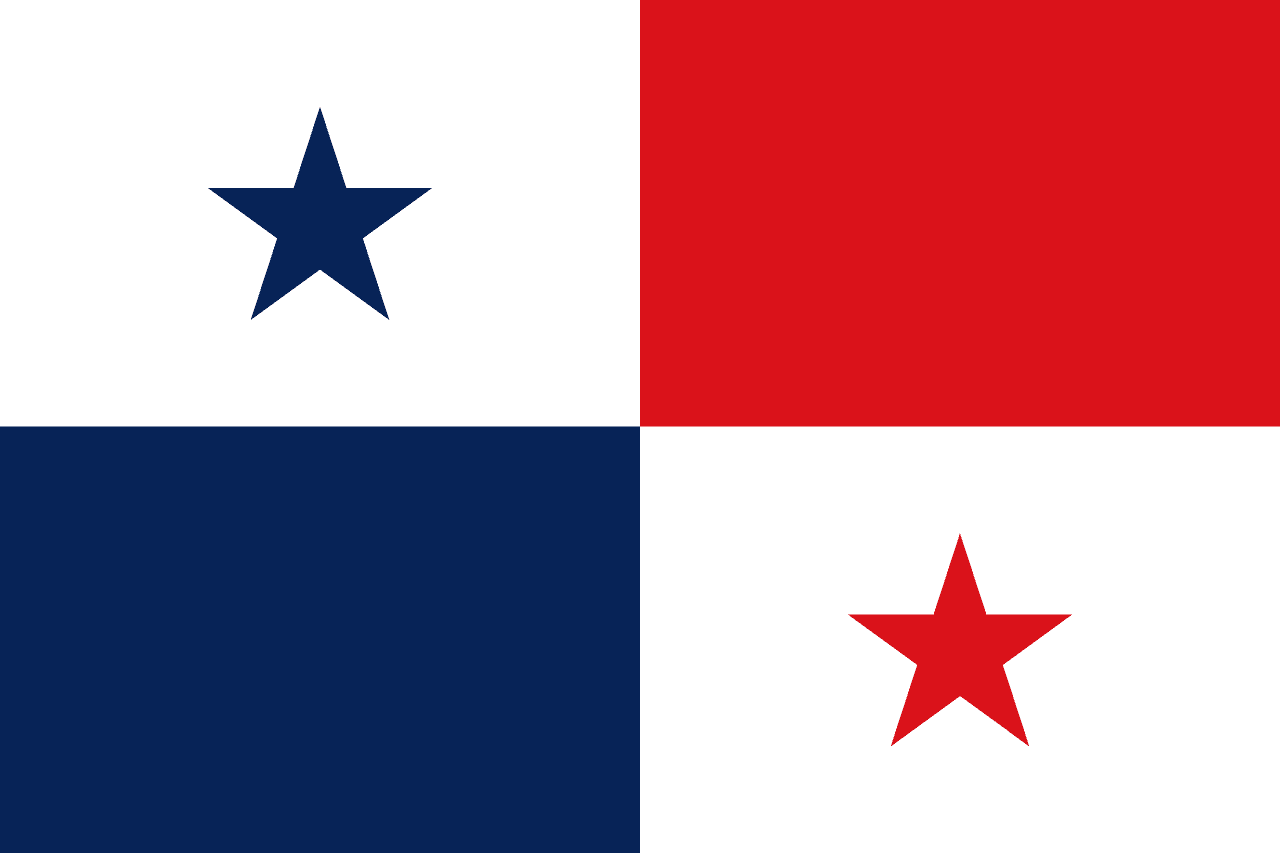
Sport in Panama leans toward the diamond and the ring rather than the football pitch that dominates much of Latin America. Baseball is hugely popular, and Panama has sent stars to the Major Leagues, most famously the legendary New York Yankees closer Mariano Rivera, widely regarded as the greatest relief pitcher in the game's history. Boxing is the other national passion, producing champions such as Roberto Durán, the ferocious "Manos de Piedra" (Hands of Stone). Panama also boasts an unusual political footnote: Rubén Blades, one of the most celebrated salsa singers and songwriters in the world, served as the country's Minister of Tourism. You can see these symbols of national pride reflected in the country's flag.
Frequently Asked Questions
What is the capital of Panama?
The capital is Panama City, located on the Pacific coast at the entrance to the Panama Canal. It is the country's largest city and economic hub, famous for its dramatic skyline of skyscrapers, the historic colonial district of Casco Viejo, and the ancient ruins of Panamá Viejo. Roughly half of all Panamanians live in or around the capital.
What is Panama most famous for?
Panama is most famous for the Panama Canal, the engineering marvel that lets ships cross between the Atlantic and Pacific Oceans without sailing around South America. Beyond the canal, Panama is known as a global banking and shipping center, for its incredible biodiversity, the colorful molas of the Guna people, and Boquete's world-class coffee.
Can you really see the sunrise over the Pacific in Panama?
Yes, and it surprises almost everyone. Because the isthmus curves so sharply, the Pacific coast at the canal's mouth actually faces southeast, while the Atlantic side faces northwest. As a result, ships sail eastward to reach the Pacific, and from parts of the country you can watch the sun rise over the Pacific Ocean rather than set into it.
Conclusion
Panama is far more than the canal that made it famous. It is a place where two oceans, two continents, and dozens of cultures converge on a sliver of tropical land, producing jungle-wrapped cities, self-governing island nations, record-breaking coffee, and some of the densest biodiversity on the planet. Whether you come for the ships, the wildlife, the folklore, or the food, Panama proves that the smallest crossroads can hold the biggest surprises.
