
Few countries pack as much into a single map as Peru. Drape a Pacific coastline over the spine of the Andes, then unroll the Amazon rainforest behind it, and you have a nation where you can surf in the morning, climb a glacier at noon, and listen to howler monkeys by nightfall. Add the lost city of an empire that once stretched 4,000 kilometres, and a cuisine that chefs travel across oceans to taste, and Peru starts to feel less like one country and more like a continent in miniature.
1. Three Countries in One: Coast, Andes, and Amazon
Peru is famously divided into three radically different worlds. The narrow costa is a thin desert ribbon along the Pacific, home to Lima and most of the population despite receiving almost no rain. The sierra is the high Andes, where peaks soar above 6,700 metres at Huascarán. The selva is dense Amazon rainforest, covering roughly 60 percent of the country's territory yet holding only a small fraction of its people.
This three-way split shapes everything from agriculture to dialect. A traveller crossing from sea level to a 4,800-metre mountain pass and down into jungle can pass through more ecological zones in a day than exist in most entire nations. You can explore these regions further in our Peru country guide.
2. The Heart of the Inca Empire
Before the Spanish arrived in 1532, Peru was the centre of Tawantinsuyu, the Inca Empire and the largest state in pre-Columbian America. From their capital at Cusco, the Inca ruled an estimated ten million people connected by some 40,000 kilometres of stone roads, without the wheel, iron tools, or a writing system as we know it.
Instead of writing, the Inca recorded information on quipus, knotted cords whose colours, lengths, and knot positions encoded numbers and possibly narratives. Their engineering still astonishes: stone blocks fitted so precisely that a knife blade cannot slip between them, built to flex and survive the earthquakes that regularly shake the Andes.
3. Machu Picchu Was Never Truly "Lost"
Machu Picchu, the cloud-wreathed citadel built around 1450, is Peru's defining image and a UNESCO World Heritage Site. American explorer Hiram Bingham brought it to global attention in 1911, often described as its "discovery." In reality, local farming families had never forgotten it and were living and growing crops on its terraces when he arrived.
The site sits at about 2,430 metres on a ridge above the Urubamba River, lower than Cusco itself, which is why some visitors find the altitude easier there. Its true purpose remains debated, with most scholars believing it was a royal estate for the emperor Pachacuti rather than a fortress or temple complex.
4. Lima: A Desert Capital Where It Rarely Rains
Lima, the capital, is one of the largest cities in the Americas, home to roughly a third of all Peruvians. Founded by Francisco Pizarro in 1535 as the "City of Kings," it became the seat of Spanish power across the whole of South America for two centuries.
Remarkably, Lima sits in a coastal desert and receives almost no measurable rainfall, making it the second-driest world capital after Cairo. Yet it is rarely sunny: a thick marine fog called the garúa blankets the city for much of the year. Today Lima is also a global dining destination, with several of its restaurants regularly appearing on lists of the world's best.
5. Spanish, Quechua, and Aymara All Share Official Status
Spanish is the most widely spoken language, but Peru also recognises Quechua and Aymara as official languages, alongside dozens of Indigenous Amazonian tongues. Quechua, the language of the Inca, is still spoken by millions of people across the Andes and is taught in schools in many highland regions.
Everyday English borrows from Quechua more than most people realise: words like puma, condor, llama, and quinoa all entered global vocabularies through Peru. This linguistic richness reflects a population that is a deep blend of Indigenous, European, African, and Asian heritage.
6. The Potato Capital of the World
Potatoes were first domesticated in the Peruvian Andes thousands of years ago, and the country still cultivates an astonishing diversity of them. Peru grows over 3,000 native potato varieties, in colours from deep purple to bright yellow, many grown only in specific valleys at specific altitudes.
The crop was so central that the Inca used freeze-dried potatoes, called chuño, as a portable food that could be stored for years. When Spanish ships carried the potato to Europe, it transformed diets across the continent and helped fuel population booms far from its Andean home. Peru also gave the world the tomato's cousins and a huge share of global maize diversity.
7. A Cuisine Ranked Among the World's Best
Peruvian food is one of the planet's great fusion cuisines, repeatedly named the world's leading culinary destination at international tourism awards. The national dish, ceviche, is raw fish "cooked" in lime juice with chilli and onion, so beloved it has its own national holiday each June.
The cuisine reflects waves of immigration. Chifa blends Chinese cooking with Peruvian ingredients, while nikkei fuses Japanese technique with local fish and peppers. Add Andean staples like cuy (guinea pig), the stir-fried lomo saltado, and a rainbow of native chillies and corn, and you get a kitchen that is genuinely unlike anywhere else.
8. Home to a Slice of the Amazon and Record-Breaking Biodiversity
Peru is one of the most biodiverse countries on Earth. Its territory shelters the Andean condor, jaguars, spectacled bears, pink river dolphins, and an extraordinary number of bird species, with new ones still being described by scientists.
The Amazon basin within Peru includes Manú National Park, one of the most species-rich protected areas anywhere, where a single region can hold more bird species than the United States and Canada combined. Off the coast, the cold Humboldt Current creates one of the world's most productive fishing grounds, supporting vast colonies of seabirds, sea lions, and the country's important anchovy fishery.
9. The Mysterious Nazca Lines
Etched into the desert plains of southern Peru are the Nazca Lines, enormous geoglyphs created between roughly 500 BCE and 500 CE. They depict animals such as a hummingbird, monkey, spider, and condor, alongside straight lines and geometric shapes stretching for kilometres.
The figures are so large that many can only be fully appreciated from the air, which has fuelled endless speculation about how and why an ancient people made them. Most archaeologists believe they had ritual or astronomical purposes, perhaps linked to water and fertility in this parched landscape. Preserved by the region's near-total lack of rain and wind, they remain one of archaeology's great open questions.
10. A Mining Powerhouse High in the Andes
Peru's economy leans heavily on its mineral wealth: it is one of the world's largest producers of copper, silver, and gold, with mining a cornerstone of its exports. Some of its mines and towns rank among the highest-altitude inhabited places on the planet.
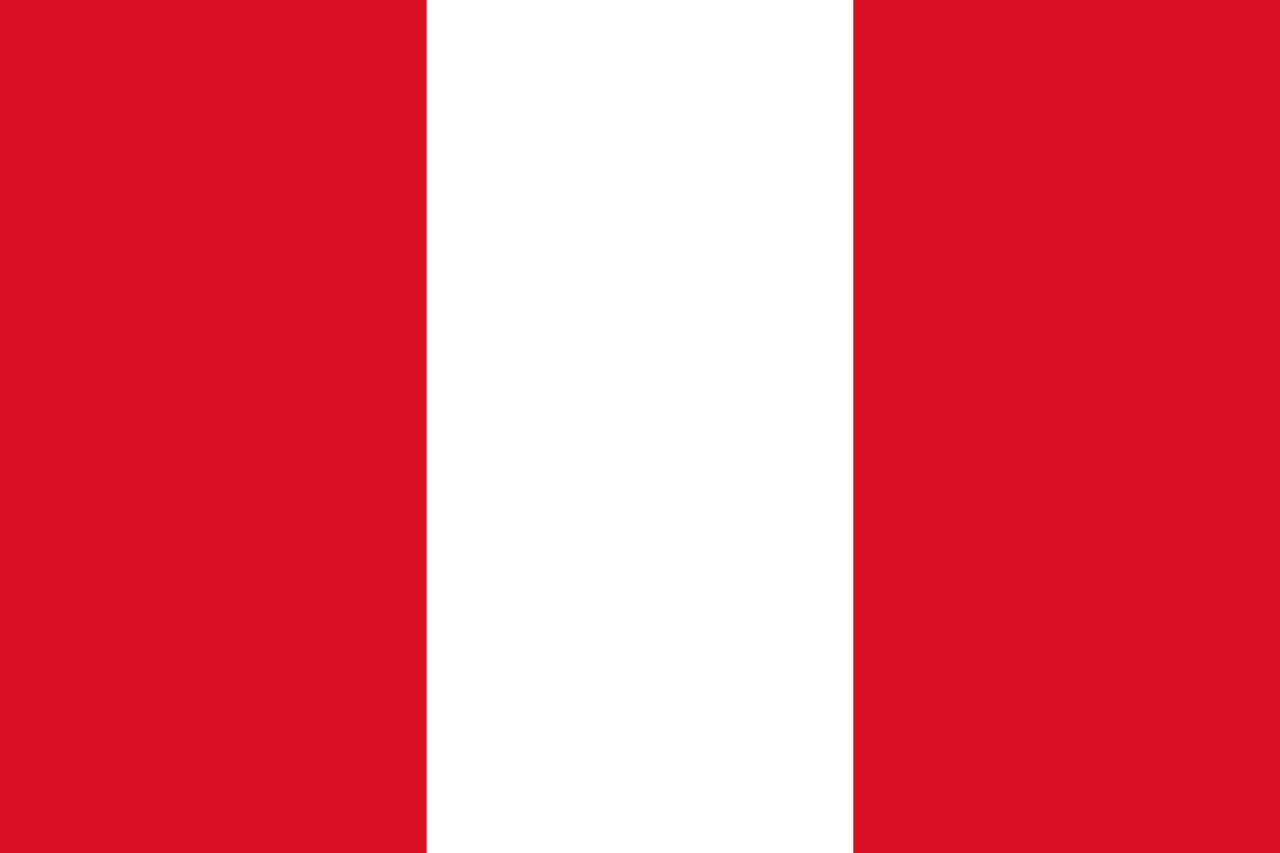
The settlement of La Rinconada, a gold-mining town in the southern Andes, sits above 5,000 metres, often cited as the highest permanent human habitation in the world. Beyond minerals, Peru is a leading exporter of agricultural products like avocados, blueberries, asparagus, and quinoa, the ancient Andean "supergrain" that has become a global health food. The colours of its national flag, red and white, are said to echo this proud blend of land and history.
Frequently Asked Questions
What is the capital of Peru?
The capital of Peru is Lima, a sprawling coastal city of around ten million people that is home to roughly a third of the national population. Founded in 1535, it serves as the country's political, economic, and culinary heart, and is famous for sitting in a near-rainless desert blanketed by sea fog.
What is Peru most famous for?
Peru is best known for Machu Picchu, the iconic mountaintop Inca citadel, and for being the former centre of the Inca Empire. It is also celebrated worldwide for its award-winning cuisine, the mysterious Nazca Lines, llamas and alpacas, and its share of the Amazon rainforest and the high Andes.
Why are there so many types of potato in Peru?
The potato was first domesticated in the Peruvian Andes thousands of years ago, so the country is its original homeland. Farmers across countless mountain valleys and altitudes have cultivated and preserved thousands of distinct native varieties, each suited to specific local conditions, giving Peru more potato diversity than anywhere else on Earth.
Conclusion
Peru is a country that refuses to fit into a single story. It is desert and rainforest, ancient empire and modern food capital, Andean glacier and Pacific surf, all stitched together in one extraordinary place. These ten facts barely scratch the surface, and the best way to truly understand Peru is to keep exploring, one knotted cord, mountaintop ruin, and plate of ceviche at a time.