
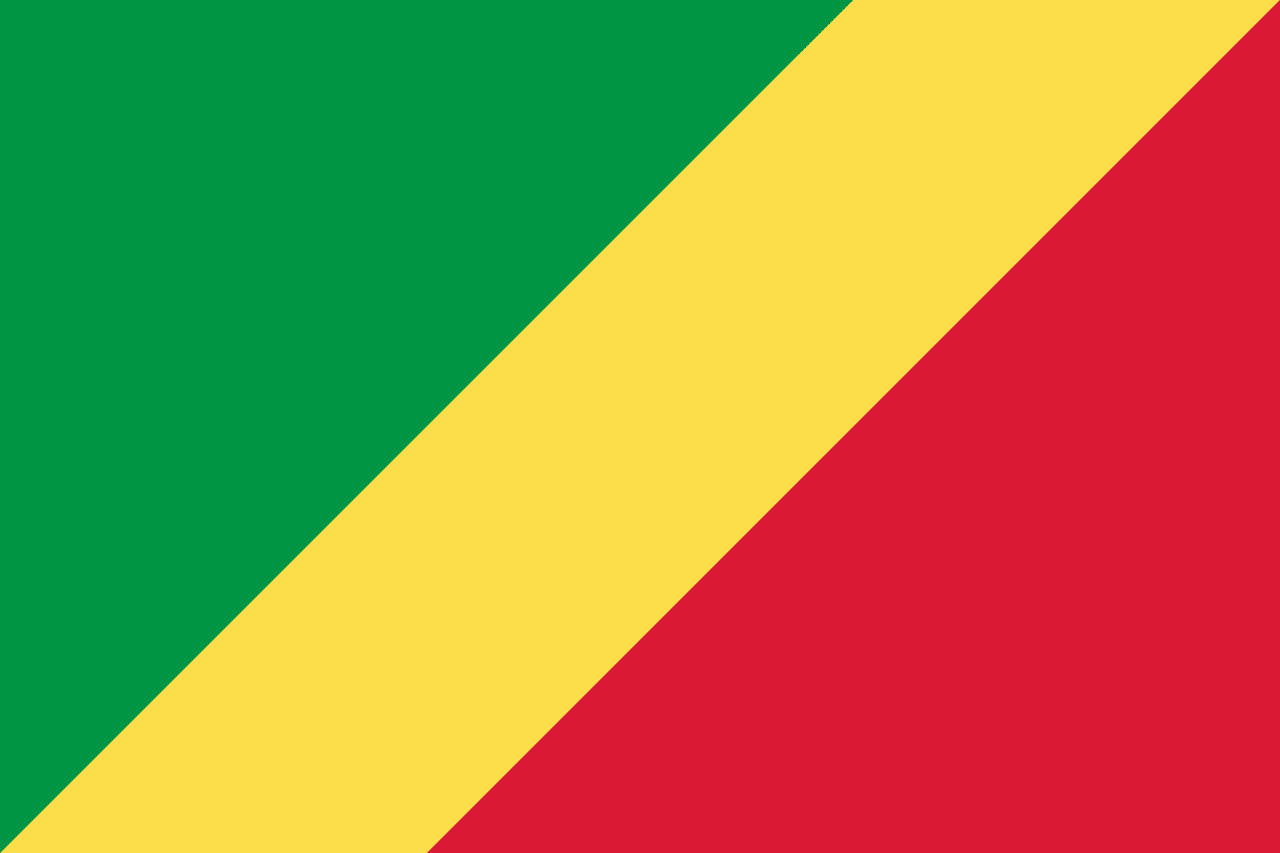
Straddling the equator in Central Africa, the Republic of the Congo is a country where the world's second-largest rainforest meets a coastline on the Atlantic, and where two capital cities sit gazing at each other across a single river. Often confused with its much larger neighbour, "Congo-Brazzaville" has a character entirely its own. Here are ten genuinely fascinating facts that go far beyond the textbook.
1. It Shares the World's Only Pair of "Face-to-Face" Capitals
Brazzaville, capital of the Republic of the Congo, sits directly across the Congo River from Kinshasa, capital of the neighbouring Democratic Republic of the Congo. They are the two closest capital cities on Earth, separated by just a few kilometres of water and visible from each other's riverbanks. No other pair of national capitals on the planet sits this close together. The river here widens into the vast, lake-like Pool Malebo, and ferries and pirogues shuttle between the two cities daily. This unusual geographic intimacy means residents can watch the lights of a foreign capital twinkle across the water each night.
2. About 70% of the Population Lives in Just Two Cities
With a population of roughly 6.6 million, the Republic of the Congo is one of the most urbanised nations in Sub-Saharan Africa. An overwhelming majority of citizens cluster in Brazzaville and the Atlantic port of Pointe-Noire, linked by a historic railway. This leaves enormous swathes of the country's rainforest interior almost empty, with population densities dropping to just a handful of people per square kilometre. The contrast is striking: crowded riverfront boulevards and bustling markets on one hand, and silent, near-uninhabited jungle on the other. To dig deeper into the nation's regions and demographics, see our country guide.
3. Rainforest Covers Roughly Two-Thirds of the Country
The Republic of the Congo is one of the most heavily forested nations on Earth, with dense tropical rainforest blanketing well over half its territory. These forests form part of the Congo Basin, the planet's second-largest rainforest after the Amazon and a globally vital "lung" that absorbs huge quantities of carbon. The country's northern reaches are dominated by swampy, flooded woodlands and the immense peatlands of the Cuvette Centrale, discovered to store billions of tonnes of carbon. This makes the Congo a quiet but crucial player in the fight against climate change.
4. French Is Official, but Lingala and Kituba Rule the Streets
French is the country's official language, a legacy of its time as part of French Equatorial Africa. In everyday life, however, two home-grown lingua francas dominate. Lingala, the rhythmic language of the river and of Congolese music, is widely spoken in the north and in Brazzaville, while Kituba (Munukutuba) prevails in the south around Pointe-Noire. Dozens of other Bantu languages thrive among the country's ethnic groups. This layered linguistic landscape mirrors the way Congolese identity blends colonial inheritance with deep-rooted African heritage.
5. It Gave the World "Congolese Rumba," a UNESCO Treasure
Music is the beating heart of Congolese culture. Congolese rumba, the genre born along both banks of the Congo River, was inscribed on UNESCO's list of Intangible Cultural Heritage in 2021. Its hypnotic guitar lines and swaying rhythms grew from a blend of African traditions and Cuban influences, and it eventually gave rise to soukous, the upbeat dance music that swept across Africa. Brazzaville is also famous for its flamboyantly dressed dandies, the sapeurs of "La SAPE," who turn elegant tailored suits into a celebrated art form and statement of pride.
6. Oil Dominates the Economy More Than Almost Anywhere
The Republic of the Congo is one of Sub-Saharan Africa's significant crude oil producers, and petroleum accounts for the lion's share of its exports and government revenue. Offshore rigs in the Atlantic near Pointe-Noire pump the bulk of this wealth, making the port city the country's economic engine. Alongside oil, the nation exports tropical timber from its vast forests. This heavy reliance on a single commodity means the economy can swing dramatically with global oil prices, a vulnerability the government has long tried to diversify away from.
7. Its Forests Shelter Western Lowland Gorillas and Forest Elephants
The Congo's wilderness is a stronghold for some of Africa's most endangered great apes and mammals. Nouabalé-Ndoki National Park in the far north protects pristine rainforest teeming with western lowland gorillas, chimpanzees, and forest elephants, and is famous for its "bais," natural forest clearings where wildlife gathers in plain sight. Odzala-Kokoua National Park, one of Africa's oldest, is renowned for gorilla-tracking expeditions. Because much of this forest was never logged or settled, researchers have described parts of it as a glimpse of a "last Eden," largely untouched by human hands.
8. The Country Takes Its Name From an Ancient Kingdom
Long before European arrival, the region was shaped by powerful Bantu states, most notably the Kingdom of Kongo, a sophisticated polity whose influence radiated across Central Africa from around the 14th century. The word "Congo" derives from this kingdom and the river it commanded. Centuries later the area became a French colony, and Brazzaville even served as the symbolic capital of Free France during the Second World War. The nation gained independence in 1960 and, after decades that included a Marxist-Leninist era and civil conflict in the 1990s, continues to navigate its modern path.
9. Cassava and Saka-Saka Are Dietary Staples
Congolese cuisine is built around the rainforest's bounty and the humble cassava plant. Cassava root is pounded into fufu or fermented into sticky loaves called chikwangue, while its leaves are stewed into saka-saka, a beloved dish often cooked with palm oil and peanuts. Freshwater fish from the great rivers, smoked or grilled, feature heavily, as do plantains and tropical fruits. Meals are communal and generous, reflecting a culture where sharing food is a cornerstone of hospitality and family life.
10. A Single Equatorial River Defines Almost Everything
The Congo River is the deepest river in the world and the second-most powerful by discharge after the Amazon. It forms much of the Republic of the Congo's eastern and southern border, serves as a vital highway for trade and travel, and shapes the climate, ecology, and daily rhythms of life. The equator itself slices across the country, giving it a hot, humid climate with little seasonal temperature change. From the colours of the national flag to the songs of its musicians, the river's presence echoes through nearly every aspect of Congolese identity.
Frequently Asked Questions
What is the capital of the Republic of the Congo?
The capital is Brazzaville, a riverside city on the Congo River. It sits directly opposite Kinshasa, the capital of the Democratic Republic of the Congo, making them the closest pair of national capitals in the world.
What is the Republic of the Congo famous for?
It is best known for its vast Congo Basin rainforests, its endangered western lowland gorillas and forest elephants, its oil-driven economy, and its world-famous Congolese rumba music, recognised by UNESCO as intangible cultural heritage.
Why are there two countries called "Congo"?
Both nations take their name from the Congo River and the historic Kingdom of Kongo. The smaller Republic of the Congo (Congo-Brazzaville) was a French colony, while the larger Democratic Republic of the Congo (Congo-Kinshasa) was a Belgian one, leading to two separate independent states with similar names.
Conclusion
The Republic of the Congo is a nation of vivid contrasts, where empty rainforests meet crowded river cities, where ancient kingdoms echo in modern music, and where a single mighty river ties everything together. From gorillas in untouched jungle to dapper sapeurs strolling Brazzaville's streets, the country offers far more than its compact size suggests. These ten facts are just an invitation to keep exploring one of Central Africa's most intriguing corners.
