
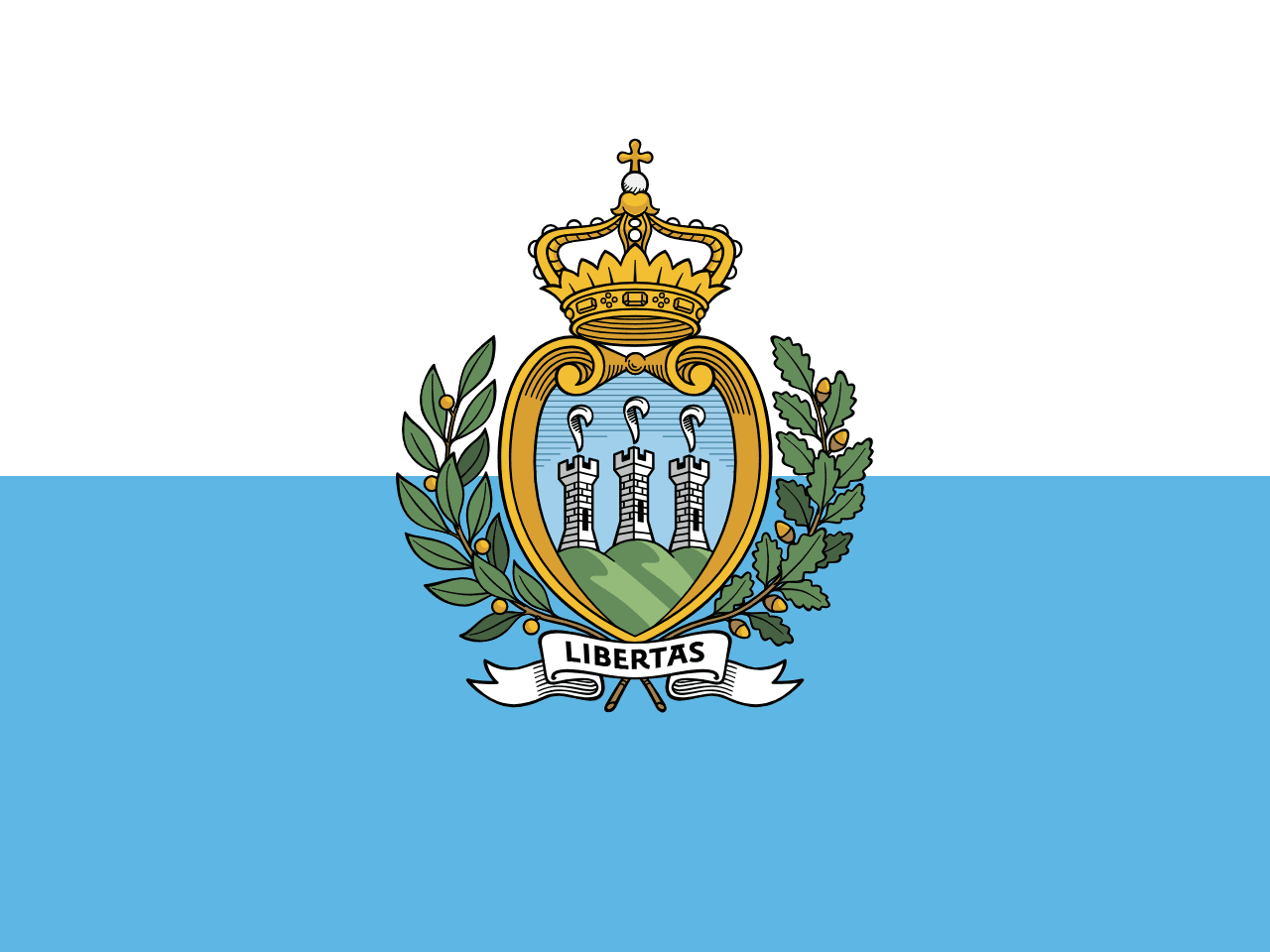
Perched on the rugged slopes of Mount Titano in northeastern Italy sits San Marino, a country so old and so improbable that it feels almost mythical. With roughly 34,000 citizens, no coastline, and a founding legend involving a stonecutter fleeing persecution, this microstate claims a title no other nation can: the world's oldest surviving sovereign republic. Here are ten facts that reveal why this tiny mountain enclave is one of the most remarkable places on Earth.
1. It Is the World's Oldest Surviving Republic
San Marino traces its founding to the year 301 AD, when a Christian stonemason named Marinus, fleeing religious persecution under the Roman emperor Diocletian, took refuge on Mount Titano and established a small monastic community. That community never dissolved, and San Marino has maintained continuous self-governance ever since, making it the oldest constitutional republic still in existence. Its statutes, written in Latin in 1600, are among the oldest functioning governing documents in the world. For more than 1,700 years, while empires rose and fell all around it, this stubborn little state simply refused to disappear. Learn more in our country guide.
2. It Is Completely Surrounded by Italy
San Marino is one of only three countries on the planet entirely enclosed by a single other nation, sharing all of its borders with Italy (the others are Vatican City and Lesotho). Covering just 61 square kilometers, it is the third-smallest country in Europe and the fifth-smallest in the world. Despite being landlocked deep within Italian territory, San Marino has never been absorbed by its giant neighbor, fiercely guarding its independence through diplomacy, mountainous terrain, and sheer historical luck. The country sits between the Italian regions of Emilia-Romagna and Marche, just a short drive from the Adriatic resort city of Rimini.
3. Its Capital Crowns a Mountain Peak
The capital, the City of San Marino, clings dramatically to the summit and slopes of Mount Titano at over 700 meters above sea level. Its historic center and the mountain itself are jointly recognized as a UNESCO World Heritage Site, celebrated for their exceptional medieval townscape. Cobblestone lanes wind between stone towers and offer breathtaking panoramas stretching all the way to the Adriatic coast on clear days. Interestingly, the capital is not even the country's most populous settlement; that distinction belongs to Dogana, in the larger municipality of Serravalle, which sits on the lower, flatter land below the mountain.
4. Three Towers Stand as the Nation's Symbol
Crowning the three peaks of Mount Titano are three medieval fortifications: Guaita, Cesta, and Montale. These towers are so central to Sammarinese identity that they appear on the national flag, the coat of arms, and even the country's euro coins. Guaita is the oldest, dating to the 11th century, and once served as a prison. Cesta, the highest, houses a museum of historical weaponry. Montale, the smallest, remains closed to the public. Together they form one of Europe's most photographed skylines, and walking the "Path of the Witches" ridge that connects them is a highlight for visitors.
5. It Is Led by Two Heads of State at Once
San Marino is governed by not one but two Captains Regent, who serve jointly as heads of state for six-month terms running from April to October and October to April. This unusual system of dual leadership dates back to 1243 and was deliberately designed to prevent any single person from seizing absolute power. The two officials, elected by the Grand and General Council, share authority equally and check one another. The semi-annual investiture ceremony, complete with historic costumes and crossbow salutes, is one of the country's most cherished traditions.
6. Abraham Lincoln Was Made an Honorary Citizen
In 1861, San Marino extended honorary citizenship to United States President Abraham Lincoln. Touched by the gesture, Lincoln wrote a warm letter in reply, praising the republic for proving that "government founded on republican principles is capable of being so administered as to be secure and enduring." The exchange remains a point of national pride and a charming reminder that this micro-republic has long earned the admiration of far larger nations. San Marino also famously offered refuge to more than 100,000 people fleeing the fighting during World War II, despite its own tiny size.
7. Tourism and Stamps Power Its Economy
For such a small country, San Marino has a prosperous economy built largely on tourism, banking, and a surprising specialty: postage stamps and collectible coins. The nation welcomes more than two million visitors a year, many of them day-trippers from the nearby Italian Riviera. Collectors worldwide prize Sammarinese stamps and commemorative euro coins, which the country is permitted to mint despite not being a member of the European Union. Manufacturing, ceramics, and the famous Sammarinese wine and spirits round out an economy that keeps unemployment low and living standards high.
8. Sammarinese Cuisine Reflects Its Italian Soul
The food of San Marino draws deeply on the traditions of surrounding Emilia-Romagna and Le Marche, regions famous for some of Italy's finest cooking. A national specialty is the torta tre monti, or "cake of the three mountains," a layered wafer dessert covered in chocolate and named for the three towers. Hearty pasta dishes, savory piadina flatbreads, cured meats, and local cheeses appear on tables everywhere. The country also produces its own wines, including a red Sangiovese and a sweet Moscato, along with a herbal liqueur. Dining here is essentially a refined slice of central Italian gastronomy with a proud local twist.
9. The Official Language Is Italian, With a Local Dialect
Italian is the official language of San Marino, used in government, schools, and daily life. Alongside it, many older residents still speak the Romagnol dialect, an Emilian-Romagnol language native to the surrounding Italian region and quite distinct from standard Italian. The Sammarinese share Italy's currency (the euro), much of its culture, and its Roman Catholic faith, yet they maintain a fiercely separate national identity. Citizens proudly call themselves Sammarinese rather than Italian, and the country issues its own passports, license plates, and even a distinctive country code.
10. It Punches Above Its Weight in Sport
Despite having a population smaller than many towns, San Marino competes internationally in football, basketball, and the Olympics under its own flag. The national football team is famous less for victories than for its plucky persistence against far larger nations, and any goal it scores becomes a celebrated event. The country's greatest sporting glory came at the 2020 Tokyo Olympics, where it won three medals, becoming the least populous nation ever to medal at the Games. San Marino also hosted Formula One's San Marino Grand Prix for years, though the famous Imola circuit actually lies just over the border in Italy.
Frequently Asked Questions
What is the capital of San Marino?
The capital is the City of San Marino, perched atop Mount Titano at over 700 meters. Its historic center is a UNESCO World Heritage Site, though the larger settlement of Dogana in Serravalle actually has more residents.
What is San Marino famous for?
San Marino is best known as the world's oldest surviving republic, founded in 301 AD. It is also celebrated for its three medieval towers atop Mount Titano, its dramatic mountaintop capital, its collectible stamps and coins, and being entirely surrounded by Italy.
Why does San Marino have two presidents?
San Marino is led by two Captains Regent who share power equally for six-month terms. This dual-leadership system dates to 1243 and was created to prevent any individual from accumulating too much authority, a safeguard that has endured for nearly eight centuries.
Conclusion
San Marino proves that history, identity, and pride have nothing to do with size. From its 1,700-year independence and mountaintop towers to its dual presidents and Olympic underdog spirit, this tiny republic packs an extraordinary story into 61 square kilometers. Whether you come for the views, the cuisine, or the sheer wonder of a state that has outlasted empires, San Marino rewards every curious traveler who climbs its storied slopes.