
Sierra Leone is a small but extraordinary nation on the Atlantic coast of West Africa, where lush rainforest tumbles down to some of the most beautiful beaches on the continent. Its very name, given by a 15th-century Portuguese explorer, means "Lion Mountains" — and behind that evocative title lies a story of freed slaves, blood diamonds, devastating war, and a remarkable resilience that has rebuilt a country from the ground up. Here are ten fascinating facts that reveal the real Sierra Leone.
1. Its Name Means "Lion Mountains"
In 1462, the Portuguese explorer Pedro de Sintra sailed past the dramatic mountains surrounding the Freetown Peninsula and named them Serra Leoa — "Lioness Mountains" or "Lion Mountains." Scholars still debate what inspired the name: perhaps the lion-like shape of the rugged peaks, the roar of thunderstorms echoing through the hills, or simply the wild, untamed character of the coastline. Over the centuries the Portuguese name was anglicized into "Sierra Leone." Whatever its origin, the title stuck for more than five hundred years and remains one of the most poetic country names in the world, even though wild lions themselves are no longer found in the country's forests.
2. Freetown Was Founded by Freed Slaves
The capital, Freetown, carries one of the most moving founding stories of any city on Earth. Established in the late 1700s, it became a haven for freed and formerly enslaved Africans — including the "Black Poor" from London, Black Loyalists from Nova Scotia who had sided with Britain in the American Revolution, and later thousands of Africans rescued from slave ships by the Royal Navy. These diverse settlers blended into a distinct people known as the Krios. Today Freetown is a bustling port city of steep hills and tin-roofed houses spilling toward a vast natural harbour, one of the largest in the world. You can learn more in our country guide.
3. It Has One of the World's Largest Natural Harbours
Freetown sits beside the Sierra Leone River estuary, which forms the third-largest natural harbour on the planet — a deep, sheltered bay capable of holding enormous fleets. This strategic anchorage made the city vital during the era of the transatlantic slave trade and again during the Second World War, when Allied convoys gathered there before crossing dangerous waters. The harbour remains the economic lifeline of the country, handling most of its imports and exports. Surrounding the bay, the forested peaks of the peninsula rise sharply from the water, giving Freetown one of the most striking settings of any African capital.
4. The Beaches Are Among Africa's Finest
Just outside Freetown lies a string of palm-fringed, white-sand beaches that rank among the most beautiful on the continent. River No. 2 Beach, Tokeh, and Lakka draw visitors with turquoise water and a backdrop of green mountains. These very beaches once gained international fame: a famous chocolate-bar advertisement was filmed at River No. 2 decades ago, cementing the idea of a "paradise" shoreline in the popular imagination. After years of conflict and the Ebola crisis dented tourism, Sierra Leone has worked hard to rebrand itself as a beach and eco-tourism destination, inviting travellers to discover a coastline that remains gloriously uncrowded.
5. Krio Is the Language That Unites the Nation
While English is the official language, the true lingua franca of Sierra Leone is Krio, an English-based creole spoken by the vast majority of the population. Krio evolved from the speech of the freed-slave settlers and absorbed words from English, Portuguese, and numerous African languages. It serves as a common tongue that bridges the country's many ethnic groups, allowing a Temne fisherman, a Mende farmer, and a Freetown trader to all understand one another. Alongside Krio, major indigenous languages such as Mende in the south and Temne in the north reflect the nation's rich ethnic diversity.
6. Diamonds Shaped Its Modern History
Sierra Leone sits on some of the richest alluvial diamond deposits in the world, and these gems have profoundly shaped its fortunes — for better and worse. In 1972 the famous Star of Sierra Leone, one of the largest gem-quality diamonds ever discovered, was unearthed here, weighing nearly 970 carats. Tragically, the diamond trade also helped fuel a brutal civil war from 1991 to 2002, giving rise to the term "blood diamonds." Since the war's end, the country has worked to formalize the industry and ensure that its mineral wealth — which also includes gold, bauxite, and rutile — benefits ordinary Sierra Leoneans rather than warlords.
7. Bunce Island Bears Witness to a Painful Past
In the Sierra Leone River sits Bunce Island, the ruins of a British slave-trading fort that operated from the 1600s into the 1800s. Tens of thousands of captive Africans passed through this small island before being shipped across the Atlantic — many to the rice plantations of South Carolina and Georgia, where Sierra Leonean skills in rice cultivation were specifically prized. The crumbling stone walls, cannons, and cemetery stand today as a haunting memorial. Bunce Island has become a place of pilgrimage for African Americans, particularly the Gullah Geechee community of the American South, who trace their roots and many cultural traditions directly back to this coast.
8. Cassava Leaves and Rice Rule the Kitchen
Food in Sierra Leone revolves around rice — so central that many people feel they have not truly eaten a meal unless rice was part of it. The national dish is arguably cassava leaf stew, made from pounded cassava greens simmered with palm oil, fish or meat, and fiery chili peppers, served over a mound of rice. Other beloved dishes include groundnut (peanut) stew and "plasas," a catch-all term for leafy sauces. Street food culture thrives too, from grilled corn to akara bean fritters. Meals are typically communal and generous, reflecting a culture in which sharing food is a deep expression of hospitality and respect.
9. Tiwai Island Shelters Rare Wildlife
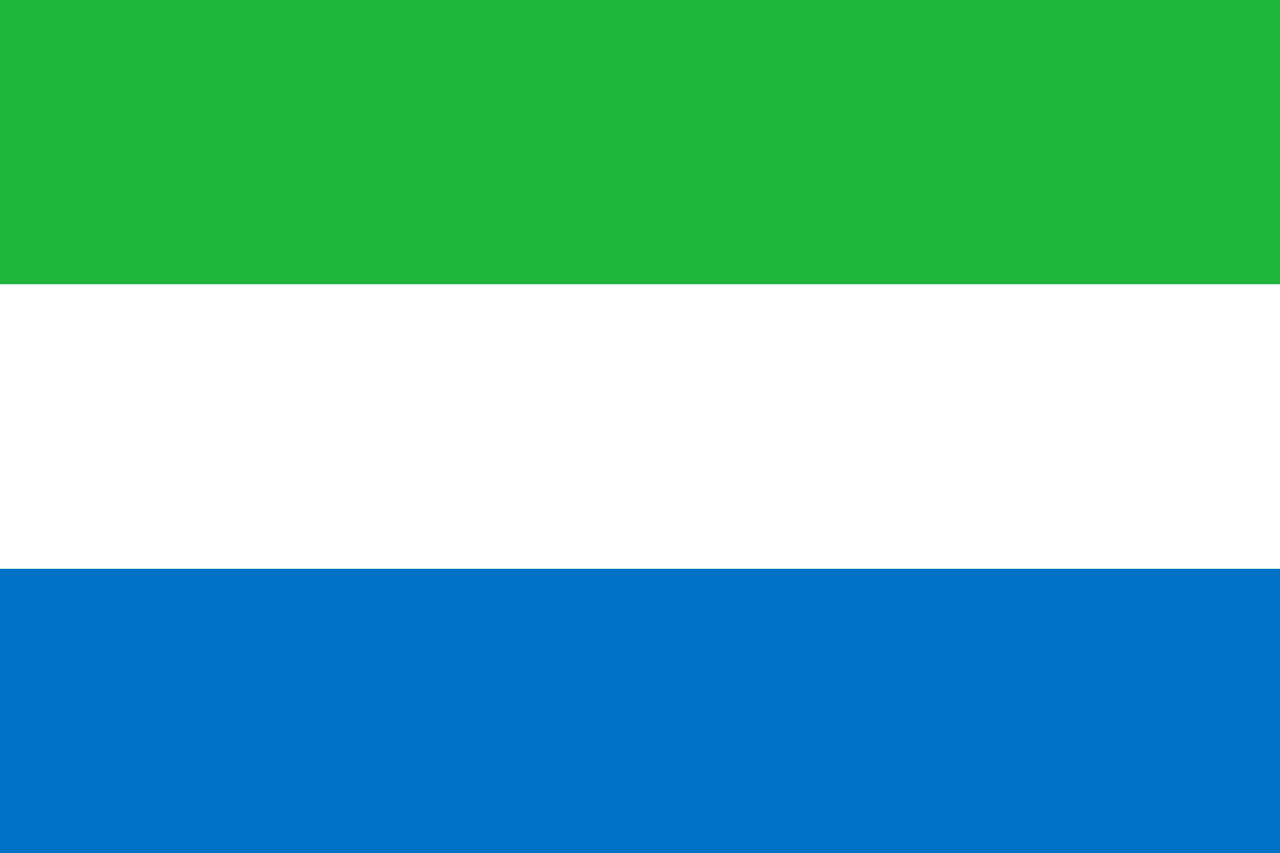
Despite its small size, Sierra Leone is a biodiversity treasure. Tiwai Island, a forested river island, hosts one of the highest concentrations of primates anywhere on Earth, including the rare Diana monkey and the elusive pygmy hippopotamus — a shy, forest-dwelling cousin of the common hippo found in only a handful of West African countries. The Gola Rainforest, shared with neighbouring Liberia, protects endangered chimpanzees and hundreds of bird species. You can explore the colours and symbolism of the nation's flag, whose green stripe represents exactly these natural riches and agriculture.
10. Football Fever and the "Leone Stars"
Football is the undisputed national passion of Sierra Leone, and the national team, nicknamed the Leone Stars, commands enormous devotion. On match days, the streets of Freetown empty as crowds gather around television sets and radios to follow the action. The sport offers a powerful source of unity in a country still healing from conflict, bringing together people of every ethnic background under a single banner. Beyond football, the country celebrates a vibrant music scene blending traditional rhythms with reggae, hip-hop, and Afrobeats, while colourful festivals and masked devil dancers keep age-old cultural traditions alive.
Frequently Asked Questions
What is the capital of Sierra Leone?
The capital is Freetown, a vibrant port city set on a hilly peninsula beside one of the world's largest natural harbours. Founded in the late 18th century as a home for freed slaves, it is the country's political, economic, and cultural heart, home to roughly a fifth of the nation's population of around 9 million.
What is Sierra Leone famous for?
Sierra Leone is best known for its diamonds, its founding story as a homeland for freed slaves, and its stunning Atlantic beaches. It is also remembered for its 1991–2002 civil war and its courageous recovery, including its role in defeating the West African Ebola outbreak of 2014–2016.
Why is it called Sierra Leone?
The name comes from the Portuguese Serra Leoa, meaning "Lion Mountains," given by explorer Pedro de Sintra in 1462. It likely described the imposing, lion-like mountains around the Freetown Peninsula or the roaring thunderstorms heard offshore.
Conclusion
Sierra Leone is a country of extraordinary contrasts — breathtaking beaches and dense rainforest, a painful history of slavery and a hopeful spirit of renewal, glittering diamonds and warm communal meals of rice and cassava leaf. From the Krio language that binds its people together to the rare pygmy hippos of Tiwai Island, this Lion Mountain nation rewards anyone willing to look beyond the headlines. There is far more to discover, and Sierra Leone is ready to surprise you.