
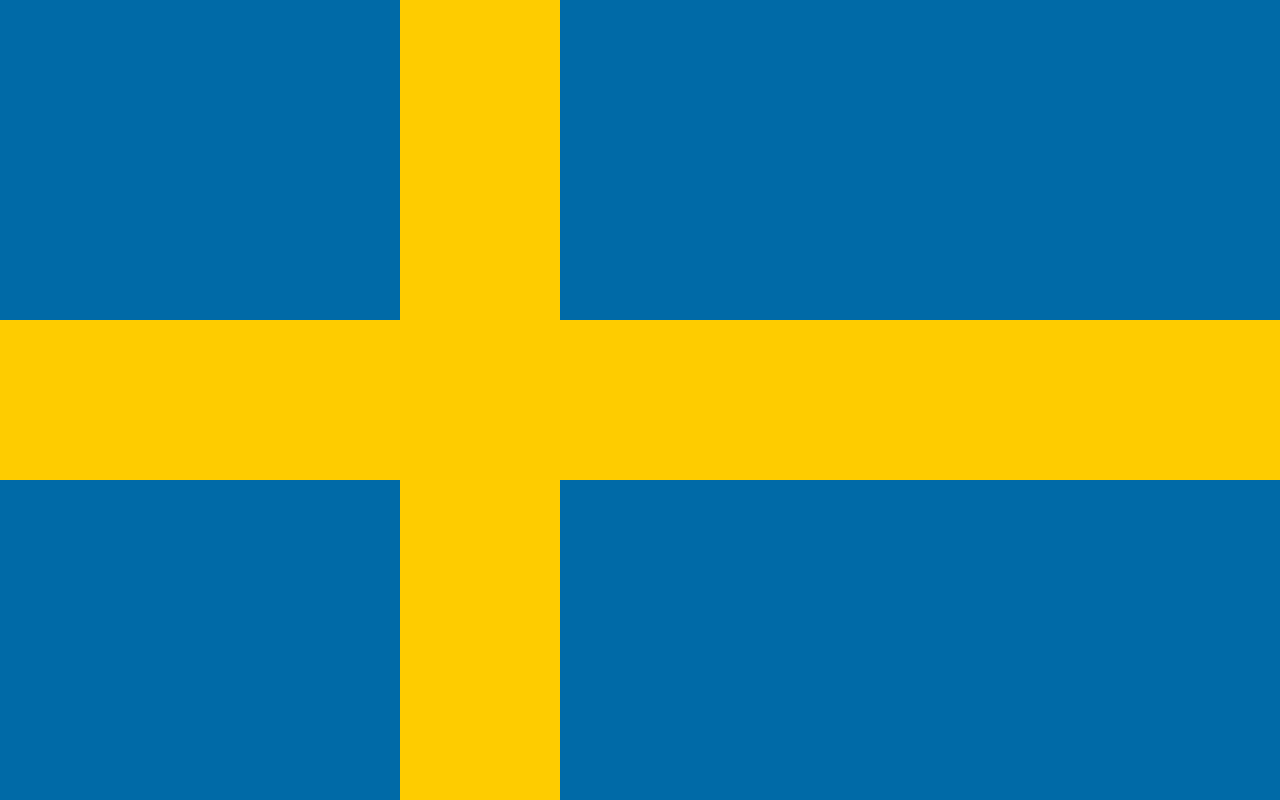
Stretching from the Baltic shores up to the frozen edge of the Arctic Circle, Sweden is a country of long summer nights, deep forests, and design so clean it has become a global brand in itself. It is the place that gave the world flat-pack furniture, streaming music, dynamite, and the safety match. These ten facts go well beyond the postcards to show why this Nordic nation is one of Europe's most fascinating.
1. The Third-Largest Country in the European Union
Sweden covers roughly 450,000 square kilometres, making it the third-largest country in the European Union by area, behind only France and Spain. Yet with a population of about 10.7 million, it is one of the least densely populated. The country stretches nearly 1,600 kilometres from north to south, so southern Sweden sits at the same latitude as Scotland while the far north reaches deep into the Arctic. Around two-thirds of the land is covered in forest, and Sweden is dotted with close to 100,000 lakes. This enormous, sparsely settled geography means you can drive for hours through pine forest and lakeland without passing a single town. For more on its landscapes, see our Sweden country guide.
2. Stockholm Is Built Across Fourteen Islands
Sweden's capital, Stockholm, sprawls across fourteen islands where Lake Malaren meets the Baltic Sea, all stitched together by more than fifty bridges. This watery setting has earned it the nickname "Venice of the North," and roughly a third of the city is made up of waterways. At its heart lies Gamla Stan, the medieval old town founded in 1252, with cobbled lanes, ochre-coloured buildings, and the Royal Palace. Stockholm is also a global tech hub, having produced companies like Spotify and Skype, which is why it is sometimes called the "unicorn factory" of Europe. The city neatly captures Sweden's blend of preserved history and cutting-edge modernity.
3. In the North, the Sun Never Fully Sets in Summer
Because part of Sweden lies above the Arctic Circle, the country experiences the midnight sun. In northern towns like Kiruna, the sun stays above the horizon for weeks on end during high summer, bathing the landscape in golden light at midnight. The flip side comes in winter, when those same regions are plunged into the long, dark "polmork" with only a few hours of dim twilight. This is also prime territory for watching the aurora borealis, or northern lights, dance across the sky. The dramatic swing between endless light and deep darkness profoundly shapes Swedish life, mood, and culture.
4. Swedish Is the Language, but English Is Nearly Universal
The official language is Swedish, a North Germanic tongue closely related to Norwegian and Danish, so closely that speakers of all three can often understand one another. Sweden also recognises five official minority languages, including Finnish and Sami, the language of the indigenous people of the far north. What surprises many visitors is the extraordinary level of English fluency: Sweden consistently ranks among the top non-native English-speaking countries in the world. Subtitled rather than dubbed television, strong schooling, and a small domestic media market all encourage Swedes to absorb English from childhood, making travel here remarkably easy for English speakers.
5. A Viking Heartland with Centuries of Peace
Sweden was a centre of the Viking Age, when Norse seafarers from the region sailed east along Russian rivers as far as Constantinople and the Caspian Sea, trading and raiding. Rune stones from that era still stand across the countryside. In later centuries, Sweden became a great power, controlling much of the Baltic in the 1600s. In striking contrast, modern Sweden has not fought a war since 1814, one of the longest stretches of peace of any nation, and it maintained official neutrality through both World Wars. That long peace helped build the stable, prosperous society Sweden is known for today.
6. The Birthplace of the Nobel Prize
The Nobel Prizes were created by Swedish chemist and inventor Alfred Nobel, who made his fortune inventing dynamite. Reportedly stung by an obituary that branded him a "merchant of death," he left most of his wealth to fund prizes honouring those who benefit humanity. Each December, the awards for physics, chemistry, medicine, literature, and economics are presented in Stockholm at a glittering ceremony followed by a lavish banquet in the City Hall. The Peace Prize, by Nobel's own wish, is awarded separately in Oslo, Norway. The prizes have made Stockholm a global stage for celebrating science and ideas.
7. Fika: A Coffee Break Elevated to a National Ritual
Swedes drink some of the most coffee per person of any nation, and they have built an entire cultural institution around it called fika. More than just grabbing a coffee, fika is a deliberate pause in the day to slow down, share a cup, and enjoy something sweet, ideally a cinnamon bun, or kanelbulle. It is so woven into daily life that workplaces schedule fika breaks, and friendships are maintained over it. The ritual reflects the broader Swedish value of balance and lagom, a famously untranslatable word meaning "just the right amount," not too much and not too little.
8. IKEA, Volvo, and a Design-Obsessed Economy
For a country of fewer than 11 million people, Sweden punches astonishingly above its weight in global business. It is the home of IKEA, the world's largest furniture retailer, founded by Ingvar Kamprad in 1943; Volvo, long synonymous with car safety; H&M in fashion; and Spotify, which reshaped how the world listens to music. Swedish design, all clean lines, light woods, and functional minimalism, has become a recognisable aesthetic worldwide. The economy is highly developed, innovation-driven, and known for a generous welfare model funded by some of the world's higher tax rates, paired with strong worker protections.
9. Wild Forests Full of Bears, Moose, and the Right to Roam
Sweden's vast wilderness is home to brown bears, lynx, wolverines, wolves, and an estimated several hundred thousand moose, affectionately called the "king of the forest." Spotting a moose on a quiet road is a genuine possibility in the countryside. Just as remarkable is allemansratten, the "right of public access," a centuries-old principle written into law that gives everyone the freedom to walk, camp, forage berries and mushrooms, and swim almost anywhere in nature, even on private land, as long as they respect it. This deep connection between Swedes and their landscape is a defining part of the national character.
10. Midsummer, the Year's Biggest Celebration
Forget Christmas; for many Swedes, Midsummer is the highlight of the calendar. Held around the summer solstice in late June, it celebrates the longest days of the year with maypole dancing, flower crowns, herring and new potatoes, and plenty of singing. Towns and villages gather in meadows to raise a flower-covered pole and dance around it, often to the cheerful frog song "Sma grodorna." The tradition has pagan roots tied to fertility and the bounty of summer. Combined with the bright nights, Midsummer captures the joyful release Swedes feel after their long, dark winters. You can spot the colours of the celebrations everywhere, much like the blue-and-yellow Swedish flag.
Frequently Asked Questions
What is the capital of Sweden?
The capital of Sweden is Stockholm, a city built across fourteen islands where Lake Malaren meets the Baltic Sea. It is Sweden's political, cultural, and economic centre, home to the Royal Palace, the medieval old town of Gamla Stan, and the annual Nobel Prize ceremony.
What is Sweden most famous for?
Sweden is famous for the Nobel Prizes, global brands like IKEA, Volvo, and Spotify, and its sleek minimalist design. It is also known for ABBA, stunning natural scenery with forests and lakes, the northern lights, Viking heritage, and lifestyle concepts like fika and lagom.
Why does the sun not set in northern Sweden during summer?
Because the northern part of Sweden lies above the Arctic Circle, the tilt of the Earth keeps the sun above the horizon for weeks around the summer solstice. This "midnight sun" means continuous daylight, while in winter the same regions experience long periods of darkness instead.
Conclusion
From Viking longships and a 200-year stretch of peace to flat-pack furniture and the midnight sun, Sweden blends rugged Nordic nature with world-leading design and a deeply human approach to daily life. Whether it is dancing around a Midsummer maypole, pausing for fika, or wandering freely through ancient forests, this is a country that rewards a closer look, and these ten facts are only the beginning of the story.